



Percutaneous Mechanical and Pharmacomechanical Thrombolysis for Occlusive Deep Venous Thrombosis of the Proximal Limb in Adolescents
Supporting Files

-
2 2011 ; 2-2011
-
Available in CDC Stacks on 2012-02-01T00:00:00Z
File Language:
English
Details
-
Alternative Title:J Vasc Interv Radiol
-
Personal Author:
-
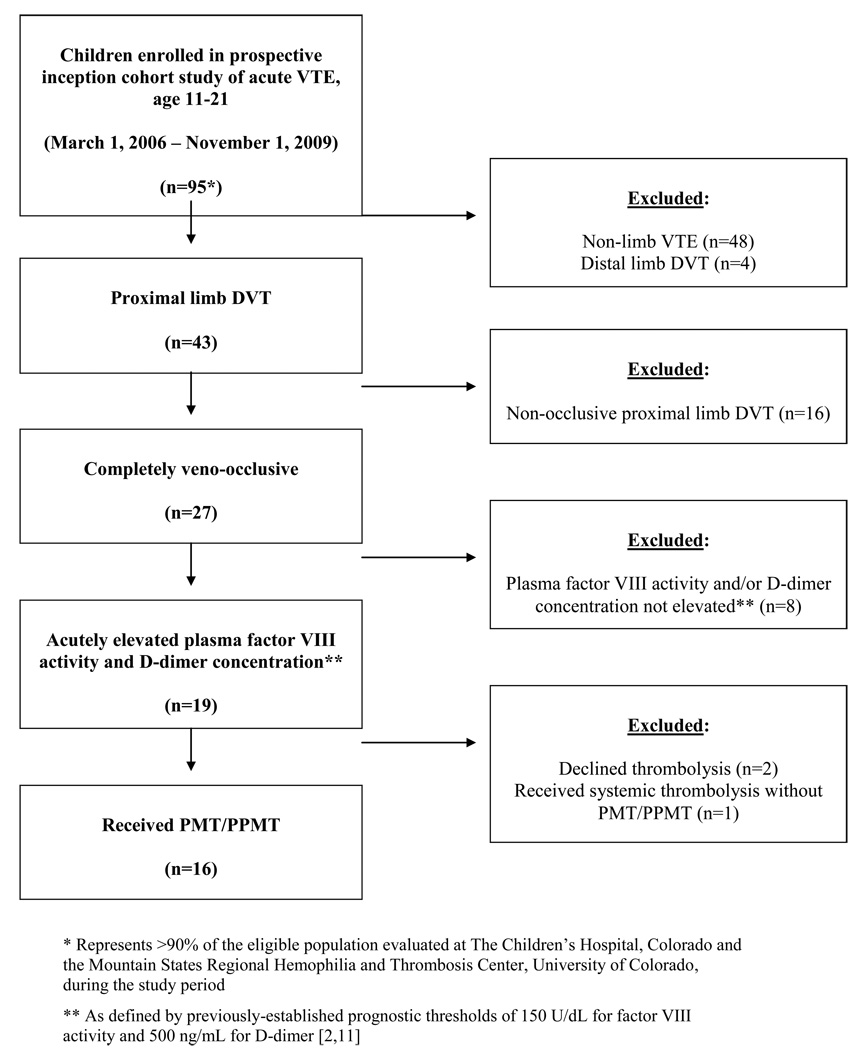
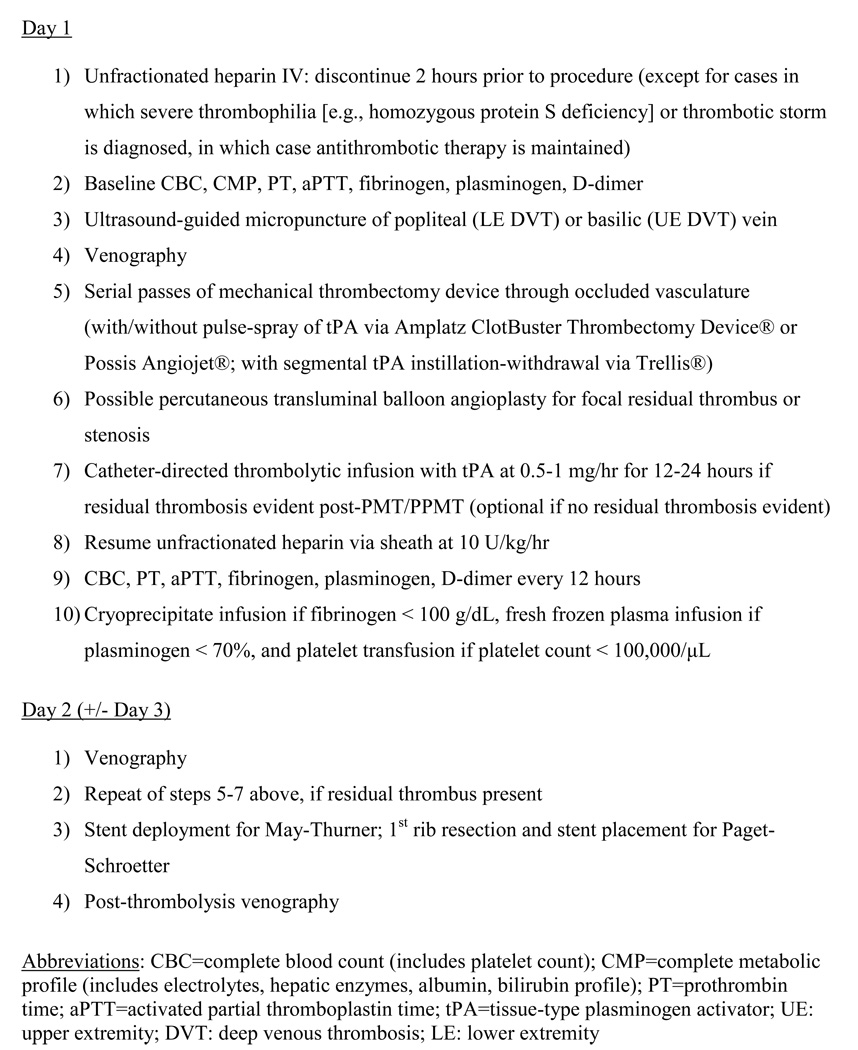
Description:PURPOSE ; Young individuals with occlusive, proximal limb DVT who have acutely elevated plasma levels of factor VIII and D-dimer are at high risk for post-thrombotic syndrome (PTS) when treated with conventional anticoagulation alone. We sought to evaluate our experience with adjunctive percutaneous mechanical/pharmacomechanical thrombolysis (PMT/PPMT) in such patients. ; PATIENTS AND METHODS ; Among 95 children 11 to 21 years of age enrolled in a prospective cohort of venous thromboembolism between March 1, 2006 and November 1, 2009, 16 met eligibility criteria and underwent PMT/PPMT, typically with adjunctive catheter-directed thrombolytic infusion (CDTI) of tissue-type plasminogen activator given post-procedure. ; RESULTS ; Median age was 16 years (range: 11–19 years). Thirteen cases (81%) involved lower limbs. Underlying stenotic lesions were disclosed in 53%, with endovascular stents deployed in all cases of May-Thurner. There were no peri-procedural major bleeding events and one symptomatic pulmonary embolism. Technical success rate was 94%. Early (<30 days) locally recurrent DVT developed in 40%, of which 83% were successfully re-lysed. Late recurrent DVT rate (median follow-up duration: 14 months range: 1–42 months) was 27%. Cumulative incidence of physically and functionally significant PTS at 1–2 years was 13%. ; CONCLUSION ; This experience provides prospective evidence that PMT/PPMT with adjunctive CDTI can be used safely and effectively in adolescents with DVT at high risk for PTS.
-
Subjects:
-
Source:J Vasc Interv Radiol. 22(2):121-132
-
Pubmed ID:21216157
-
Pubmed Central ID:PMC3058325
-
Document Type:
-
Funding:
-
Volume:22
-
Issue:2
-
Download URL:
-
File Type:
 [PDF - 388.57 KB]
 -
Collection(s):
-
Main Document Checksum:urn:sha256:0de6f2aae7fce321c2320cea7155b2082584b730ac3aeb72d4694b79bd917314
Supporting Files


File Language:
English
 Was this page helpful?
 Found an issue?

CDC STACKS serves as an archival repository of CDC-published products including
scientific findings, journal articles, guidelines, recommendations, or other public health information authored or
co-authored by CDC or funded partners.
As a repository, CDC STACKS retains documents in their original published format to ensure public access to scientific information.
As a repository, CDC STACKS retains documents in their original published format to ensure public access to scientific information.
You May Also Like
COLLECTION
CDC Public Access