


Insurance coverage of medical foods for treatment of inherited metabolic disorders
Supporting Files

-
Apr 18 2013
-
Details
-
Alternative Title:Genet Med
-
Personal Author:
-
Description:Purpose
Treatment of inherited metabolic disorders is accomplished by use of specialized diets employing medical foods and medically necessary supplements. Families seeking insurance coverage for these products express concern that coverage is often limited; the extent of this challenge is not well defined.
Methods
To learn about limitations in insurance coverage, parents of 305 children with inherited metabolic disorders completed a paper survey providing information about their use of medical foods, modified low-protein foods, prescribed dietary supplements, and medical feeding equipment and supplies for treatment of their child's disorder as well as details about payment sources for these products.
Results
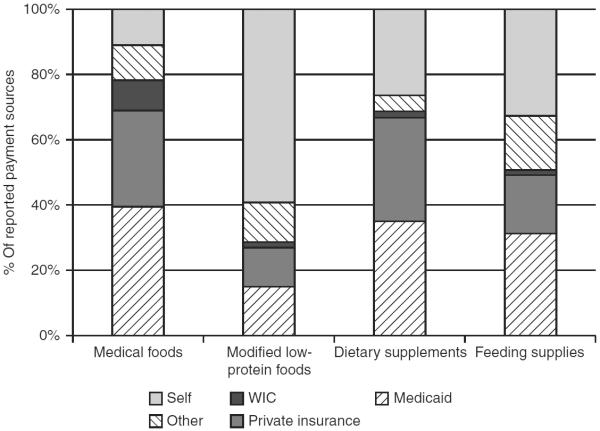
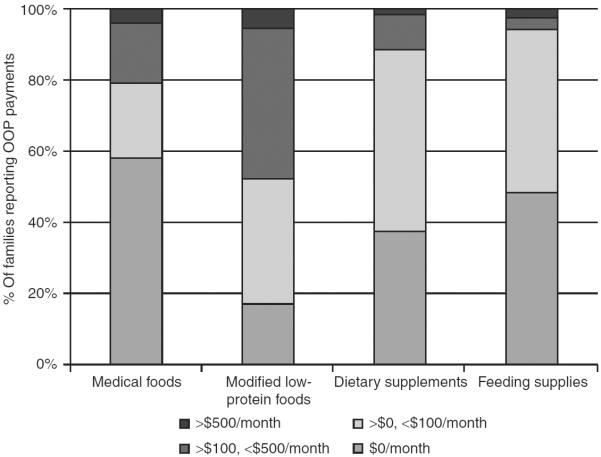
Although nearly all children with inherited metabolic dis orders had medical coverage of some type, families paid “out of pocket” for all types of products. Uncovered spending was reported for 11% of families purchasing medical foods, 26% purchasing supplements, 33% of those needing medical feeding supplies, and 59% of families requiring modified low-protein foods. Forty-two percent of families using modified low-protein foods and 21% of families using medical foods reported additional treatment-related expenses of $100 or more per month for these products.
Conclusion
Costs of medical foods used to treat inherited metabolic disorders are not completely covered by insurance or other resources.
-
Subjects:
-
Source:Genet Med. 15(12):978-982.
-
Pubmed ID:23598714
-
Pubmed Central ID:PMC4541808
-
Document Type:
-
Funding:
-
Volume:15
-
Issue:12
-
Collection(s):
-
Main Document Checksum:urn:sha256:761a9bf9ebc6eb6bfc065313b1a60d7b64339d86393b3834f37f5c5075c60723
-
Download URL:
-
File Type:
 [PDF
- 252.16 KB
]
[PDF
- 252.16 KB
]
Supporting Files


ON THIS PAGE

CDC STACKS serves as an archival repository of CDC-published products including
scientific findings,
journal articles, guidelines, recommendations, or other public health information authored or
co-authored by CDC or funded partners.
As a repository, CDC STACKS retains documents in their original published format to ensure public access to scientific information.
As a repository, CDC STACKS retains documents in their original published format to ensure public access to scientific information.
You May Also Like
COLLECTION
CDC Public Access