


Exposure Controls for Nanomaterials at Three Manufacturing Sites
Supporting Files

-
2015
Details
-
Alternative Title:J Occup Environ Hyg
-
Personal Author:
-
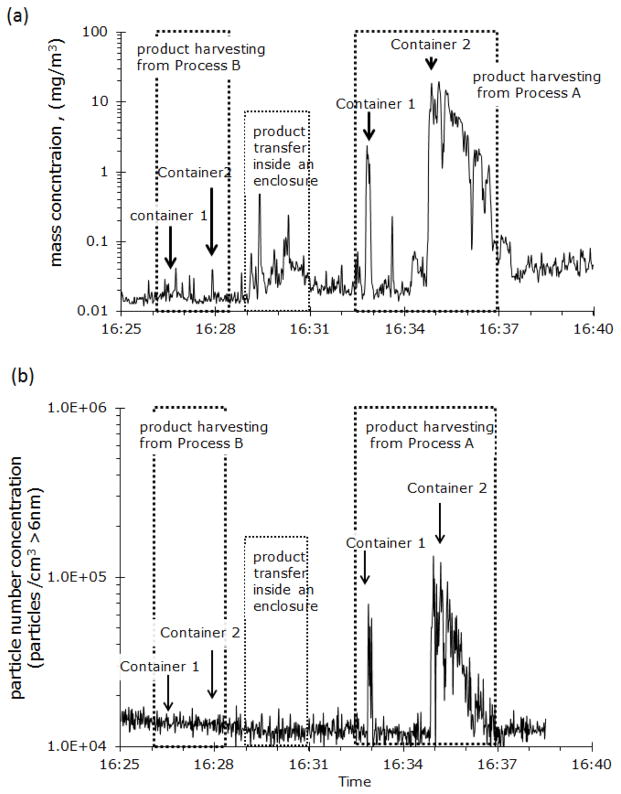
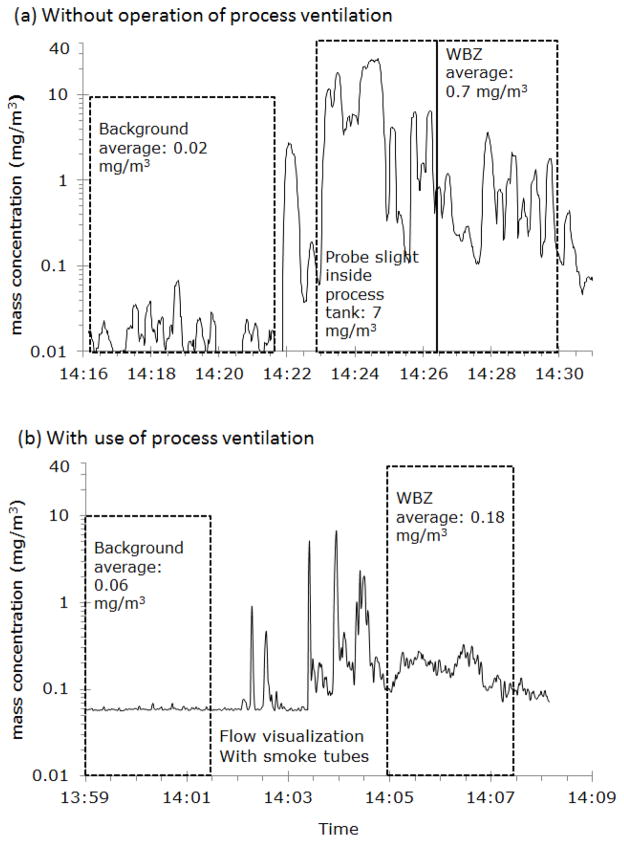
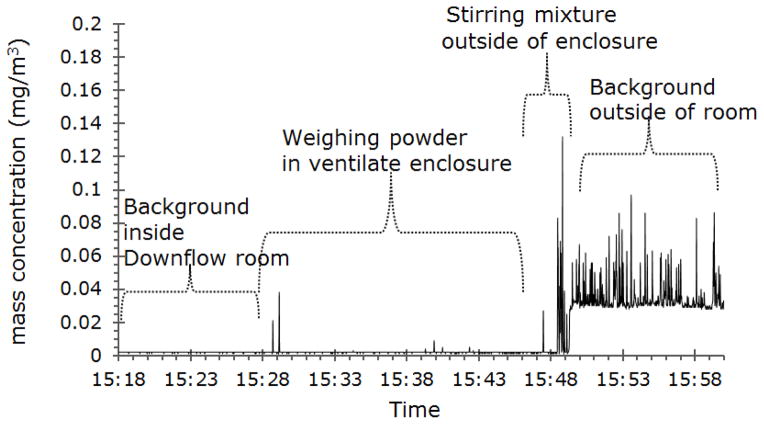
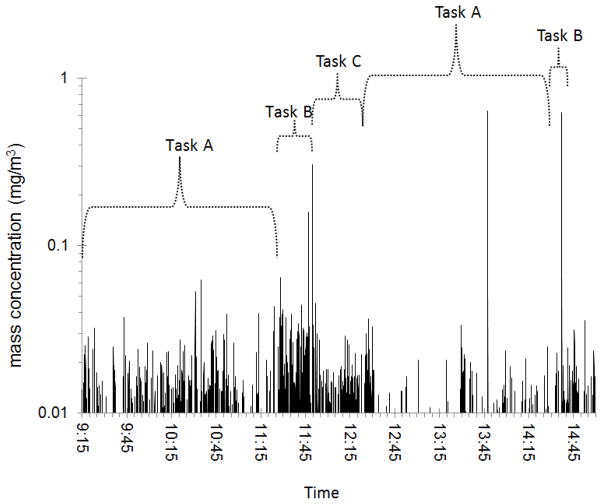
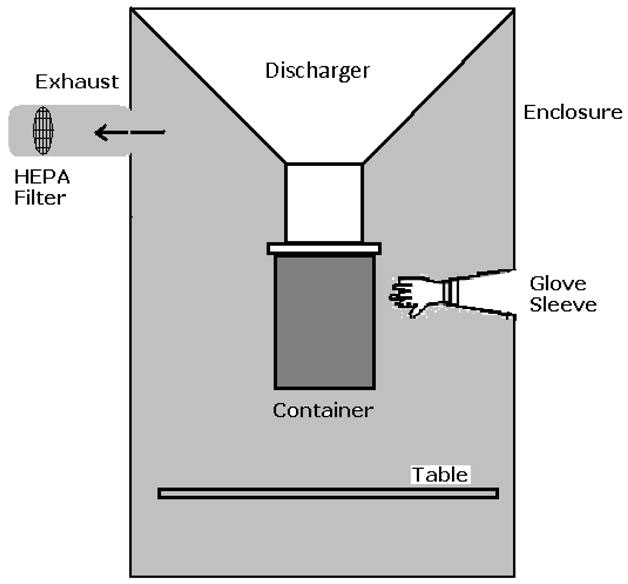
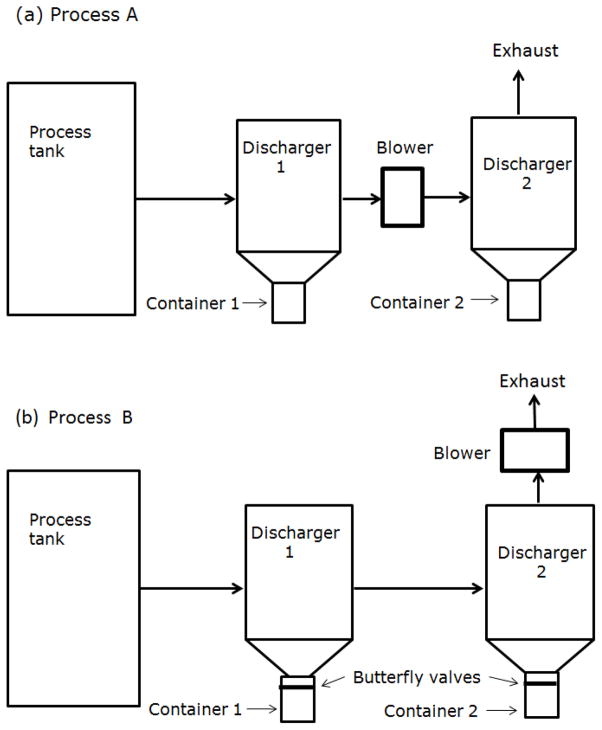
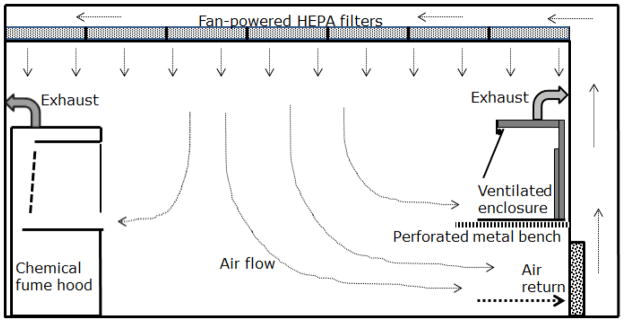
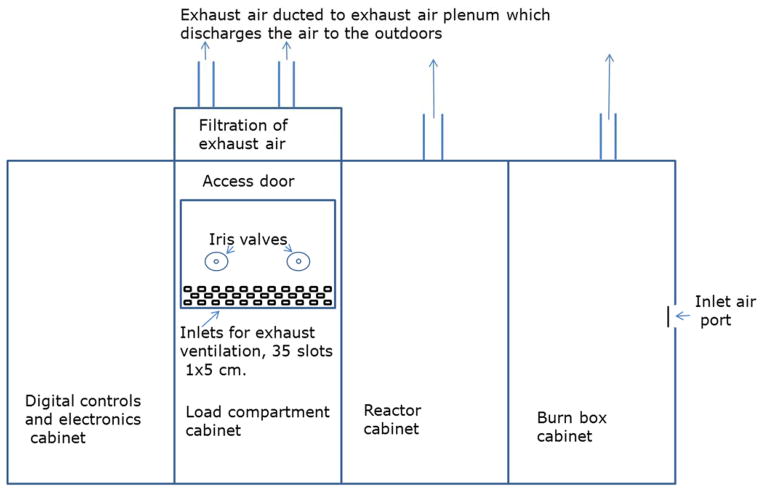
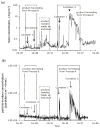
Description:Because nanomaterials are thought to be more biologically active than their larger parent compounds, careful control of exposures to nanomaterials is recommended. Field studies were conducted at three sites to develop information about the effectiveness of control measures including process changes, a downflow room, a ventilated enclosure, and an enclosed reactor. Aerosol mass and number concentrations were measured during specific operations with a photometer and an electrical mobility particle sizer to provide concentration measurements across a broad range of sizes (from 5.6 nm to 30 μm). At site A, the dust exposure and during product harvesting was eliminated by implementing a wait time of 30 -min following process completion. And, the dust exposure attributed to process tank cleaning was reduced from 0.7 to 0.2 mg/m3 by operating the available process ventilation during this task. At site B, a ventilated enclosure was used to control dust generated by the manual weigh-out and manipulation of powdered nanomaterials inside of a downflow room. Dust exposures were at room background (under 0.04 mg/m3 and 500 particles/cm3) during these tasks however, manipulations conducted outside of the enclosure were correlated with a transient increase in concentration measured at the source. At site C, a digitally controlled reactor was used to produce aligned carbon nanotubes. This reactor was a closed system and the ventilation functioned as a redundant control measure. Process emissions were well controlled by this system with the exception of increased concentrations measured during the unloading of the product. However, this emission source could be easily controlled through increasing cabinet ventilation. The identification and adoption of effective control technologies is an important first step in reducing the risk associated with worker exposure to engineered nanoparticles. Properly designing and evaluating the effectiveness of these controls is a key component in a comprehensive health and safety program.
-
Subjects:
-
Source:J Occup Environ Hyg. 12(1):16-28.
-
Pubmed ID:24918905
-
Pubmed Central ID:PMC4535687
-
Document Type:
-
Funding:
-
Volume:12
-
Issue:1
-
Collection(s):
-
Main Document Checksum:urn:sha256:a8793a767c0d891d50fdb0abc422278e67c7ad3f7170487179fe76440cf45c48
-
Download URL:
-
File Type:
 [PDF
- 1.33 MB
]
[PDF
- 1.33 MB
]
Supporting Files


ON THIS PAGE



CDC STACKS serves as an archival repository of CDC-published products including
scientific findings,
journal articles, guidelines, recommendations, or other public health information authored or
co-authored by CDC or funded partners.
As a repository, CDC STACKS retains documents in their original published format to ensure public access to scientific information.
As a repository, CDC STACKS retains documents in their original published format to ensure public access to scientific information.
You May Also Like
COLLECTION
CDC Public Access