


Nitroreductase-Activatable Morpholino Oligonucleotides for in Vivo Gene Silencing
Supporting Files

-
Jul 28 2014
Details
-
Alternative Title:ACS Chem Biol
-
Personal Author:
-
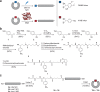
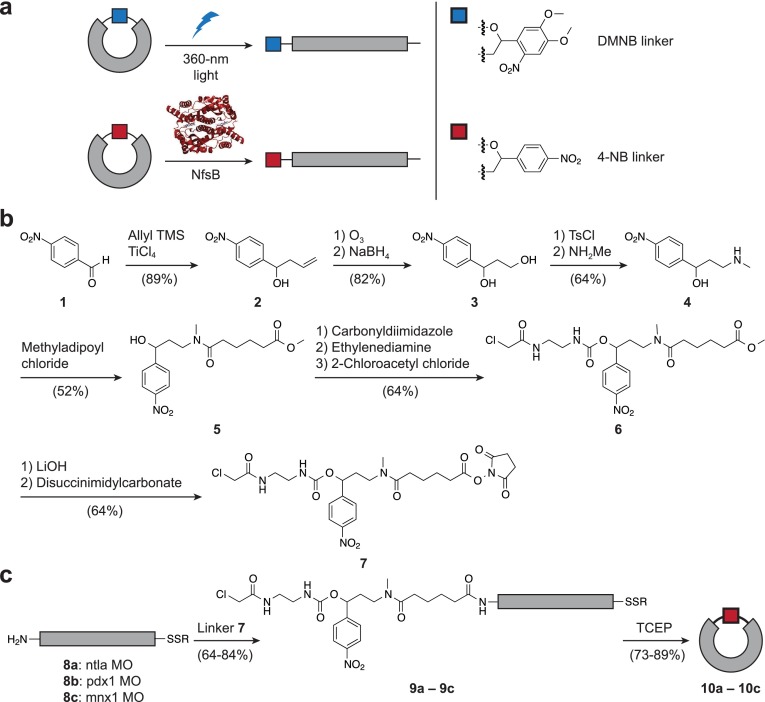
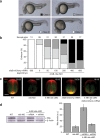
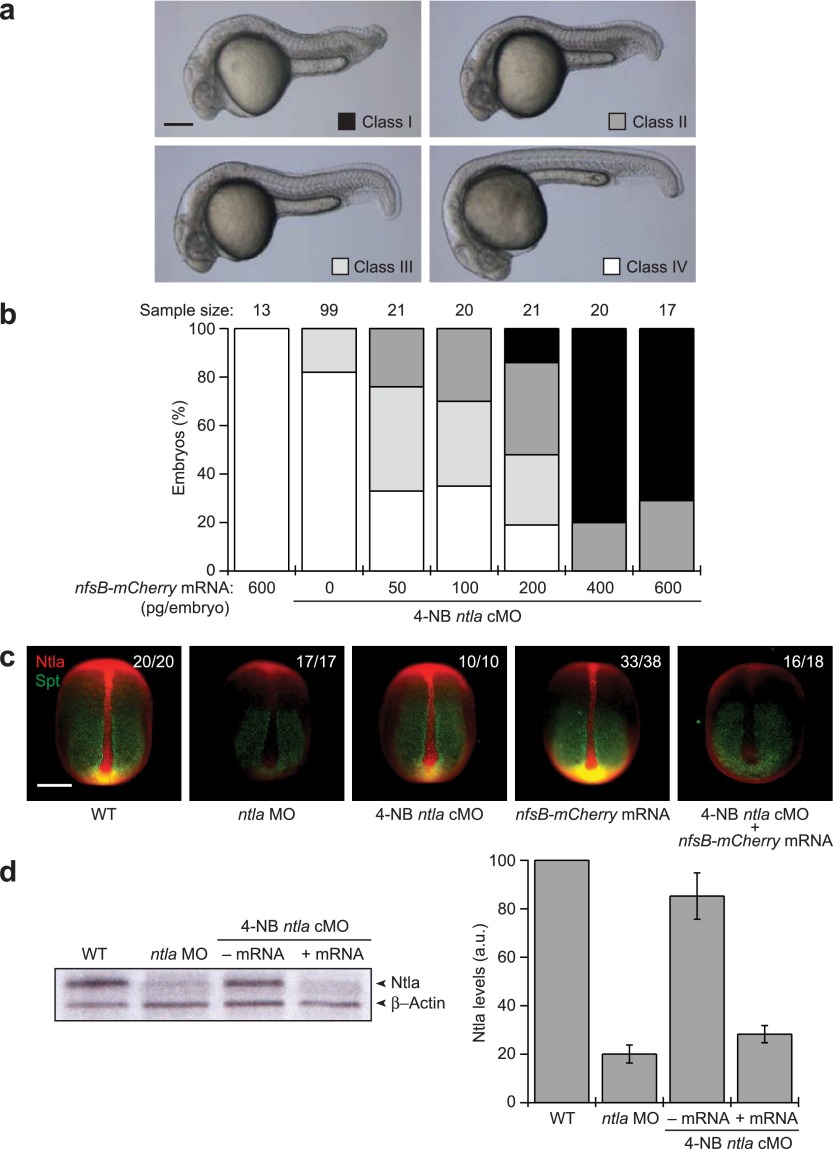
Description:Phosphorodiamidate morpholino oligonucleotides are widely used to interrogate gene function in whole organisms, and light-activatable derivatives can reveal spatial and temporal differences in gene activity. We describe here a new class of caged morpholino oligonucleotides that can be activated by the bacterial nitroreductase NfsB. We characterize the activation kinetics of these reagents in vitro and demonstrate their efficacy in zebrafish embryos that express NfsB either ubiquitously or in defined cell populations. In combination with transgenic organisms, such enzyme-actuated antisense tools will enable gene silencing in specific cell types, including tissues that are not amenable to optical targeting.
-
Subjects:
-
Source:ACS Chem Biol. 2014; 9(9):1985-1990.
-
Pubmed ID:25069083
-
Pubmed Central ID:PMC4168795
-
Document Type:
-
Funding:
-
Volume:9
-
Issue:9
-
Collection(s):
-
Main Document Checksum:urn:sha256:fce756927db90c9ae645308a018e72bd8c8cac6bfca81233a93c5cba21e28b94
-
Download URL:
-
File Type:
 [PDF
- 1.40 MB
]
[PDF
- 1.40 MB
]
Supporting Files


ON THIS PAGE


CDC STACKS serves as an archival repository of CDC-published products including
scientific findings,
journal articles, guidelines, recommendations, or other public health information authored or
co-authored by CDC or funded partners.
As a repository, CDC STACKS retains documents in their original published format to ensure public access to scientific information.
As a repository, CDC STACKS retains documents in their original published format to ensure public access to scientific information.
You May Also Like
COLLECTION
CDC Public Access