


Asymmetric pathways in the electrochemical conversion reaction of NiO as battery electrode with high storage capacity
Supporting Files

-
Nov 20 2014
-
File Language:
English
Details
-
Alternative Title:Sci Rep
-
Personal Author:
-
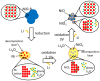
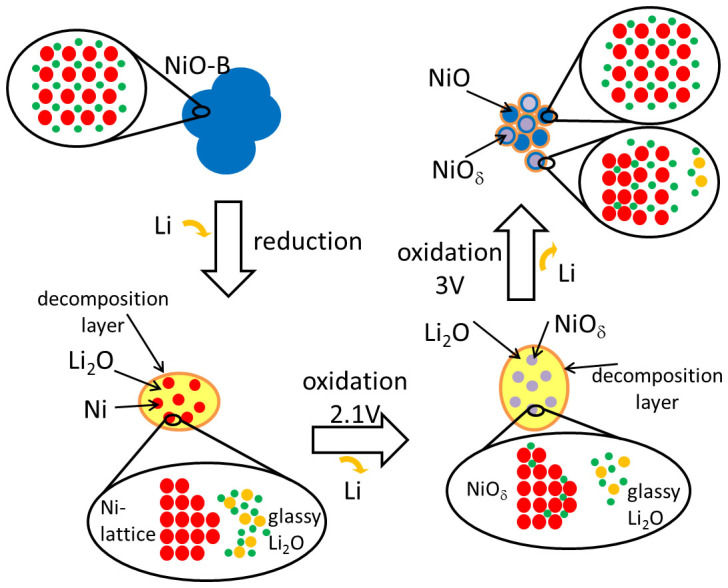
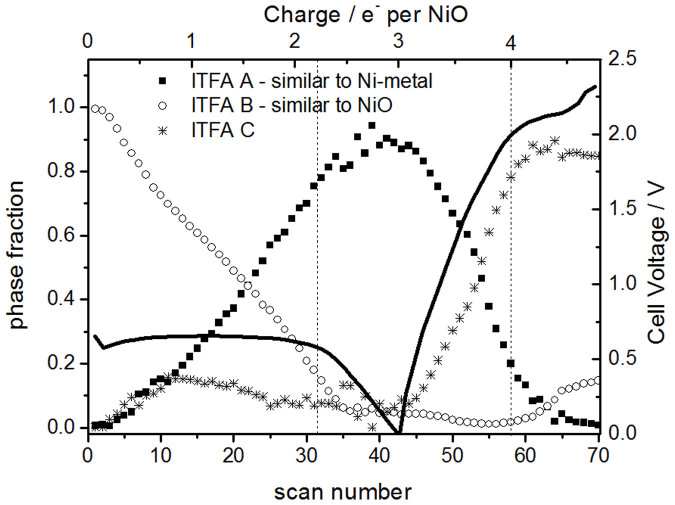
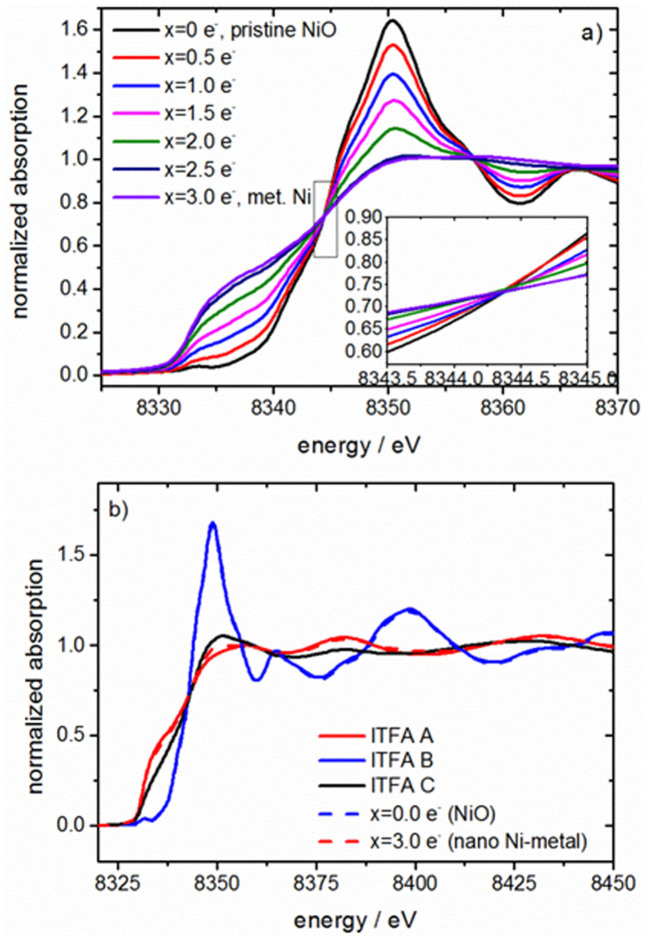
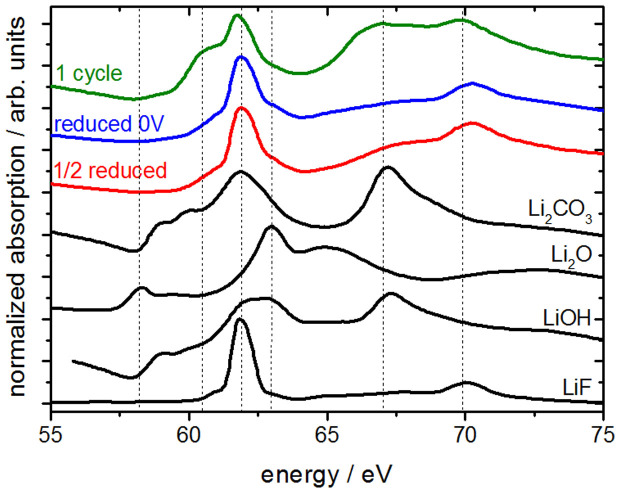
Description:Electrochemical conversion reactions of transition metal compounds create opportunities for large energy storage capabilities exceeding modern Li-ion batteries. However, for practical electrodes to be envisaged, a detailed understanding of their mechanisms is needed, especially vis-à-vis the voltage hysteresis observed between reduction and oxidation. Here, we present such insight at scales from local atomic arrangements to whole electrodes. NiO was chosen as a simple model system. The most important finding is that the voltage hysteresis has its origin in the differing chemical pathways during reduction and oxidation. This asymmetry is enabled by the presence of small metallic clusters and, thus, is likely to apply to other transition metal oxide systems. The presence of nanoparticles also influences the electrochemical activity of the electrolyte and its degradation products and can create differences in transport properties within an electrode, resulting in localized reactions around converted domains that lead to compositional inhomogeneities at the microscale.
-
Subjects:
-
Source:Sci Rep. 2014; 4.
-
Pubmed ID:25410966
-
Pubmed Central ID:PMC4238016
-
Document Type:
-
Funding:
-
Volume:4
-
Collection(s):
-
Main Document Checksum:urn:sha256:c660a82fc151d530d892ceffe63a0067a8e1d8905527d37e87e81f20c0ca5d9b
-
Download URL:
-
File Type:
 [PDF
- 2.16 MB
]
[PDF
- 2.16 MB
]
Supporting Files


File Language:
English
ON THIS PAGE




CDC STACKS serves as an archival repository of CDC-published products including
scientific findings,
journal articles, guidelines, recommendations, or other public health information authored or
co-authored by CDC or funded partners.
As a repository, CDC STACKS retains documents in their original published format to ensure public access to scientific information.
As a repository, CDC STACKS retains documents in their original published format to ensure public access to scientific information.
You May Also Like
COLLECTION
CDC Public Access