



Protect all the skin you’re in
Multi-Language
Public Domain

-
May 18, 2015
File Language:
Details
-
Corporate Authors:
-
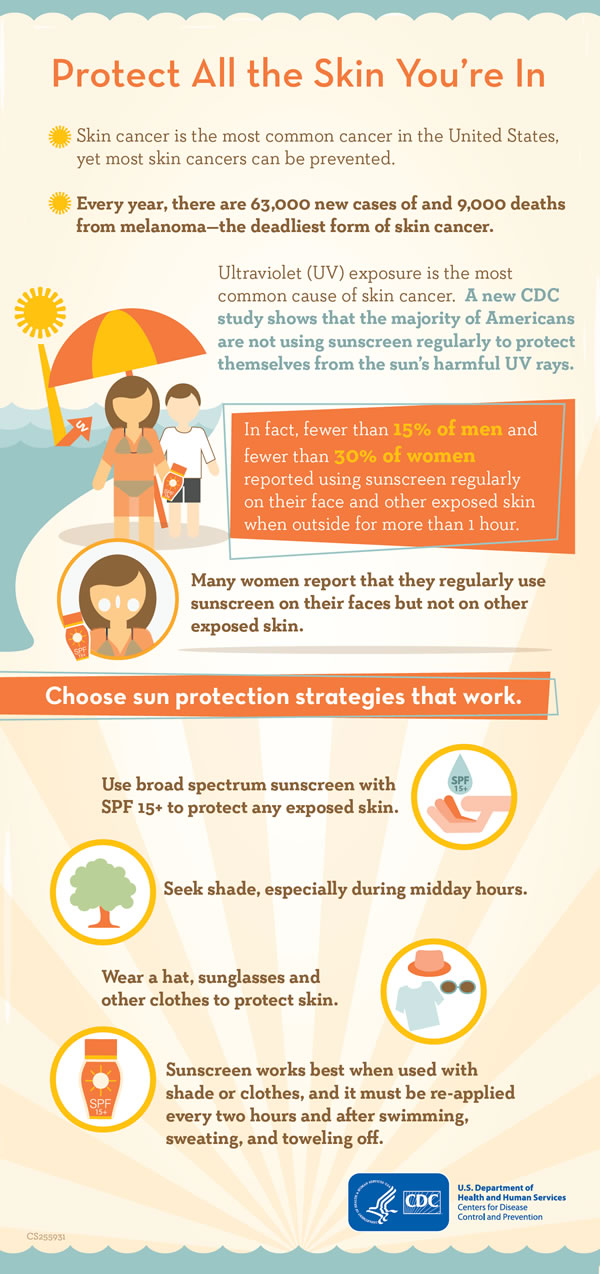
Description:Skin cancer is the most common cancer in the United States, yet most skin cancers can be prevented. ; Every year, there are 63,000 new cases of and 9,000 deaths from melanoma—the deadliest form of skin cancer. ; Ultraviolet (UV) exposure is the most common cause of skin cancer. A new CDC study shows that the majority of Americans are not using sunscreen regularly to protect themselves from the sun’s harmful UV rays. ; In fact, fewer than 15% of men and fewer than 30% of women reported using sunscreen regularly on their face and other exposed skin when outside for more than 1 hour. ; Many women report that they regularly use sunscreen on their faces but not on other exposed skin. ; Choose sun protection strategies that work: ; • Use broad spectrum sunscreen with SPF 15+ to protect any exposed skin. ; • Seek shade, especially during midday hours. ; • Wear a hat, sunglasses and other clothes to protect skin. ; Sunscreen works best when used with shade or clothes, and it must be re-applied every two hours and after swimming, sweating, and toweling off. ; CS255931
-
Subjects:
-
Document Type:
-
Genre:
-
Pages in Document:1 infographic
-
Download URL:
-
File Type:
 [JPEG - 162.56 KB]
 -
Collection(s):
-
Main Document Checksum:urn:sha256:bc6e9db16dc8f2fb9672868878b90d6ae5445ac8c463850814bbcae4b95f786f

File Language:
 Was this page helpful?
 Found an issue?

CDC STACKS serves as an archival repository of CDC-published products including
scientific findings, journal articles, guidelines, recommendations, or other public health information authored or
co-authored by CDC or funded partners.
As a repository, CDC STACKS retains documents in their original published format to ensure public access to scientific information.
As a repository, CDC STACKS retains documents in their original published format to ensure public access to scientific information.
You May Also Like
COLLECTION
Stephen B. Thacker CDC Library