


Unlocking Proteomic Heterogeneity in Complex Diseases through Visual Analytics
Supporting Files

-
Apr 2015
-
Details
-
Alternative Title:Proteomics
-
Personal Author:
-
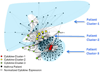
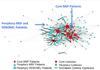
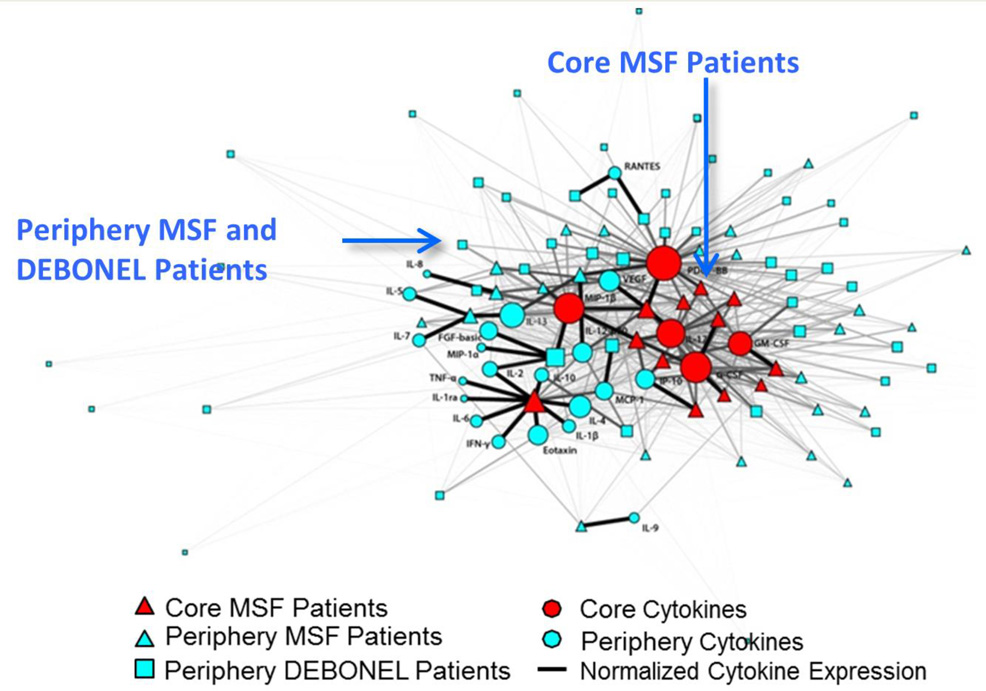
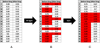
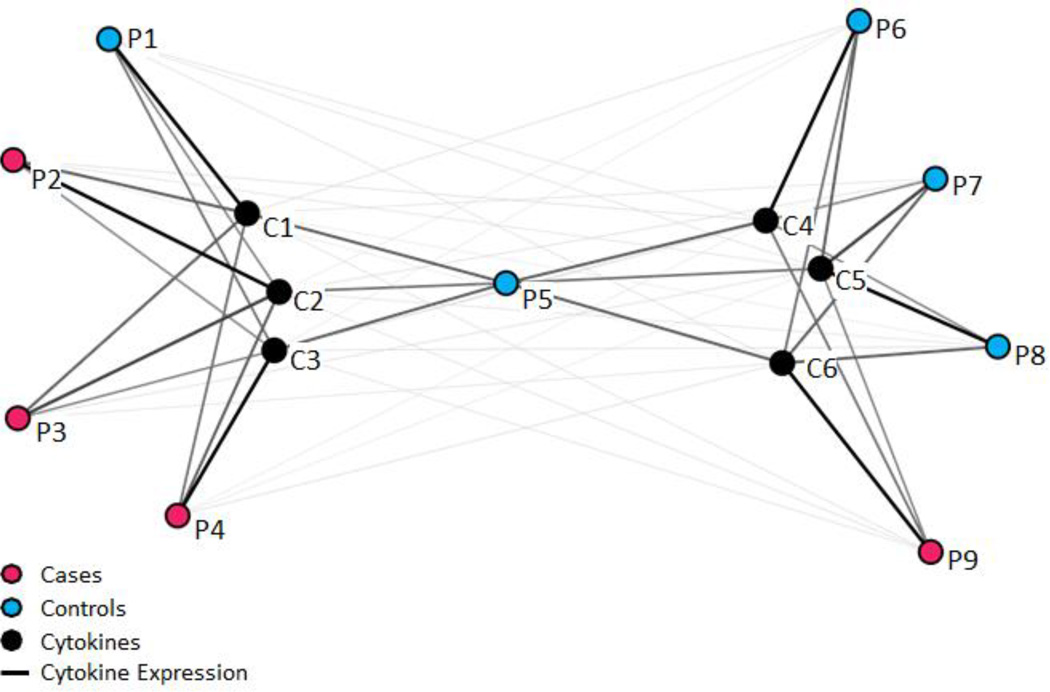
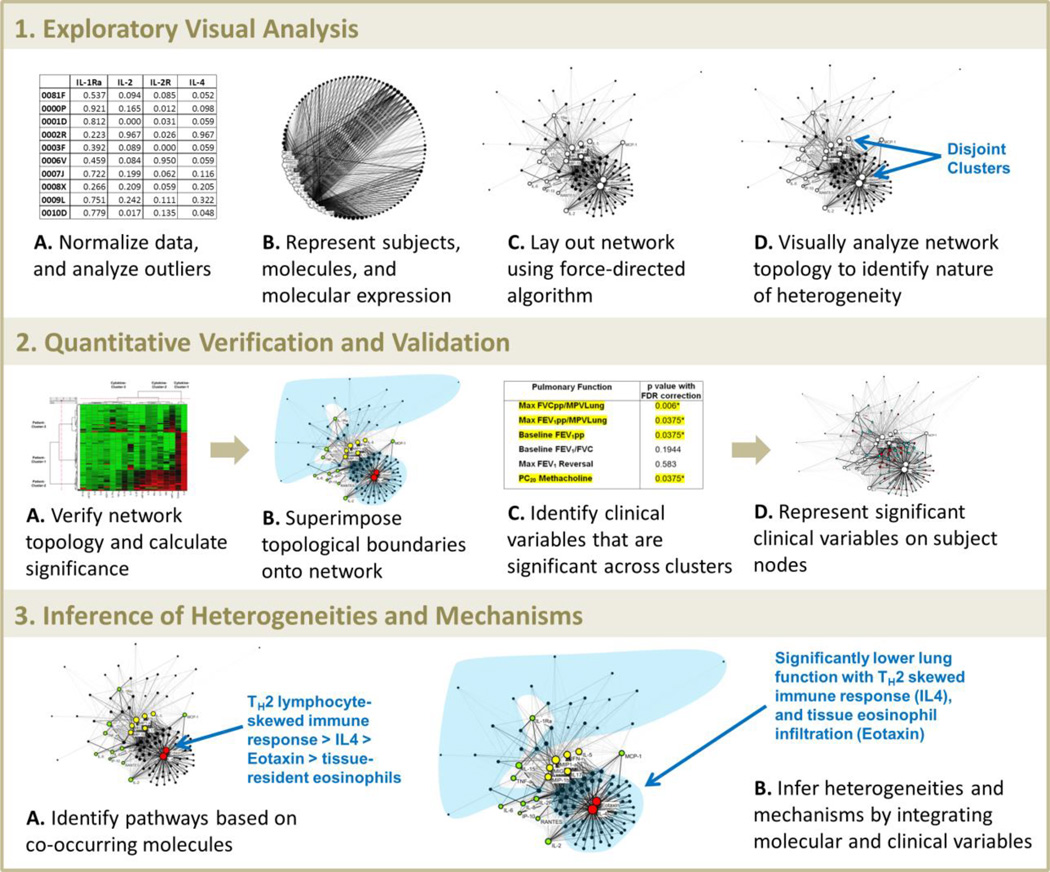
Description:Despite years of preclinical development, biological interventions designed to treat complex diseases such as asthma often fail in phase III clinical trials. These failures suggest that current methods to analyze biomedical data might be missing critical aspects of biological complexity such as the assumption that cases and controls come from homogeneous distributions. Here we discuss why and how methods from the rapidly evolving field of visual analytics can help translational teams (consisting of biologists, clinicians, and bioinformaticians) to address the challenge of modeling and inferring heterogeneity in the proteomic and phenotypic profiles of patients with complex diseases. Because a primary goal of visual analytics is to amplify the cognitive capacities of humans for detecting patterns in complex data, we begin with an overview of the cognitive foundations for the field of visual analytics. Next, we organize the primary ways in which a specific form of visual analytics called networks has been used to model and infer biological mechanisms, which help to identify the properties of networks that are particularly useful for the discovery and analysis of proteomic heterogeneity in complex diseases. We describe one such approach called subject-protein networks, and demonstrate its application on two proteomic datasets. This demonstration provides insights to help translational teams overcome theoretical, practical, and pedagogical hurdles for the widespread use of subject-protein networks for analyzing molecular heterogeneities, with the translational goal of designing biomarker-based clinical trials, and accelerating the development of personalized approaches to medicine.
-
Subjects:
-
Source:Proteomics. 15(8):1405-1418.
-
Pubmed ID:25684269
-
Pubmed Central ID:PMC4471338
-
Document Type:
-
Funding:1UL1TR000071/TR/NCATS NIH HHS/United States ; HHSN268201000037C/HV/NHLBI NIH HHS/United States ; HHSN268201000037C-0-0-1/PHS HHS/United States ; KL2 TR000072/TR/NCATS NIH HHS/United States ; R21 OH009441/OH/NIOSH CDC HHS/United States ; R21OH009441-01A2/OH/NIOSH CDC HHS/United States ; UL1 TR000071/TR/NCATS NIH HHS/United States
-
Volume:15
-
Issue:8
-
Collection(s):
-
Main Document Checksum:urn:sha256:d86c698df27dcd4e54cec7f3ddd6e4f3ecf562d48e9b23fae424abd152252443
-
Download URL:
-
File Type:
 [PDF
- 1.54 MB
]
[PDF
- 1.54 MB
]
Supporting Files


ON THIS PAGE



CDC STACKS serves as an archival repository of CDC-published products including
scientific findings,
journal articles, guidelines, recommendations, or other public health information authored or
co-authored by CDC or funded partners.
As a repository, CDC STACKS retains documents in their original published format to ensure public access to scientific information.
As a repository, CDC STACKS retains documents in their original published format to ensure public access to scientific information.
You May Also Like
COLLECTION
CDC Public Access