


Developing a Comprehensive Pesticide Health Effects Tracking System for an Urban Setting: New York City’s Approach
Supporting Files

-
Oct 2004
-
File Language:
English
Details
-
Alternative Title:Environ Health Perspect
-
Personal Author:
-
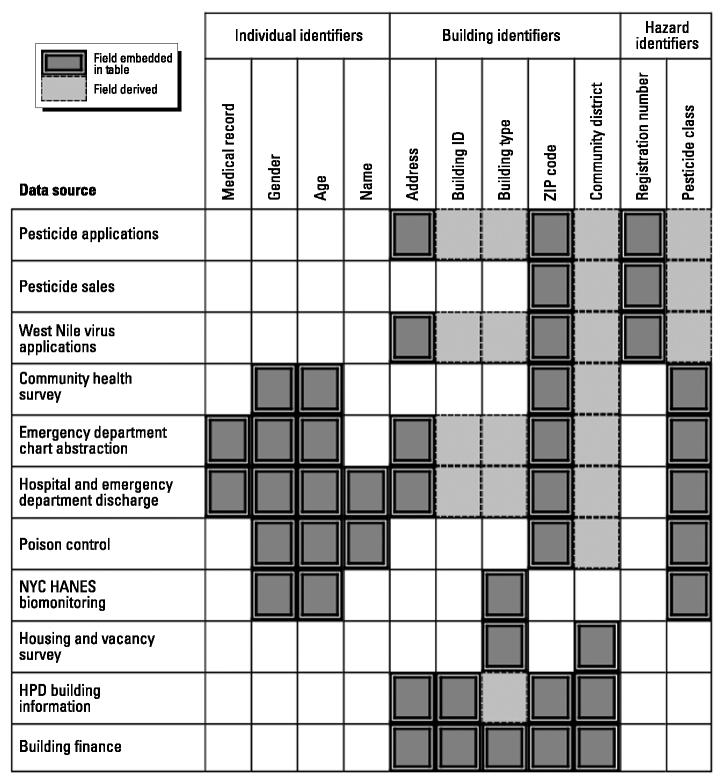
Description:In recent years, there have been substantial investments and improvements in federal and state surveillance systems to track the health effects from pesticide exposure. These surveillance systems help to identify risk factors for occupational exposure to pesticides, patterns in poisonings, clusters of disease, and populations at risk of exposure from pesticide use. Data from pesticide use registries and recent epidemiologic evidence pointing to health risks from urban residential pesticide use make a strong case for understanding better the sale, application, and use of pesticides in cities. In this article, we describe plans for the development of a pesticide tracking system for New York City that will help to elucidate where and why pesticides are used, potential risks to varied populations, and the health consequences of their use. The results of an inventory of data sources are presented along with a description of their relevance to pesticide tracking. We also discuss practical, logistical, and methodologic difficulties of linking multiple secondary data sources with different levels of person, place, and time descriptors.
-
Subjects:
-
Source:Environ Health Perspect. 112(14):1419-1423.
-
Document Type:
-
Funding:
-
Place as Subject:
-
Volume:112
-
Issue:14
-
Collection(s):
-
Main Document Checksum:urn:sha256:fb1be56d9c5c6552209e69d674ddaf3c1170a179903c313b71d17d2200b0c7ab
-
Download URL:
-
File Type:
 [PDF
- 326.29 KB
]
[PDF
- 326.29 KB
]
Supporting Files


File Language:
English
ON THIS PAGE

CDC STACKS serves as an archival repository of CDC-published products including
scientific findings,
journal articles, guidelines, recommendations, or other public health information authored or
co-authored by CDC or funded partners.
As a repository, CDC STACKS retains documents in their original published format to ensure public access to scientific information.
As a repository, CDC STACKS retains documents in their original published format to ensure public access to scientific information.
You May Also Like
COLLECTION
CDC Public Access