



CNS Myelination Requires Cytoplasmic Dynein Function
Supporting Files

-
Feb 2015
-
Details
-
Alternative Title:Dev Dyn
-
Personal Author:
-
Description:Background
Cytoplasmic dynein provides the main motor force for minus-end-directed transport of cargo on microtubules. Within the vertebrate central nervous system (CNS), proliferation, neuronal migration and retrograde axon transport are among the cellular functions known to require dynein. Accordingly, mutations of DYNC1H1, which encodes the heavy chain subunit of cytoplasmic dynein, have been linked to developmental brain malformations and axonal pathologies. Oligodendrocytes, the myelinating glial cell type of the CNS, migrate from their origins to their target axons and subsequently extend multiple long processes that ensheath axons with specialized insulating membrane. These processes are filled with microtubules, which facilitate molecular transport of myelin components. However, whether oligodendrocytes require cytoplasmic dynein to ensheath axons with myelin is not known.
Results
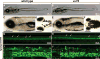
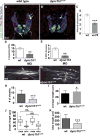
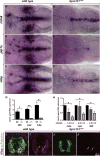
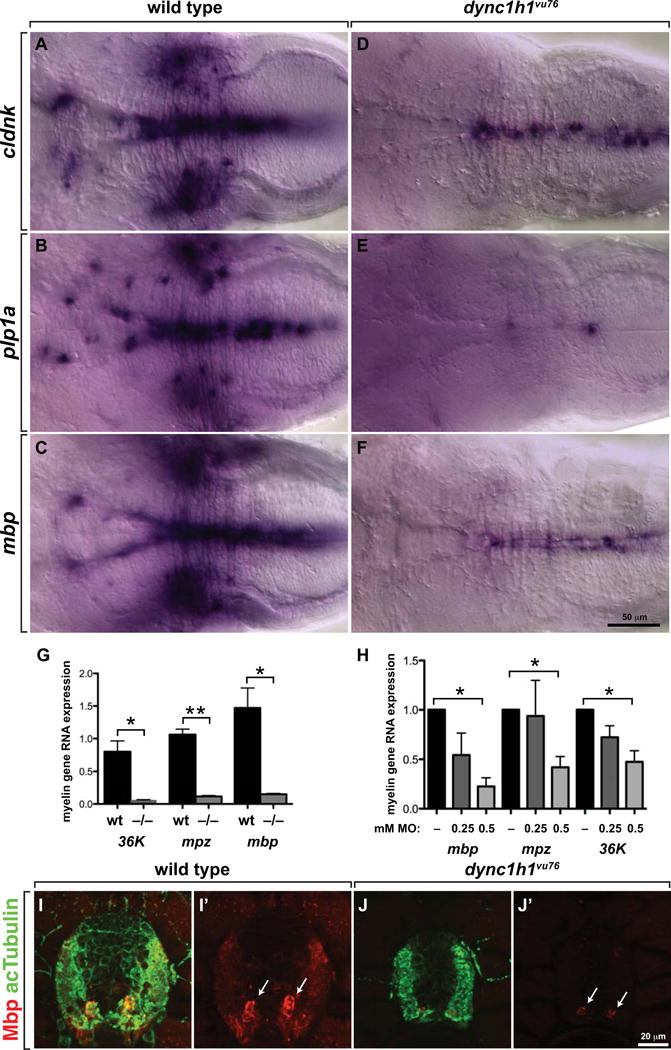
We identified a mutation of zebrafish dync1h1 in a forward genetic screen that caused a deficit of oligodendrocytes. Using in vivo imaging and gene expression analyses, we additionally found evidence that dync1h1 promotes axon ensheathment and myelin gene expression.
Conclusions
In addition to its well known roles in axon transport and neuronal migration, cytoplasmic dynein contributes to neural development by promoting myelination.
-
Subjects:
-
Source:Dev Dyn. 244(2):134-145.
-
Pubmed ID:25488883
-
Pubmed Central ID:PMC4368448
-
Document Type:
-
Funding:
-
Volume:244
-
Issue:2
-
Collection(s):
-
Main Document Checksum:urn:sha256:873e5417ee86806f306179d1fcf1db47b025678cea8cdab945680fb3747ba200
-
Download URL:
-
File Type:
 [PDF
- 1.07 MB
]
[PDF
- 1.07 MB
]
Supporting Files


 Was this page helpful?
 Found an issue?








CDC STACKS serves as an archival repository of CDC-published products including
scientific findings,
journal articles, guidelines, recommendations, or other public health information authored or
co-authored by CDC or funded partners.
As a repository, CDC STACKS retains documents in their original published format to ensure public access to scientific information.
As a repository, CDC STACKS retains documents in their original published format to ensure public access to scientific information.
You May Also Like
COLLECTION
CDC Public Access