


The Hypoxic Response Contributes to Altered Gene Expression and Pre-Capillary Pulmonary Hypertension in Patients with Sickle Cell Disease
Supporting Files

-
Feb 10 2014
-
File Language:
English
Details
-
Alternative Title:Circulation
-
Personal Author:Zhang, Xu ; Zhang, Wei ; Ma, Shwu-Fan ; Desai, Ankit A. ; Saraf, Santosh ; Miasniakova, Galina ; Sergueeva, Adelina ; Ammosova, Tatiana ; Xu, Min ; Nekhai, Sergei ; Abbasi, Taimur ; Casanova, Nancy G. ; Steinberg, Martin H. ; Baldwin, Clinton T. ; Sebastiani, Paola ; Prchal, Josef T. ; Kittles, Rick ; Garcia, Joe G. N. ; Machado, Roberto F. ; Gordeuk, Victor R.
-
Description:Background
We postulated that the hypoxic response in sickle cell disease (SCD) contributes to altered gene expression and pulmonary hypertension, a complication associated with early mortality.
Methods and Results
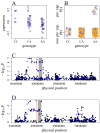
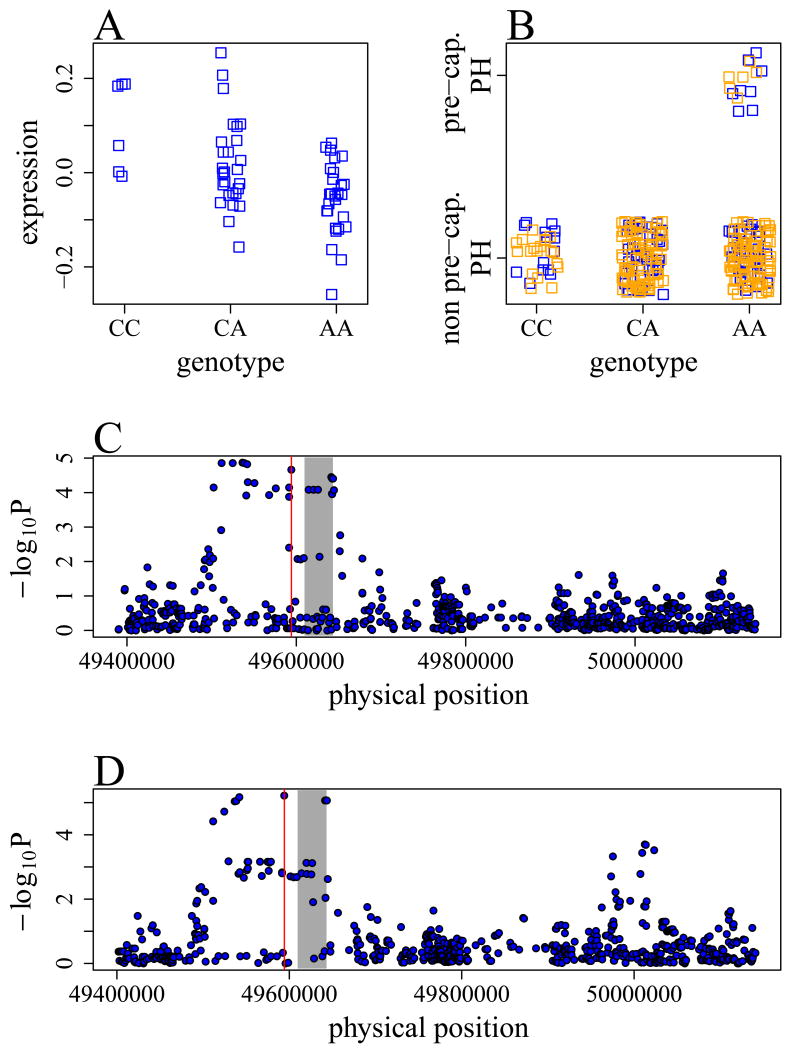
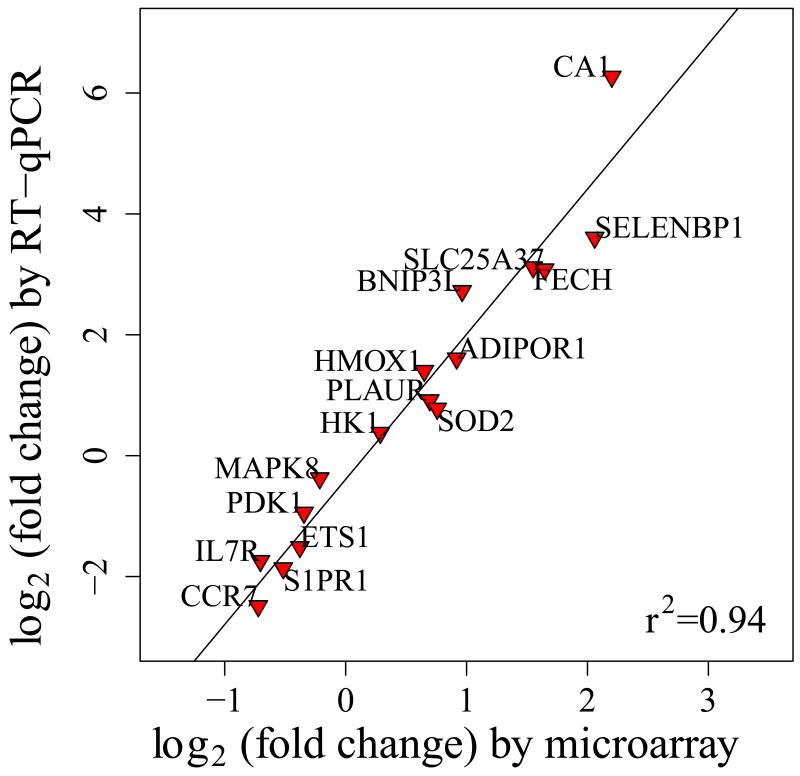
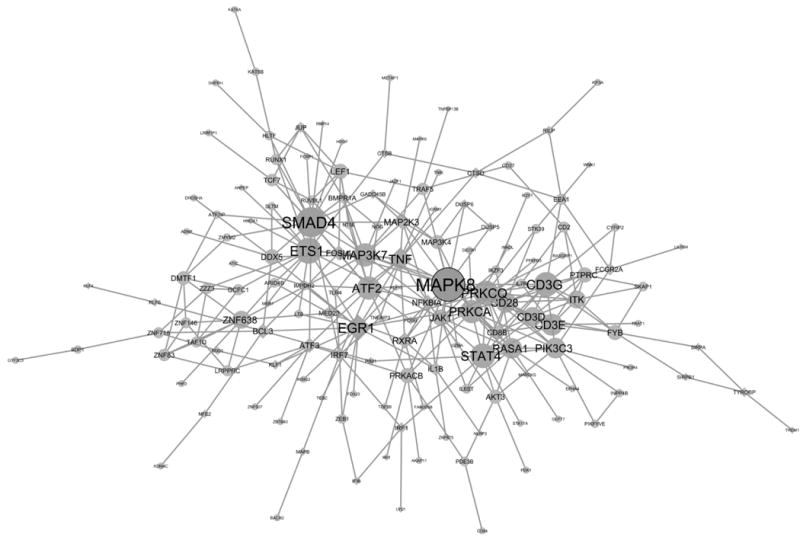
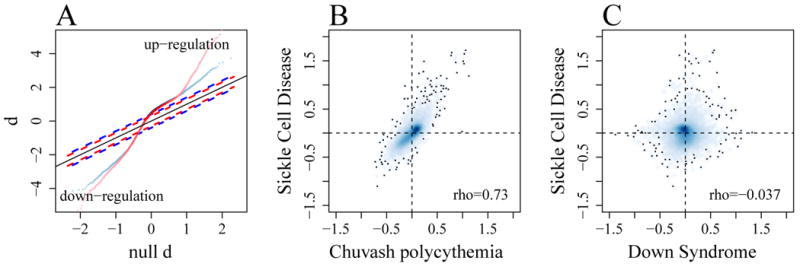
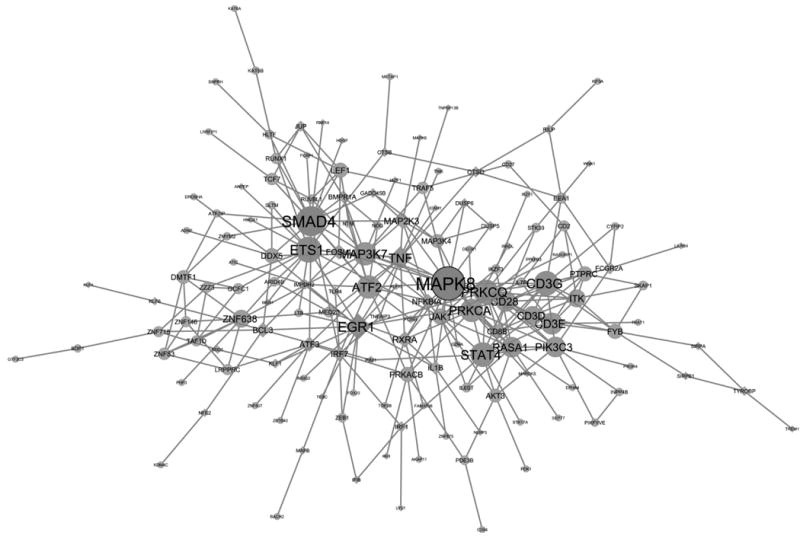
To identify genes regulated by the hypoxic response and not other effects of chronic anemia, we compared expression variation in peripheral blood mononuclear cells from 13 SCD subjects with hemoglobin SS genotype and 15 Chuvash polycythemia subjects (VHLR200W homozygotes with constitutive up-regulation of hypoxia inducible factors in the absence of anemia or hypoxia). At 5% false discovery rate, 1040 genes exhibited >1.15 fold change in both conditions; 297 were up-regulated and 743 down-regulated including MAPK8 encoding a mitogen-activated protein kinase important for apoptosis, T-cell differentiation and inflammatory responses. Association mapping with a focus on local regulatory polymorphisms in 61 SCD patients identified expression quantitative trait loci (eQTL) for 103 of these hypoxia response genes. In a University of Illinois SCD cohort the A allele of a MAPK8 eQTL, rs10857560, was associated with pre-capillary pulmonary hypertension defined as mean pulmonary artery pressure ≥25 and pulmonary capillary wedge pressure ≤15 mm Hg at right heart catheterization (allele frequency=0.66; OR=13.8, P=0.00036, n=238). This association was confirmed in an independent Walk-PHaSST cohort (allele frequency=0.65; OR=11.3, P=0.0025, n=519). The homozygous AA genotype of rs10857560 was associated with decreased MAPK8 expression and present in all 14 identified pre-capillary pulmonary hypertension cases among the combined 757 patients.
Conclusions
Our study demonstrates a prominent hypoxic transcription component in SCD and a MAPK8 eQTL associated with pre-capillary pulmonary hypertension.
-
Subjects:
-
Source:Circulation. 129(16):1650-1658.
-
Pubmed ID:24515990
-
Pubmed Central ID:PMC4287376
-
Document Type:
-
Funding:UL1 TR000430/TR/NCATS NIH HHS/United States ; HL RC2 101212/HL/NHLBI NIH HHS/United States ; R01 HL079912-04/HL/NHLBI NIH HHS/United States ; P01CA108671/CA/NCI NIH HHS/United States ; R01 HL111656/HL/NHLBI NIH HHS/United States ; SC1 GM082325/GM/NIGMS NIH HHS/United States ; R01 HL125005/HL/NHLBI NIH HHS/United States ; G12 MD007597/MD/NIMHD NIH HHS/United States ; G12 RR003048/RR/NCRR NIH HHS/United States ; K23 HL098454/HL/NHLBI NIH HHS/United States ; P30 HL107253/HL/NHLBI NIH HHS/United States ; P50 HL118006/HL/NHLBI NIH HHS/United States ; P01 CA108671/CA/NCI NIH HHS/United States ; R01 HL 87681/HL/NHLBI NIH HHS/United States ; 8G12MD007597/MD/NIMHD NIH HHS/United States ; 1P30HL107253/HL/NHLBI NIH HHS/United States ; R25 HL003679/HL/NHLBI NIH HHS/United States ; R01 HL079912/HL/NHLBI NIH HHS/United States ; 2 R25-HL03679-08/HL/NHLBI NIH HHS/United States ; SC1GM082325/GM/NIGMS NIH HHS/United States ; K23HL098454/HL/NHLBI NIH HHS/United States ; R01 HL087681/HL/NHLBI NIH HHS/United States ; 2G12RR003048/RR/NCRR NIH HHS/United States ; M01-PR10284/PR/OCPHP CDC HHS/United States
-
Volume:129
-
Issue:16
-
Collection(s):
-
Main Document Checksum:urn:sha256:dfa1c4cdd4df9ce172599e6422a899bc1c41fe712ac1818b333484712ec2503e
-
Download URL:
-
File Type:
 [PDF
- 967.56 KB
]
[PDF
- 967.56 KB
]
Supporting Files


File Language:
English
ON THIS PAGE


CDC STACKS serves as an archival repository of CDC-published products including
scientific findings,
journal articles, guidelines, recommendations, or other public health information authored or
co-authored by CDC or funded partners.
As a repository, CDC STACKS retains documents in their original published format to ensure public access to scientific information.
As a repository, CDC STACKS retains documents in their original published format to ensure public access to scientific information.
You May Also Like
COLLECTION
CDC Public Access