


C9orf72 hypermethylation protects against repeat expansion-associated pathology in ALS/FTD
Supporting Files

-
10 2014
-
File Language:
English
Details
-
Alternative Title:Acta Neuropathol
-
Personal Author:
-
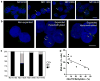
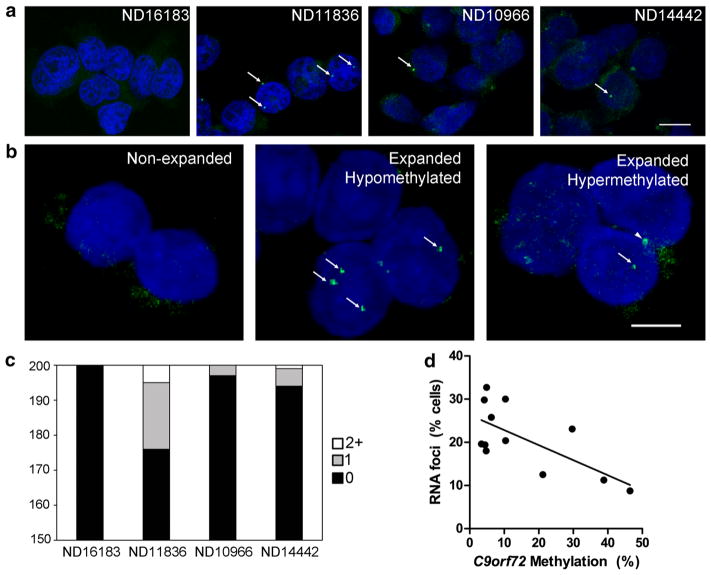
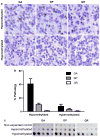
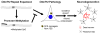
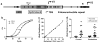
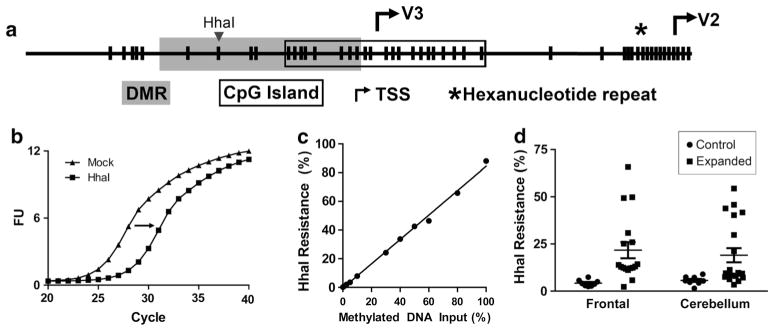
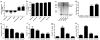
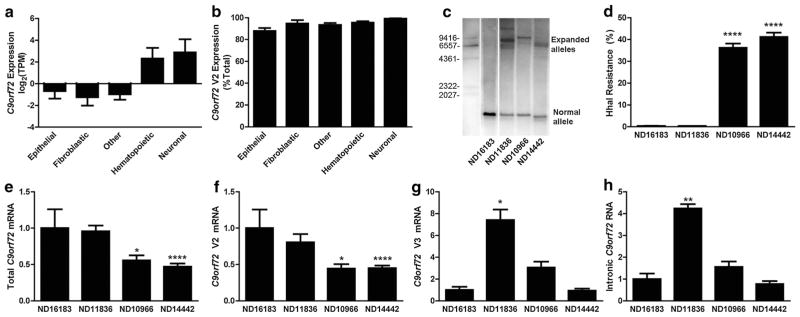
Description:Hexanucleotide repeat expansions of C9orf72 are the most common genetic cause of amyotrophic lateral sclerosis and frontotemporal degeneration. The mutation is associated with reduced C9orf72 expression and the accumulation of potentially toxic RNA and protein aggregates. CpG methylation is known to protect the genome against unstable DNA elements and to stably silence inappropriate gene expression. Using bisulfite cloning and restriction enzyme-based methylation assays on DNA from human brain and peripheral blood, we observed CpG hypermethylation involving the C9orf72 promoter in cis to the repeat expansion mutation in approximately one-third of C9orf72 repeat expansion mutation carriers. Promoter hypermethylation of mutant C9orf72 was associated with transcriptional silencing of C9orf72 in patient-derived lymphoblast cell lines, resulting in reduced accumulation of intronic C9orf72 RNA and reduced numbers of RNA foci. Furthermore, demethylation of mutant C9orf72 with 5-aza-deoxycytidine resulted in increased vulnerability of mutant cells to oxidative and autophagic stress. Promoter hypermethylation of repeat expansion carriers was also associated with reduced accumulation of RNA foci and dipeptide repeat protein aggregates in human brains. These results indicate that C9orf72 promoter hypermethylation prevents downstream molecular aberrations associated with the hexanucleotide repeat expansion, suggesting that epigenetic silencing of the mutant C9orf72 allele may represent a protective counter-regulatory response to hexanucleotide repeat expansion.
-
Subjects:
-
Keywords:
-
Source:Acta Neuropathol. 2014; 128(4):525-541
-
Pubmed ID:24806409
-
Pubmed Central ID:PMC4161616
-
Document Type:
-
Funding:P01 AG032953/AG/NIA NIH HHSUnited States/ ; T32AG00255/AG/NIA NIH HHSUnited States/ ; P01 AG017586/AG/NIA NIH HHSUnited States/ ; T32 AG000255/AG/NIA NIH HHSUnited States/ ; K08 AG039510/AG/NIA NIH HHSUnited States/ ; P01AG017586/AG/NIA NIH HHSUnited States/ ; P30AG10125/AG/NIA NIH HHSUnited States/ ; P01AG032953/AG/NIA NIH HHSUnited States/ ; ND14442/ND/ONDIEH CDC HHSUnited States/ ; K08AG039510/AG/NIA NIH HHSUnited States/ ; P30 AG010124/AG/NIA NIH HHSUnited States/ ; ND10966/ND/ONDIEH CDC HHSUnited States/ ; ND16183/ND/ONDIEH CDC HHSUnited States/ ; K23 NS088341/NS/NINDS NIH HHSUnited States/ ; ND11836/ND/ONDIEH CDC HHSUnited States/
-
Volume:128
-
Issue:4
-
Collection(s):
-
Main Document Checksum:urn:sha256:7c2a44fe6fe4dc5bc829797b01cd79455100c8cb140e83ec79a5c8413c83acd6
-
Download URL:
-
File Type:
 [PDF
- 1.36 MB
]
[PDF
- 1.36 MB
]
Supporting Files


File Language:
English
ON THIS PAGE





CDC STACKS serves as an archival repository of CDC-published products including
scientific findings,
journal articles, guidelines, recommendations, or other public health information authored or
co-authored by CDC or funded partners.
As a repository, CDC STACKS retains documents in their original published format to ensure public access to scientific information.
As a repository, CDC STACKS retains documents in their original published format to ensure public access to scientific information.
You May Also Like
COLLECTION
CDC Public Access