


Conceptualizing and experiencing compassion
Supporting Files

-
Aug 05 2013
Details
-
Alternative Title:Emotion
-
Personal Author:
-
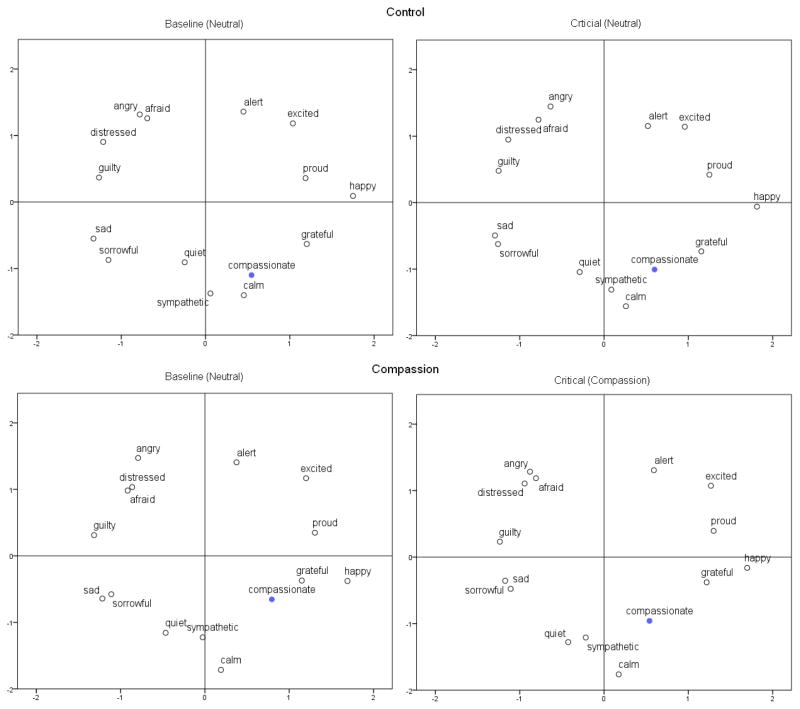
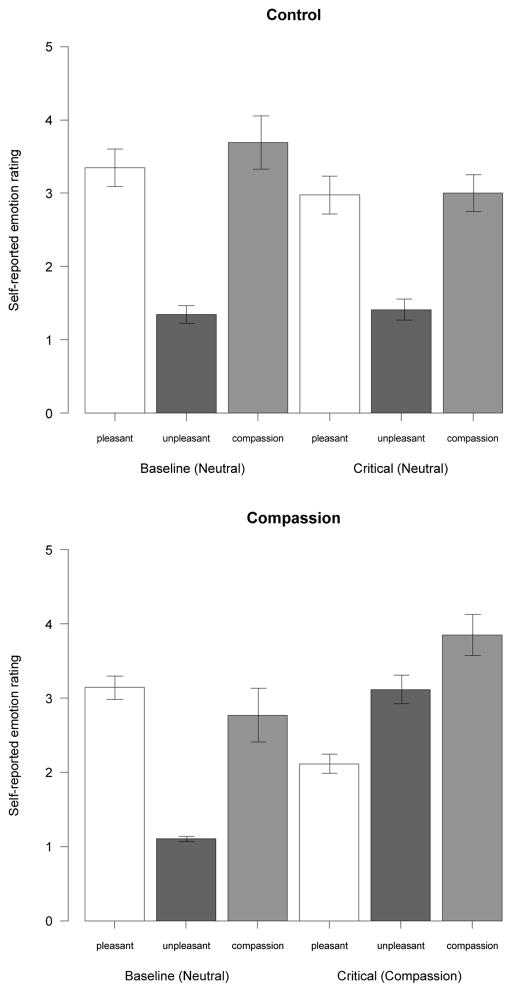
Description:Does compassion feel pleasant or unpleasant? Westerners tend to categorize compassion as a pleasant or positive emotion, but laboratory compassion inductions, which present another's suffering, may elicit unpleasant feelings. Across two studies, we examined whether prototypical conceptualizations of compassion (as pleasant) differ from experiences of compassion (as unpleasant). After laboratory-based neutral or compassion inductions, participants made abstract judgments about compassion relative to various emotion-related adjectives, thereby providing a prototypical conceptualization of compassion. Participants also rated their own affective states, thereby indicating experiences of compassion. Conceptualizations of compassion were pleasant across neutral and compassion inductions. After exposure to others' suffering, however, participants felt increased levels of compassion and unpleasant affect, but not pleasant affect. After neutral inductions, participants reported more pleasant than unpleasant affect, with moderate levels of compassion. Thus, prototypical conceptualizations of compassion are pleasant, but experiences of compassion can feel pleasant or unpleasant. The implications for emotion theory in general are discussed.
-
Subjects:
-
Source:Emotion. 13(5):817-821.
-
Document Type:
-
Funding:
-
Volume:13
-
Issue:5
-
Collection(s):
-
Main Document Checksum:urn:sha256:515b2eec66f89677253a7398b47464c8a773b08d13ca40f2beb8fa4ec6fe44cf
-
Download URL:
-
File Type:
 [PDF
- 385.39 KB
]
[PDF
- 385.39 KB
]
Supporting Files


ON THIS PAGE


CDC STACKS serves as an archival repository of CDC-published products including
scientific findings,
journal articles, guidelines, recommendations, or other public health information authored or
co-authored by CDC or funded partners.
As a repository, CDC STACKS retains documents in their original published format to ensure public access to scientific information.
As a repository, CDC STACKS retains documents in their original published format to ensure public access to scientific information.
You May Also Like
COLLECTION
CDC Public Access