



Spatial Analysis of Adherence to Treatment Guidelines for Advanced-Stage Ovarian Cancer and the Impact of Race and Socioeconomic Status
Supporting Files

-
7 2014 ; 7-2014
-
Available in CDC Stacks on July 14, 2014, 12:00 AM
File Language:
English
Details
-
Alternative Title:Gynecol Oncol
-
Personal Author:
-
Description:OBJECTIVE
To determine the impact of geographic location on advanced-stage ovarian cancer care adherence to National Comprehensive Cancer Network (NCCN) guidelines in relation to race and socioeconomic status (SES).
METHODS
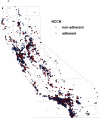
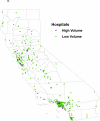
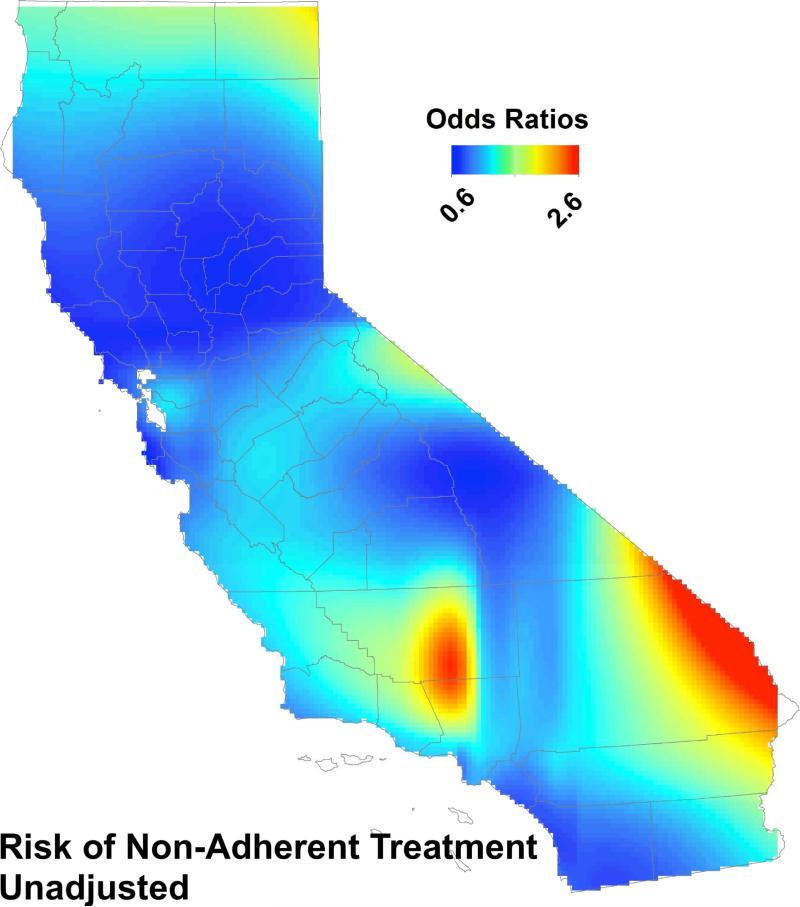
Patients diagnosed with Stage IIIC/IV epithelial ovarian cancer (1/1/96-12/31/06) were identified from the California Cancer Registry. Generalized additive models were created to assess the effect of spatial distributions of geographic location, proximity to a high-volume hospital (≥20 cases/year), distance travelled to receive care, race, and SES on adherence to NCCN guidelines, with simultaneous smoothing of geographic location and adjustment for confounding variables. Disparities in geographic predictors of treatment adherence were analyzed with the χ2 test for equality of proportions.
RESULTS
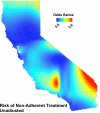
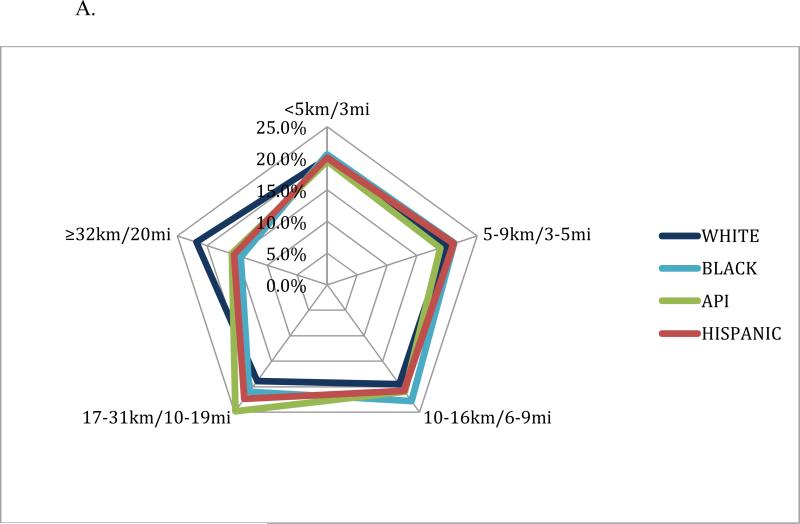
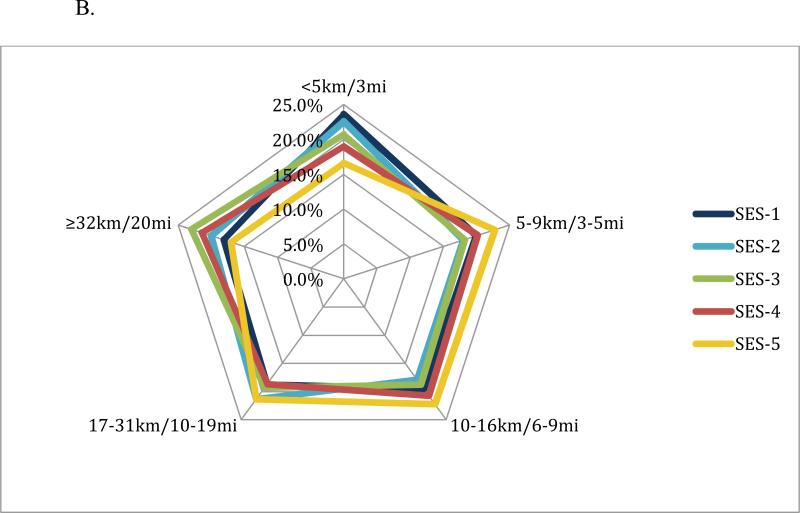
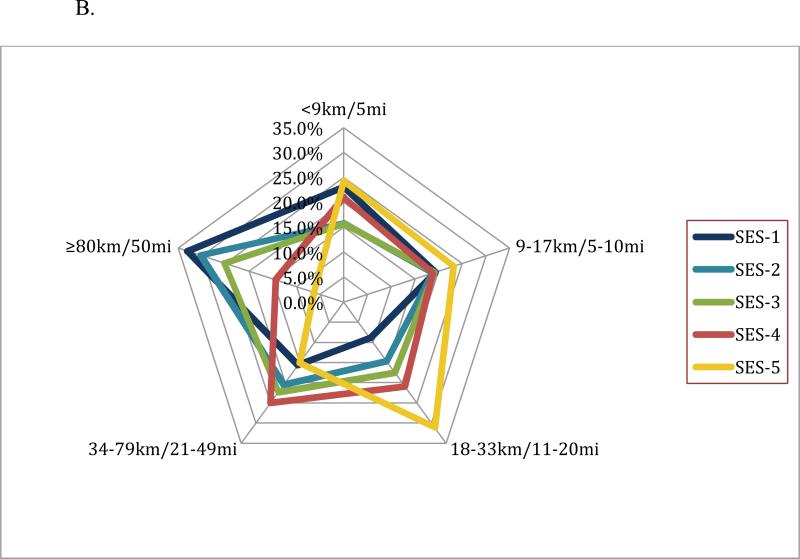
Of the 11,770 patients identified, 45.4% were treated according to NCCN guidelines. Black race (OR=1.49, 95%CI=1.21-1.83), low-SES (OR=1.46, 95%CI=1.24-1.72), and geographic location ≥80km/50mi from a high-volume hospital (OR=1.88, 95%CI=1.61-2.19) were independently associated with an increased risk of non-adherent care, while high-volume hospital treatment (OR=0.59, 95%CI=0.53-0.66) and travel distance to receive care ≥32km/20mi (OR=0.80, 95%CI=0.69-0.92) were independently protective. SES was inversely associated with location ≥80km/50mi from a high-volume hospital, ranging from 6.3% (high-SES) to 33.0% (low-SES) (p<0.0001). White patients were significantly more likely to travel ≥32km/20mi to receive care (21.8%) compared to Blacks (14.4%), Hispanics (15.9%), and Asian/Pacific Islanders (15.5%) (p<0.0001).
CONCLUSION
Geographic proximity to a high-volume hospital and travel distance to receive treatment are independently associated with NCCN guideline adherent care for advanced-stage ovarian cancer. Geographic barriers to standard ovarian cancer treatment disproportionately affect racial minorities and women of low-SES. -
Keywords:
-
Source:Gynecol Oncol. 134(1):60-67
-
Pubmed ID:24680770
-
Pubmed Central ID:PMC4095874
-
Document Type:
-
Funding:
-
Volume:134
-
Issue:1
-
Download URL:
-
File Type:
 [PDF - 1.58 MB]
 -
Collection(s):
-
Main Document Checksum:urn:sha256:cfc1bb6c546612d480a0f2a540cfc1474534bf6d378af38461b9406bc158dc0f
Supporting Files


File Language:
English
 Was this page helpful?
 Found an issue?






CDC STACKS serves as an archival repository of CDC-published products including
scientific findings, journal articles, guidelines, recommendations, or other public health information authored or
co-authored by CDC or funded partners.
As a repository, CDC STACKS retains documents in their original published format to ensure public access to scientific information.
As a repository, CDC STACKS retains documents in their original published format to ensure public access to scientific information.
You May Also Like
COLLECTION
CDC Public Access