


Risk factors associated with fatal influenza, Romania, October 2009 – May 2011
Supporting Files
Public Domain

-
Nov 20 2013
-
File Language:
English
Details
-
Alternative Title:Influenza Other Respir Viruses
-
Personal Author:
-
Description:Background
Limited data are available from Central and Eastern Europe on risk factors for severe complications of influenza. Such data are essential to prioritize prevention and treatment resources and to adapt influenza vaccination recommendations.
Objectives
To use sentinel surveillance data to identify risk factors for fatal outcomes among hospitalized patients with severe acute respiratory infections (SARI) and among hospitalized patients with laboratory-confirmed influenza.
Methods
Retrospective analysis of case-based surveillance data collected from sentinel hospitals in Romania during the 2009/2010 and 2010/2011 winter influenza seasons was performed to evaluate risk factors for fatal outcomes using multivariate logistic regression.
Results
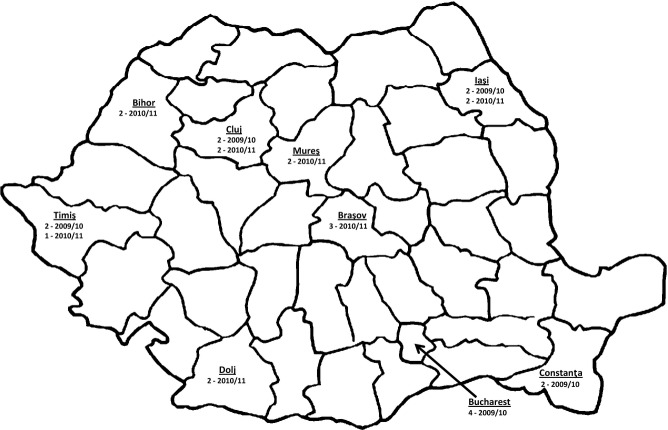
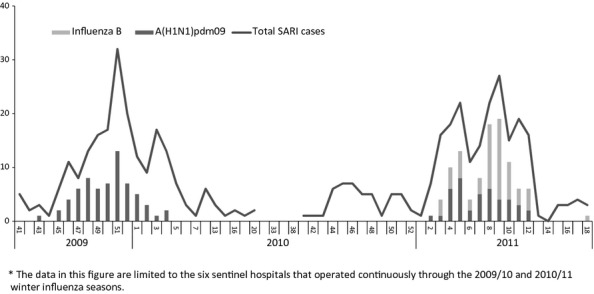
During 2009/2010 and 2010/2011, sentinel hospitals reported 661 SARI patients of which 230 (35%) tested positive for influenza. In the multivariate analyses, infection with influenza A(H1N1)pdm09 was the strongest risk factor for death among hospitalized SARI patients (OR: 6·6; 95% CI: 3·3–13·1). Among patients positive for influenza A(H1N1)pdm09 virus infection (n = 148), being pregnant (OR: 7·1; 95% CI: 1·6–31·2), clinically obese (OR: 2·9;95% CI: 1·6–31·2), and having an immunocompromising condition (OR: 3·7;95% CI: 1·1–13·4) were significantly associated with fatal outcomes.
Conclusion
These findings are consistent with several other investigations of risk factors associated with influenza A(H1N1)pdm09 virus infections. They also support the more recent 2012 recommendations by the WHO Strategic Advisory Group of Experts on Immunization (SAGE) that pregnant women are an important risk group for influenza vaccination. Ongoing sentinel surveillance can be useful tool to monitor risk factors for complications of influenza virus infections during each influenza season, and pandemics as well.
-
Subjects:
-
Source:Influenza Other Respir Viruses. 2013; 8(1):8-12.
-
Document Type:
-
Volume:8
-
Issue:1
-
Collection(s):
-
Main Document Checksum:urn:sha256:3792b7786564eb4f5b53e1940abb78932edad1fbb14eb54b8945926ffdad34cd
-
Download URL:
-
File Type:
 [PDF
- 254.99 KB
]
[PDF
- 254.99 KB
]
Supporting Files


File Language:
English
ON THIS PAGE



CDC STACKS serves as an archival repository of CDC-published products including
scientific findings,
journal articles, guidelines, recommendations, or other public health information authored or
co-authored by CDC or funded partners.
As a repository, CDC STACKS retains documents in their original published format to ensure public access to scientific information.
As a repository, CDC STACKS retains documents in their original published format to ensure public access to scientific information.
You May Also Like
COLLECTION
CDC Public Access