


Cross-sectional study of HPV-16 infection in a population-based subsample of Hispanic adults
Supporting Files
Public Domain

-
Feb 04 2014
-
Details
-
Alternative Title:BMJ Open
-
Personal Author:
-
Description:Objective
This study aimed to estimate the prevalence and correlates of seropositivity to human papillomavirus (HPV)-16 in a subsample of adults who participated in the parent study Epidemiology of Hepatitis C in the adult population of Puerto Rico (PR).
Setting
The parent study was a population-based household survey aimed to estimate the seroprevalence of hepatitis C and other viral infections (hepatitis A, hepatitis B, HIV, and herpes simplex type 2) in PR (n=1654) between 2005 and 2008.
Participants
A subsample of the last 450 consecutive adults aged 21–64 years, recruited between February 2007 and January 2008, who participated in the parent study and agreed to participate in HPV testing.
Primary and secondary outcome measures
The samples were tested by ELISA for HPV-16 viral-like particle-specific immunoglobulin G. Information on sociodemographic, health, and lifestyle characteristics was collected. Logistic regression modelling was used to estimate the prevalence odds ratio (POR) to assess factors associated to HPV-16 seropositivity.
Results
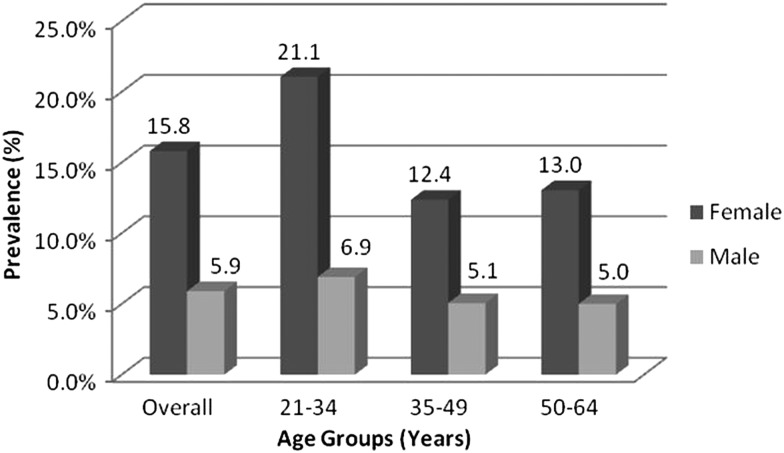
Prevalence of seropositivity to HPV-16 was 11.3%. Seroprevalence was higher in women (15.8%) than men (5.6%; p=0.001). After adjusting for age and sex, ever smokers (POR 2.06, 95% CI 1.08 to 3.92) and participants with at least five lifetime sexual partners (POR 2.91, 95% CI 1.24 to 6.81) were more likely to be HPV-16 seropositive.
Conclusions
HPV-16 seropositivity is similar to that reported in the USA (10.4%) for NHANES 2003–2004 participants, although different assays were used in these studies. While future studies should evaluate HPV seroprevalence using a larger population-based sample, our results highlight the need to further understand the burden of HPV infection and HPV-related malignancies in PR, population with a low vaccine uptake.
-
Subjects:
-
Source:BMJ Open. 2014; 4(2).
-
Document Type:
-
Volume:4
-
Issue:2
-
Collection(s):
-
Main Document Checksum:urn:sha256:f4e77f1f0f1ead8d4095d2c082f2bbb4f8865c3140188a350f961b53cc8f6a05
-
Download URL:
-
File Type:
 [PDF
- 617.95 KB
]
[PDF
- 617.95 KB
]
Supporting Files


ON THIS PAGE


CDC STACKS serves as an archival repository of CDC-published products including
scientific findings,
journal articles, guidelines, recommendations, or other public health information authored or
co-authored by CDC or funded partners.
As a repository, CDC STACKS retains documents in their original published format to ensure public access to scientific information.
As a repository, CDC STACKS retains documents in their original published format to ensure public access to scientific information.
You May Also Like
COLLECTION
CDC Public Access