


Development of a Prototype Lateral Flow Immunoassay (LFI) for the Rapid Diagnosis of Melioidosis
Supporting Files

-
Mar 20 2014
-
File Language:
English
Details
-
Alternative Title:PLoS Negl Trop Dis
-
Personal Author:Houghton, Raymond L. ; Reed, Dana E. ; Hubbard, Mark A. ; Dillon, Michael J. ; Chen, Hongjing ; Currie, Bart J. ; Mayo, Mark ; Sarovich, Derek S. ; Theobald, Vanessa ; Limmathurotsakul, Direk ; Wongsuvan, Gumphol ; Chantratita, Narisara ; Peacock, Sharon J. ; Hoffmaster, Alex R. ; Duval, Brea ; Brett, Paul J. ; Burtnick, Mary N. ; AuCoin, David P.
-
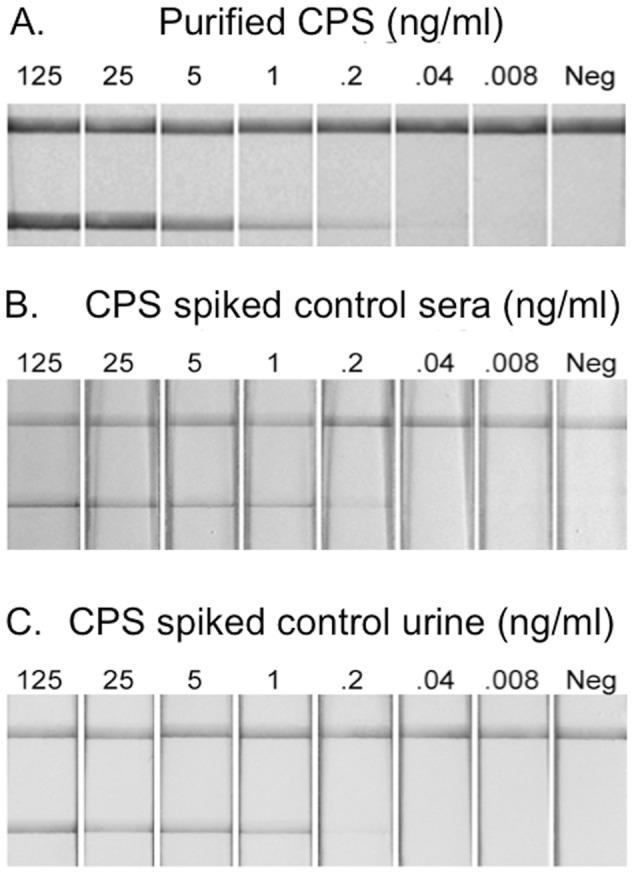
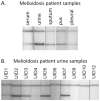
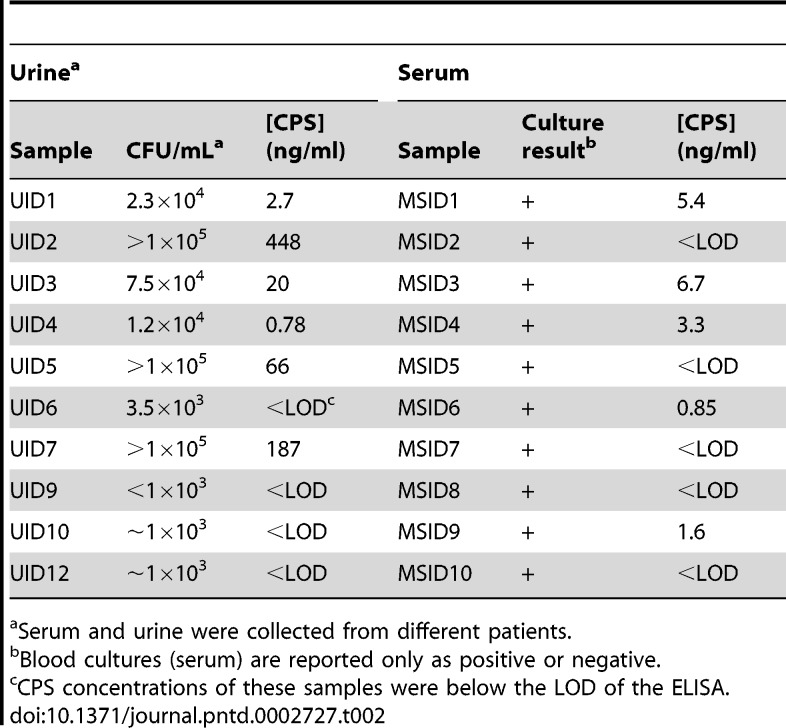
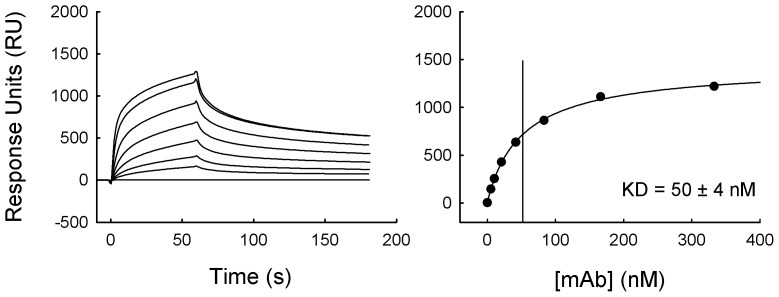
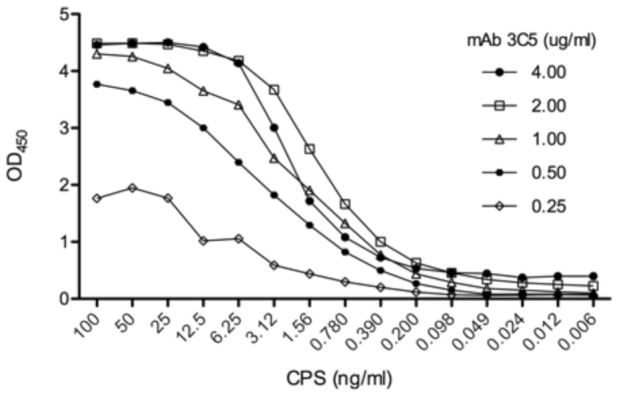
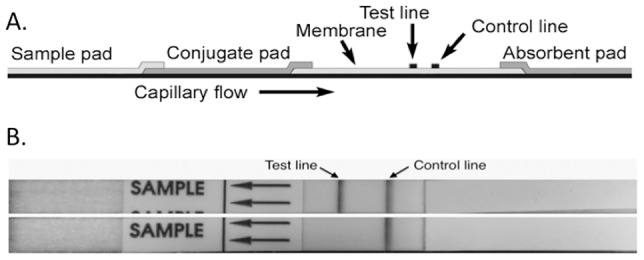
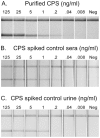
Description:Burkholderia pseudomallei is a soil-dwelling bacterium and the causative agent of melioidosis. Isolation of B. pseudomallei from clinical samples is the "gold standard" for the diagnosis of melioidosis; results can take 3-7 days to produce. Alternatively, antibody-based tests have low specificity due to a high percentage of seropositive individuals in endemic areas. There is a clear need to develop a rapid point-of-care antigen detection assay for the diagnosis of melioidosis. Previously, we employed In vivo Microbial Antigen Discovery (InMAD) to identify potential B. pseudomallei diagnostic biomarkers. The B. pseudomallei capsular polysaccharide (CPS) and numerous protein antigens were identified as potential candidates. Here, we describe the development of a diagnostic immunoassay based on the detection of CPS. Following production of a CPS-specific monoclonal antibody (mAb), an antigen-capture immunoassay was developed to determine the concentration of CPS within a panel of melioidosis patient serum and urine samples. The same mAb was used to produce a prototype Active Melioidosis Detect Lateral Flow Immunoassay (AMD LFI); the limit of detection of the LFI for CPS is comparable to the antigen-capture immunoassay (∼0.2 ng/ml). The analytical reactivity (inclusivity) of the AMD LFI was 98.7% (76/77) when tested against a large panel of B. pseudomallei isolates. Analytical specificity (cross-reactivity) testing determined that 97.2% of B. pseudomallei near neighbor species (35/36) were not reactive. The non-reactive B. pseudomallei strain and the reactive near neighbor strain can be explained through genetic sequence analysis. Importantly, we show the AMD LFI is capable of detecting CPS in a variety of patient samples. The LFI is currently being evaluated in Thailand and Australia; the focus is to optimize and validate testing procedures on melioidosis patient samples prior to initiation of a large, multisite pre-clinical evaluation.
-
Subjects:
-
Source:PLoS Negl Trop Dis. 2014; 8(3).
-
Document Type:
-
Funding:
-
Place as Subject:
-
Volume:8
-
Issue:3
-
Collection(s):
-
Main Document Checksum:urn:sha256:e74c30111d721ef75ad594a3901364435bb320d5200ef5c8ea33839669c3f26c
-
Download URL:
-
File Type:
 [PDF
- 944.84 KB
]
[PDF
- 944.84 KB
]
Supporting Files


File Language:
English
ON THIS PAGE



CDC STACKS serves as an archival repository of CDC-published products including
scientific findings,
journal articles, guidelines, recommendations, or other public health information authored or
co-authored by CDC or funded partners.
As a repository, CDC STACKS retains documents in their original published format to ensure public access to scientific information.
As a repository, CDC STACKS retains documents in their original published format to ensure public access to scientific information.
You May Also Like
COLLECTION
CDC Public Access