


Influenza Epidemiology and Vaccine Effectiveness among Patients with Influenza-Like Illness, Viral Watch Sentinel Sites, South Africa, 2005–2009
Supporting Files
Public Domain

-
Apr 15 2014
-
File Language:
English
Details
-
Alternative Title:PLoS One
-
Personal Author:
-
Description:Background
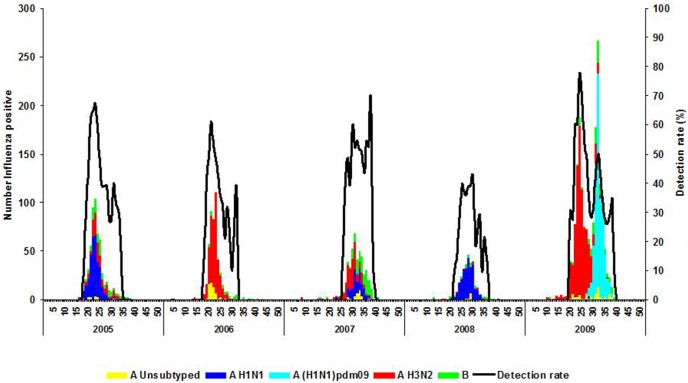
There is limited data on the epidemiology of influenza and few published estimates of influenza vaccine effectiveness (VE) from Africa. In April 2009, a new influenza virus strain infecting humans was identified and rapidly spread globally. We compared the characteristics of patients ill with influenza A(H1N1)pdm09 virus to those ill with seasonal influenza and estimated influenza vaccine effectiveness during five influenza seasons (2005–2009) in South Africa.
Methods
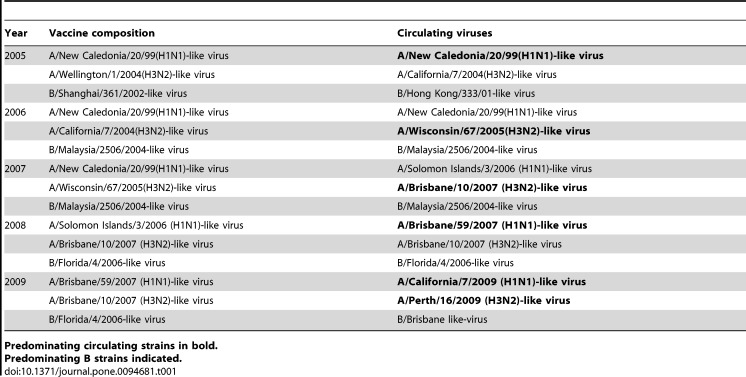
Epidemiological data and throat and/or nasal swabs were collected from patients with influenza-like illness (ILI) at sentinel sites. Samples were tested for seasonal influenza viruses using culture, haemagglutination inhibition tests and/or polymerase chain reaction (PCR) and for influenza A(H1N1)pdm09 by real-time PCR. For the vaccine effectiveness (VE) analysis we considered patients testing positive for influenza A and/or B as cases and those testing negative for influenza as controls. Age-adjusted VE was calculated as 1-odds ratio for influenza in vaccinated and non-vaccinated individuals.
Results
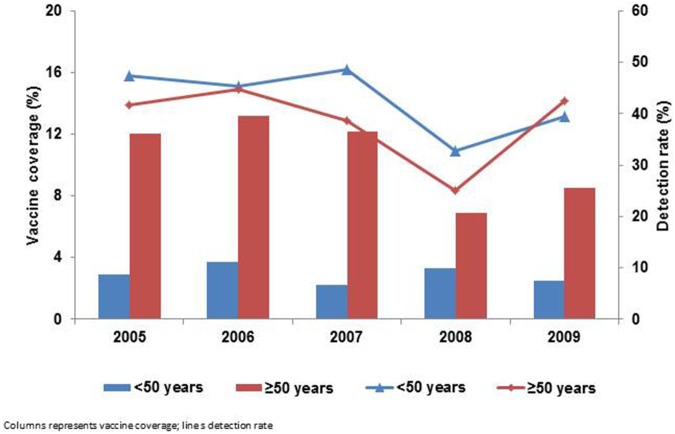
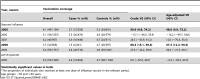
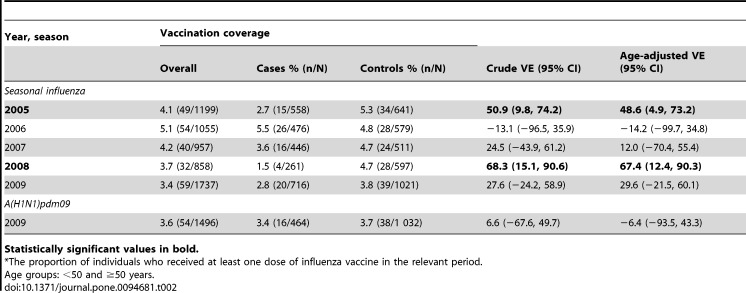
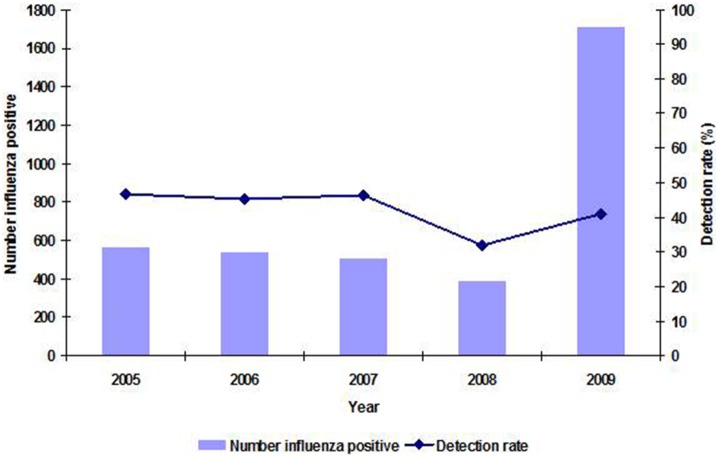
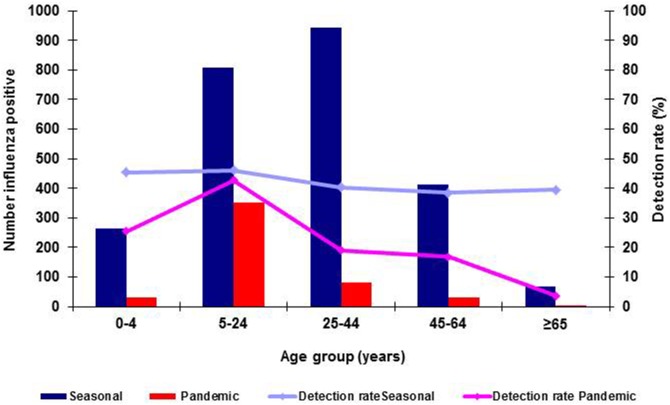
From 2005 through 2009 we identified 3,717 influenza case-patients. The median age was significantly lower among patients infected with influenza A(H1N1)pdm09 virus than those with seasonal influenza, 17 and 27 years respectively (p<0.001). The vaccine coverage during the influenza season ranged from 3.4% in 2009 to 5.1% in 2006 and was higher in the ≥50 years (range 6.9% in 2008 to 13.2% in 2006) than in the <50 years age group (range 2.2% in 2007 to 3.7% in 2006). The age-adjusted VE estimates for seasonal influenza were 48.6% (4.9%, 73.2%); −14.2% (−9.7%, 34.8%); 12.0% (−70.4%, 55.4%); 67.4% (12.4%, 90.3%) and 29.6% (−21.5%, 60.1%) from 2005 to 2009 respectively. For the A(H1N1)pdm09 season, the efficacy of seasonal vaccine was −6.4% (−93.5%, 43.3%).
Conclusion
Influenza vaccine demonstrated a significant protective effect in two of the five years evaluated. Low vaccine coverage may have reduced power to estimate vaccine effectiveness.
-
Subjects:
-
Source:PLoS One. 2014; 9(4).
-
Document Type:
-
Place as Subject:
-
Volume:9
-
Issue:4
-
Collection(s):
-
Main Document Checksum:urn:sha256:04138a186f71284a9620db5f3828fe4cb05a147557310e5309f9f2eb7aa4f40c
-
Download URL:
-
File Type:
 [PDF
- 519.99 KB
]
[PDF
- 519.99 KB
]
Supporting Files


File Language:
English
ON THIS PAGE





CDC STACKS serves as an archival repository of CDC-published products including
scientific findings,
journal articles, guidelines, recommendations, or other public health information authored or
co-authored by CDC or funded partners.
As a repository, CDC STACKS retains documents in their original published format to ensure public access to scientific information.
As a repository, CDC STACKS retains documents in their original published format to ensure public access to scientific information.
You May Also Like
COLLECTION
CDC Public Access