


Beneficial Effect of Isoniazid Preventive Therapy and Antiretroviral Therapy on the Incidence of Tuberculosis in People Living with HIV in Ethiopia
Supporting Files

-
Aug 08 2014
-
File Language:
English
Details
-
Alternative Title:PLoS One
-
Personal Author:
-
Description:Background
IPT with or without concomitant administration of ART is a proven intervention to prevent tuberculosis among PLHIV. However, there are few data on the routine implementation of this intervention and its effectiveness in settings with limited resources.
Objectives
To measure the level of uptake and effectiveness of IPT in reducing tuberculosis incidence in a cohort of PLHIV enrolled into HIV care between 2007 and 2010 in five hospitals in southern Ethiopia.
Methods
A retrospective cohort analysis of electronic patient database was done. The independent effects of no intervention, “IPT-only,” “IPT-before-ART,” “IPT-and-ART started simultaneously,” “ART-only,” and “IPT-after-ART” on TB incidence were measured. Cox-proportional hazards regression was used to assess association of treatment categories with TB incidence.
Results
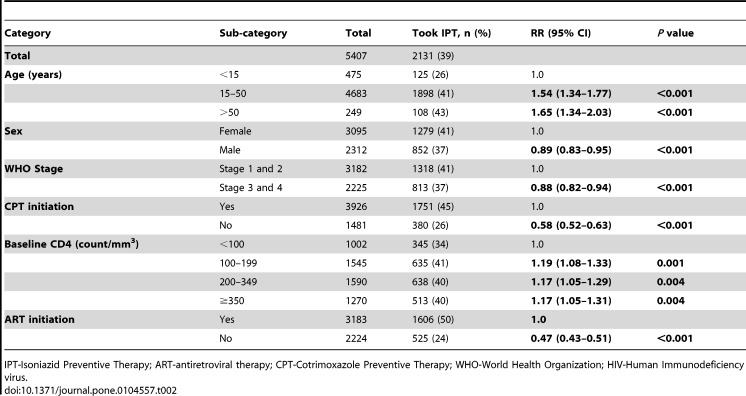
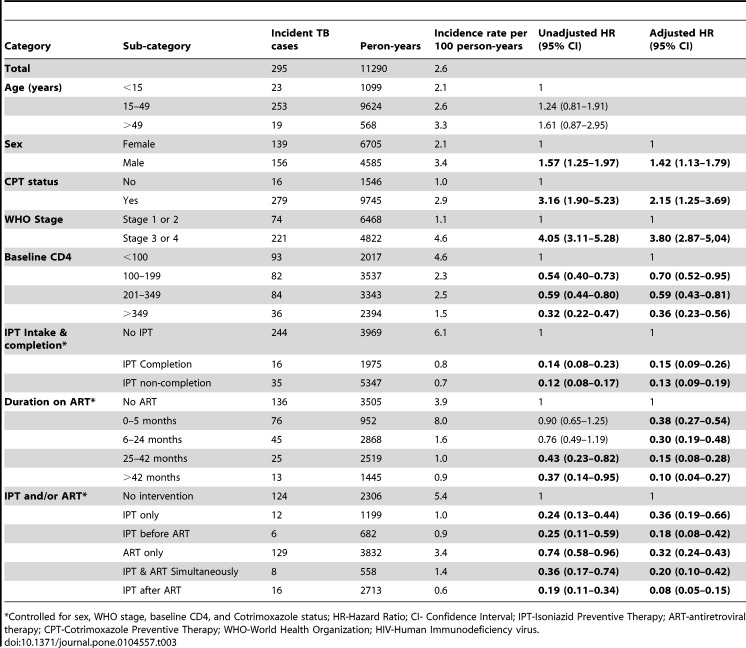
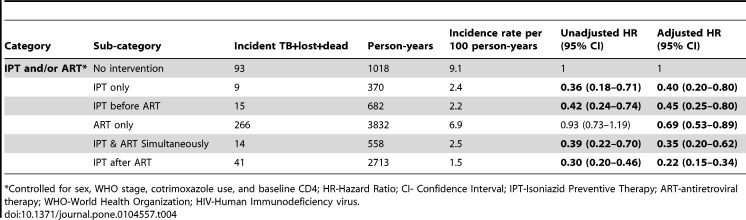
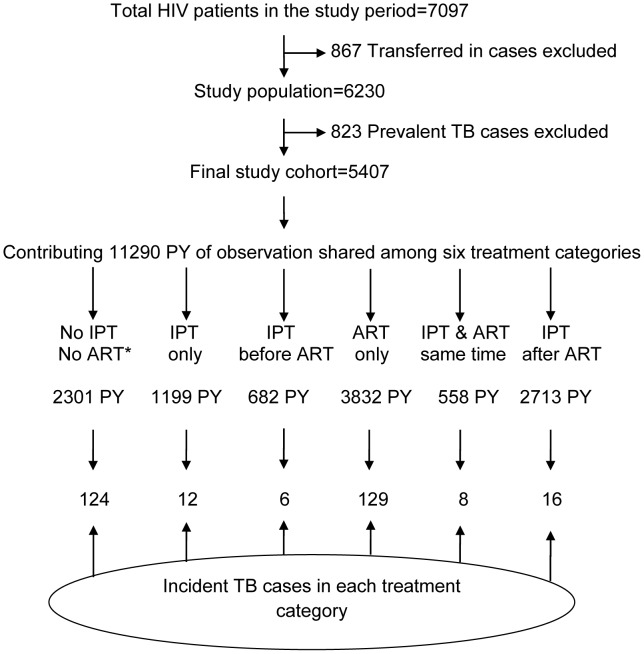
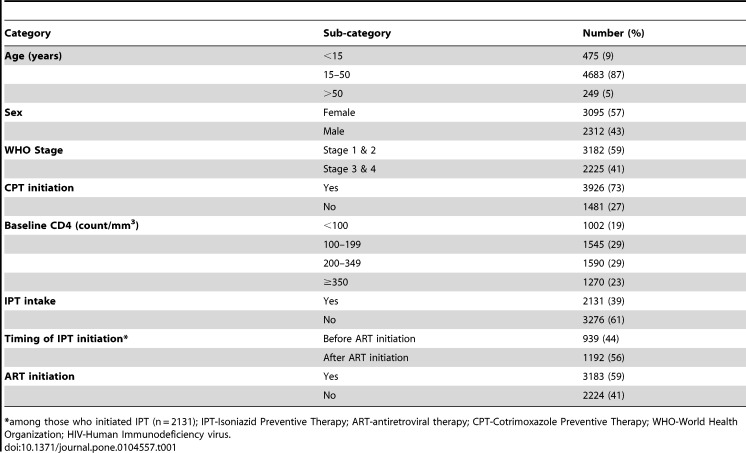
Of 7,097 patients, 867 were excluded because they were transferred-in; a further 823 (12%) were excluded from the study because they were either identified to have TB through screening (292 patients) or were on TB treatment (531). Among the remaining 5,407 patients observed, IPT had been initiated for 39% of eligible patients. Children, male sex, advanced disease, and those in Pre-ART were less likely to be initiated on IPT. The overall TB incidence was 2.6 per 100 person-years. As compared to those with no intervention, use of “IPT-only” (aHR = 0.36, 95% CI = 0.19–0.66) and “ART-only” (aHR = 0.32, 95% CI = 0.24–0.43) were associated with significant reduction in TB incidence rate. Combining ART and IPT had a more profound effect. Starting IPT-before-ART (aHR = 0.18, 95% CI = 0.08–0.42) or simultaneously with ART (aHR = 0.20, 95% CI = 0.10–0.42) provided further reduction of TB at ∼80%.
Conclusions
IPT was found to be effective in reducing TB incidence, independently and with concomitant ART, under programme conditions in resource-limited settings. The level of IPT provision and effectiveness in reducing TB was encouraging in the study setting. Scaling up and strengthening IPT service in addition to ART can have beneficial effect in reducing TB burden among PLHIV in settings with high TB/HIV burden.
-
Subjects:
-
Source:PLoS One. 2014; 9(8).
-
DOI:
-
Pubmed ID:25105417
-
Pubmed Central ID:PMC4126726
-
Document Type:
-
Funding:
-
Name as Subject:
-
Place as Subject:
-
Volume:9
-
Issue:8
-
Collection(s):
-
Main Document Checksum:urn:sha-512:2b3cde4be2338b8da214a457c649e809b6ae1a501f438807fcc32b62541aaf2f1a332e8b9527ab161db9244e53db9930eae3bf15521d505e467b1ba4469ed481
-
Download URL:
-
File Type:
 [PDF
- 255.21 KB
]
[PDF
- 255.21 KB
]
Supporting Files


File Language:
English
ON THIS PAGE


CDC STACKS serves as an archival repository of CDC-published products including
scientific findings,
journal articles, guidelines, recommendations, or other public health information authored or
co-authored by CDC or funded partners.
As a repository, CDC STACKS retains documents in their original published format to ensure public access to scientific information.
As a repository, CDC STACKS retains documents in their original published format to ensure public access to scientific information.
You May Also Like
COLLECTION
CDC Public Access