


Molecular Xenomonitoring Using Mosquitoes to Map Lymphatic Filariasis after Mass Drug Administration in American Samoa
Supporting Files
Public Domain

-
Aug 14 2014
-
Details
-
Alternative Title:PLoS Negl Trop Dis
-
Personal Author:
-
Description:Background
Mass drug administration (MDA) programs have dramatically reduced lymphatic filariasis (LF) incidence in many areas around the globe, including American Samoa. As infection rates decline and MDA programs end, efficient and sensitive methods for detecting infections are needed to monitor for recrudescence. Molecular methods, collectively termed ‘molecular xenomonitoring,’ can identify parasite DNA or RNA in human blood-feeding mosquitoes. We tested mosquitoes trapped throughout the inhabited islands of American Samoa to identify areas of possible continuing LF transmission after completion of MDA.
Methodology/Principle Findings
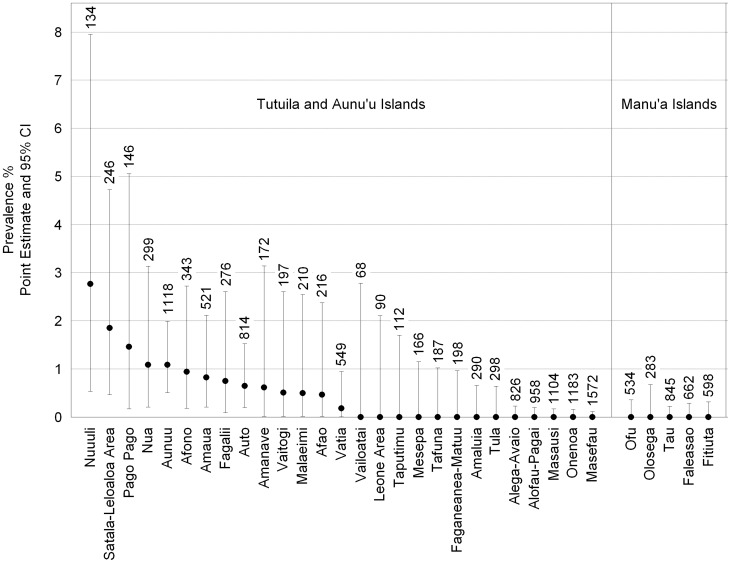
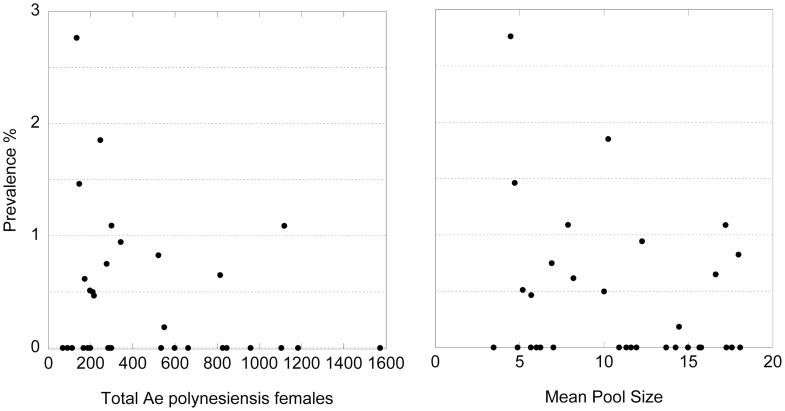
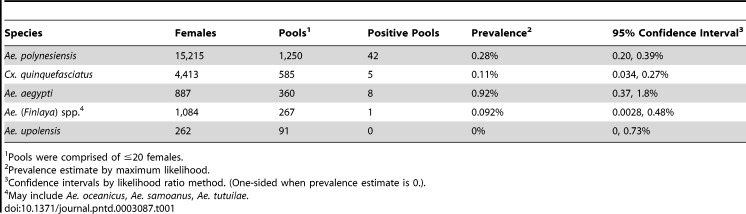
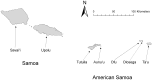
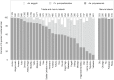
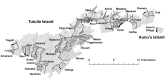
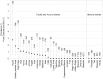
Mosquitoes were collected using BG Sentinel traps from most of the villages on American Samoa's largest island, Tutuila, and all major villages on the smaller islands of Aunu'u, Ofu, Olosega, and Ta'u. Real-time PCR was used to detect Wuchereria bancrofti DNA in pools of ≤20 mosquitoes, and PoolScreen software was used to infer territory-wide prevalences of W. bancrofti DNA in the mosquitoes. Wuchereria bancrofti DNA was found in mosquitoes from 16 out of the 27 village areas sampled on Tutuila and Aunu'u islands but none of the five villages on the Manu'a islands of Ofu, Olosega, and Ta'u. The overall 95% confidence interval estimate for W. bancrofti DNA prevalence in the LF vector Ae. polynesiensis was 0.20–0.39%, and parasite DNA was also detected in pools of Culex quinquefasciatus, Aedes aegypti, and Aedes (Finlaya) spp.
Conclusions/Significance
Our results suggest low but widespread prevalence of LF on Tutuila and Aunu'u where 98% of the population resides, but not Ofu, Olosega, and Ta'u islands. Molecular xenomonitoring can help identify areas of possible LF transmission, but its use in the LF elimination program in American Samoa is limited by the need for more efficient mosquito collection methods and a better understanding of the relationship between prevalence of W. bancrofti DNA in mosquitoes and infection and transmission rates in humans.
-
Subjects:
-
Source:PLoS Negl Trop Dis. 2014; 8(8).
-
Pubmed ID:25122037
-
Pubmed Central ID:PMC4133231
-
Document Type:
-
Volume:8
-
Issue:8
-
Collection(s):
-
Main Document Checksum:urn:sha256:18e61abe050982b84a2e7fe33d143e57c1ea4174d071625cae6e2446fe31222c
-
Download URL:
-
File Type:
 [PDF
- 1.07 MB
]
[PDF
- 1.07 MB
]
Supporting Files


ON THIS PAGE





CDC STACKS serves as an archival repository of CDC-published products including
scientific findings,
journal articles, guidelines, recommendations, or other public health information authored or
co-authored by CDC or funded partners.
As a repository, CDC STACKS retains documents in their original published format to ensure public access to scientific information.
As a repository, CDC STACKS retains documents in their original published format to ensure public access to scientific information.
You May Also Like
COLLECTION
CDC Public Access