



Volitional Weight-Lifting in Rats Promotes Adaptation via Performance and Muscle Morphology prior to Gains in Muscle Mass
Supporting Files
Public Domain

-
Oct 13 2014
-
Details
-
Alternative Title:Environ Health Insights
-
Personal Author:
-
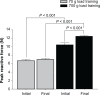
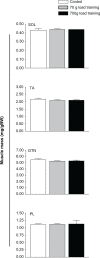
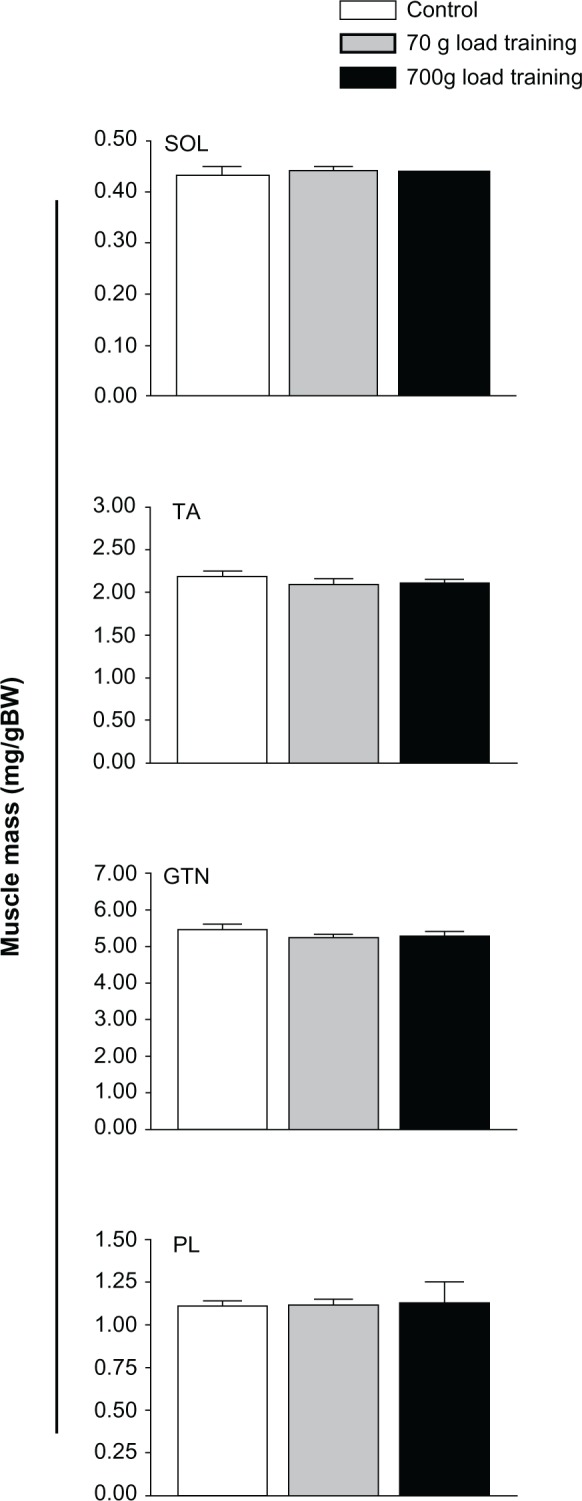
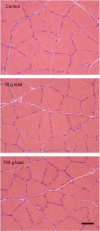
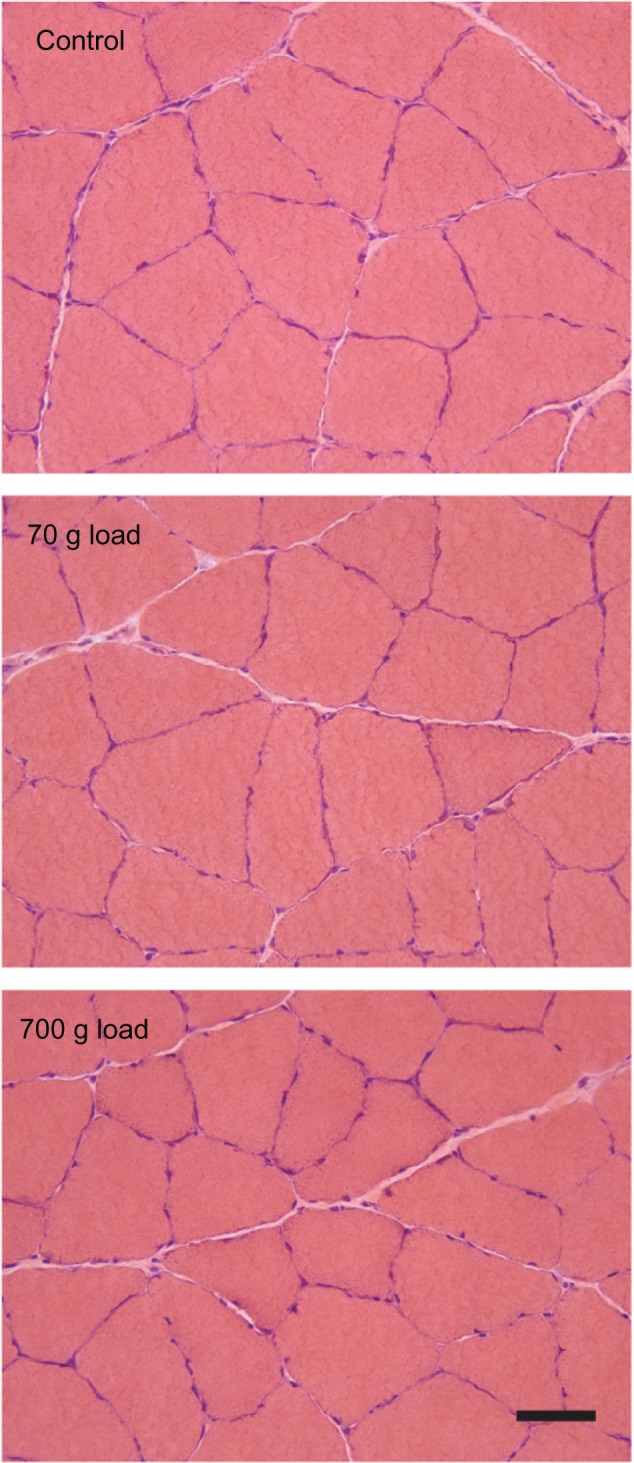
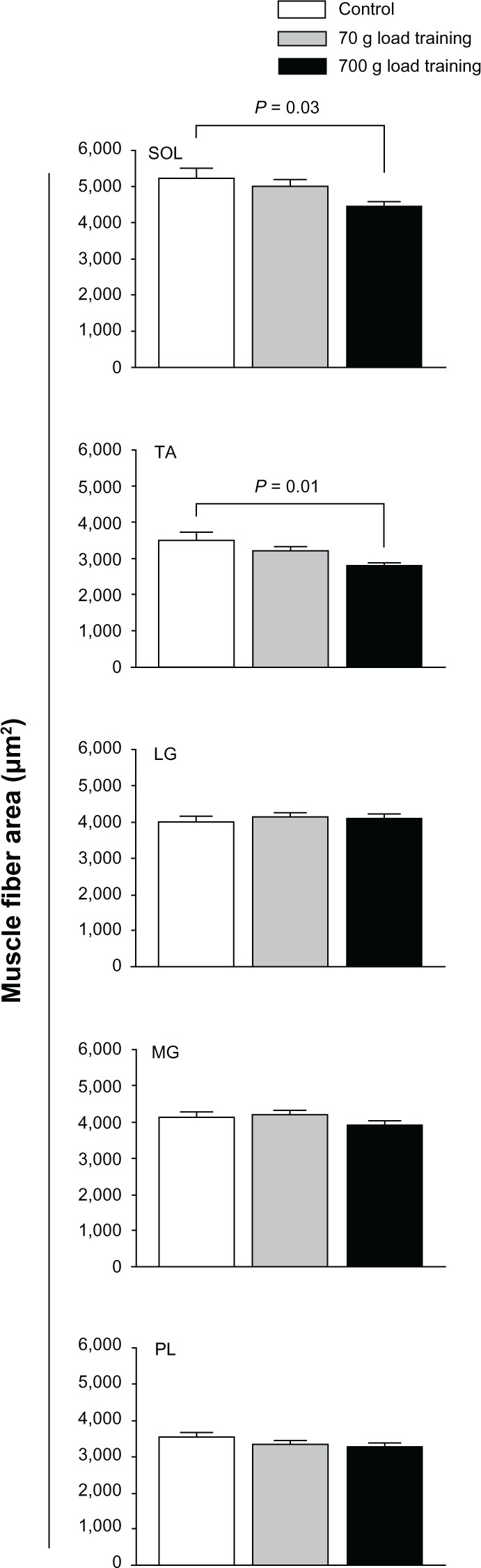
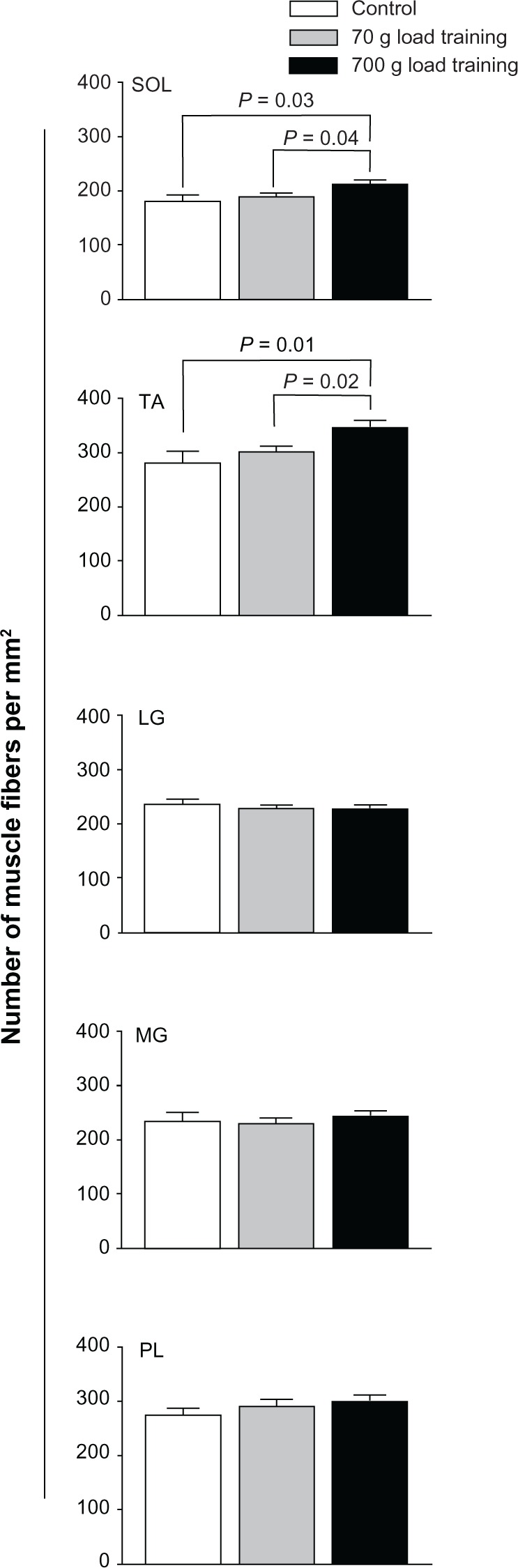
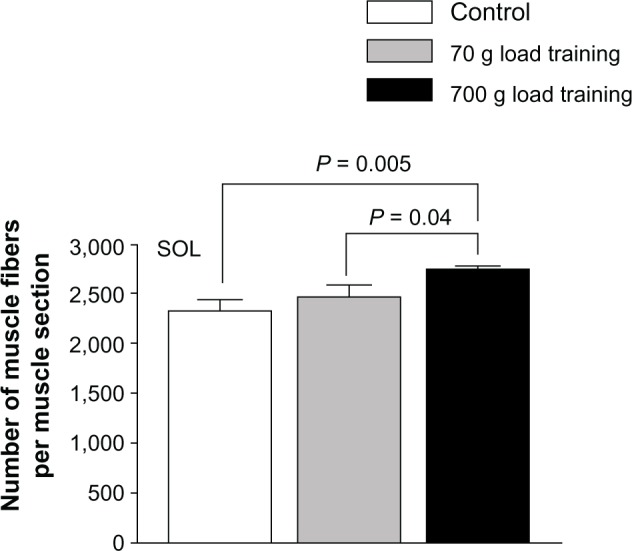
Description:Investigation of volitional animal models of resistance training has been instrumental in our understanding of adaptive training. However, these studies have lacked reactive force measurements, a precise performance measure, and morphological analysis at a distinct phase of training - when initial strength gains precede muscle hypertrophy. Our aim was to expose rats to one month of training (70 or 700 g load) on a custom-designed weight-lifting apparatus for analysis of reactive forces and muscle morphology prior to muscle hypertrophy. Exclusively following 700 g load training, forces increased by 21% whereas muscle masses remained unaltered. For soleus (SOL) and tibialis anterior (TA) muscles, 700 g load training increased muscle fiber number per unit area by ∼20% and decreased muscle fiber area by ∼20%. Additionally, number of muscle fibers per section increased by 18% for SOL muscles. These results establish that distinct morphological alterations accompany early strength gains in a volitional animal model of load-dependent adaptive resistance training.
-
Subjects:
-
Source:Environ Health Insights. 2014; 8(Suppl 1):1-9.
-
Document Type:
-
Volume:8
-
Collection(s):
-
Main Document Checksum:urn:sha256:ff4982b045955fae7255293c6145d2ea8da6ae5c023a0b9a55393b64eca92e03
-
Download URL:
-
File Type:
 [PDF
- 1.71 MB
]
[PDF
- 1.71 MB
]
Supporting Files


 Was this page helpful?
 Found an issue?


CDC STACKS serves as an archival repository of CDC-published products including
scientific findings,
journal articles, guidelines, recommendations, or other public health information authored or
co-authored by CDC or funded partners.
As a repository, CDC STACKS retains documents in their original published format to ensure public access to scientific information.
As a repository, CDC STACKS retains documents in their original published format to ensure public access to scientific information.
You May Also Like
COLLECTION
CDC Public Access