



Awareness of HIV Status, Prevention Knowledge and Condom Use among People Living with HIV in Mozambique
Supporting Files

-
Sep 15 2014
File Language:
English
Details
-
Alternative Title:PLoS One
-
Personal Author:
-
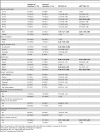
Description:Objective ; To determine factors associated with HIV status unawareness and assess HIV prevention knowledge and condom use among people living with HIV/AIDS (PLHIV) in Mozambique. ; Design ; Cross-sectional household-based nationally representative AIDS Indicator Survey. ; Methods ; Analyses focused on HIV-infected adults and were weighted for the complex sampling design. We identified PLHIV who had never been tested for HIV or received their test results prior to this survey. Logistic regression was used to assess factors associated with HIV status unawareness. ; Results ; Of persons with positive HIV test results (N = 1182), 61% (95% confidence interval CI 57–65%) were unaware of their serostatus. Men had twice the odds of being unaware of their serostatus compared with women adjusted odds ratio (aOR) 2.05, CI 1.40–2.98. PLHIV in the poorest wealth quintile were most likely to be unaware of their serostatus (aOR 3.15, CI 1.09–9.12) compared to those in the middle wealth quintile. Most PLHIV (83%, CI 79–87%) reported not using a condom during their last sexual intercourse, and PLHIV who reported not using a condom during their last sexual intercourse were more likely to be unaware of their serostatus (aOR 2.32, CI 1.57–3.43) than those who used a condom. ; Conclusions ; Knowledge of HIV-positive status is associated with more frequent condom use in Mozambique. However, most HIV-infected persons are unaware of their serostatus, with men and persons in the poorest wealth quintile being more likely to be unaware. These findings support calls for expanded HIV testing, especially among groups less likely to be aware of their HIV status and key populations at higher risk for infection.
-
Subjects:
-
Source:PLoS One. 2014; 9(9).
-
DOI:
-
Pubmed ID:25222010
-
Pubmed Central ID:PMC4164358
-
Document Type:
-
Funding:
-
Corporate as Subject:
-
Place as Subject:
-
Volume:9
-
Issue:9
-
Download URL:
-
File Type:
 [PDF - 186.31 KB]
 -
Collection(s):
-
Main Document Checksum:urn:sha-512:b15b5a70cf29ca9295a35c4df3ed21e40fdf7d4b4b53996cc64a68e25797fc160d8755a423053017cc9167fa9351305723ff38d3e0a48256922504ce5c7b5fb4
Supporting Files


File Language:
English
 Was this page helpful?
 Found an issue?


CDC STACKS serves as an archival repository of CDC-published products including
scientific findings, journal articles, guidelines, recommendations, or other public health information authored or
co-authored by CDC or funded partners.
As a repository, CDC STACKS retains documents in their original published format to ensure public access to scientific information.
As a repository, CDC STACKS retains documents in their original published format to ensure public access to scientific information.
You May Also Like
COLLECTION
CDC Public Access