



Leptospirosis-Associated Hospitalizations, United States, 1998–2009
Supporting Files
Public Domain

-
Aug 2014
File Language:
English
Details
-
Alternative Title:Emerg Infect Dis
-
Personal Author:
-
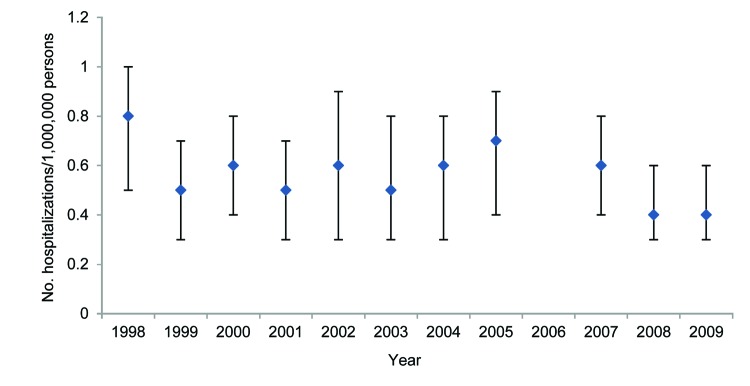
Description:A small percentage of persons with leptospirosis, a reemerging zoonosis, experience severe complications that require hospitalization. The number of leptospirosis cases in the United States is unknown. Thus, to estimate the hospitalization rate for this disease, we analyzed US hospital discharge records for 1998-2009 for the total US population by using the Nationwide Inpatient Sample. During that time, the average annual rate of leptospirosis-associated hospitalizations was 0.6 hospitalizations/1,000,000 population. Leptospirosis-associated hospitalization rates were higher for persons >20 years of age and for male patients. For leptospirosis-associated hospitalizations, the average age of patients at admission was lower, the average length of stay for patients was longer, and hospital charges were higher than those for nonleptospirosis infectious disease-associated hospitalizations. Educating clinicians on the signs and symptoms of leptospirosis may result in earlier diagnosis and treatment and, thereby, reduced disease severity and hospitalization costs.
-
Subjects:
-
Source:Emerg Infect Dis. 20(8):1273-1279.
-
Document Type:
-
Genre:
-
Place as Subject:
-
Volume:20
-
Issue:8
-
Download URL:
-
File Type:
 [PDF - 393.73 KB]
 -
Collection(s):
-
Main Document Checksum:urn:sha256:ea5d81ab04347effb76e6b9c417ba863954abb5a3861d35cbcfdc4e387a22e46
Supporting Files


File Language:
English
 Was this page helpful?
 Found an issue?



CDC STACKS serves as an archival repository of CDC-published products including
scientific findings, journal articles, guidelines, recommendations, or other public health information authored or
co-authored by CDC or funded partners.
As a repository, CDC STACKS retains documents in their original published format to ensure public access to scientific information.
As a repository, CDC STACKS retains documents in their original published format to ensure public access to scientific information.
You May Also Like
COLLECTION
Emerging Infectious Diseases