


The risk of misclassifying subjects within principal component based asset index
Supporting Files
Public Domain

-
Jun 18 2014
-
Details
-
Alternative Title:Emerg Themes Epidemiol
-
Personal Author:
-
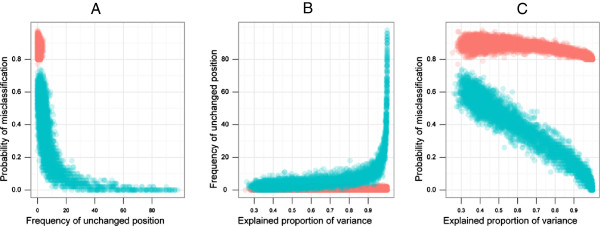
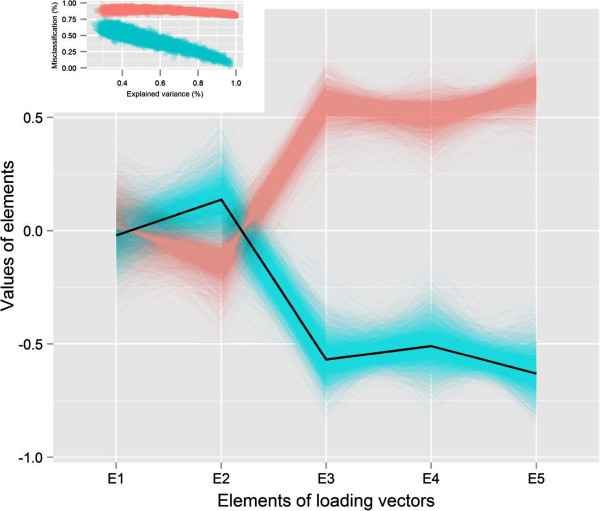
Description:The asset index is often used as a measure of socioeconomic status in empirical research as an explanatory variable or to control confounding. Principal component analysis (PCA) is frequently used to create the asset index. We conducted a simulation study to explore how accurately the principal component based asset index reflects the study subjects' actual poverty level, when the actual poverty level is generated by a simple factor analytic model. In the simulation study using the PC-based asset index, only 1% to 4% of subjects preserved their real position in a quintile scale of assets; between 44% to 82% of subjects were misclassified into the wrong asset quintile. If the PC-based asset index explained less than 30% of the total variance in the component variables, then we consistently observed more than 50% misclassification across quintiles of the index. The frequency of misclassification suggests that the PC-based asset index may not provide a valid measure of poverty level and should be used cautiously as a measure of socioeconomic status.
-
Subjects:
-
Source:Emerg Themes Epidemiol. 2014; 11:6.
-
Document Type:
-
Volume:11
-
Collection(s):
-
Main Document Checksum:urn:sha256:956c0e94386e81dfd6c1c519b3c4ecc95ef503b1ce6a310aa0a8678c604fc8f2
-
Download URL:
-
File Type:
 [PDF
- 622.22 KB
]
[PDF
- 622.22 KB
]
Supporting Files


ON THIS PAGE



CDC STACKS serves as an archival repository of CDC-published products including
scientific findings,
journal articles, guidelines, recommendations, or other public health information authored or
co-authored by CDC or funded partners.
As a repository, CDC STACKS retains documents in their original published format to ensure public access to scientific information.
As a repository, CDC STACKS retains documents in their original published format to ensure public access to scientific information.
You May Also Like
COLLECTION
CDC Public Access