



Serious Invasive Saffold Virus Infections in Children, 2009
Supporting Files
Public Domain

-
Jan 2012
Details
-
Alternative Title:Emerg Infect Dis
-
Personal Author:
-
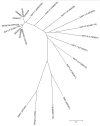
Description:The first human virus in the genus Cardiovirus was described in 2007 and named Saffold virus (SAFV). Cardioviruses can cause severe infections of the myocardium and central nervous system in animals, but SAFV has not yet been convincingly associated with disease in humans. To study a possible association between SAFV and infections in the human central nervous system, we designed a real-time PCR for SAFV and tested cerebrospinal fluid (CSF) samples from children <4 years of age. SAFV was detected in 2 children: in the CSF and a fecal sample from 1 child with monosymptomatic ataxia caused by cerebellitis; and in the CSF, blood, and myocardium of another child who died suddenly with no history of illness. Virus from each child was sequenced and shown to be SAFV type 2. These findings demonstrate that SAFV can cause serious invasive infection in children.
-
Subjects:
- Research
- Saffold virus
- cardiovirus
- viral encephalitis
- encephalitis
- cerebrospinal fluid
- picornavirus infections
- fatal outcome
- viruses
- Denmark
- children
- Cardiovirus
- Cardiovirus Infections
- Central Nervous System Infections
- Child, Preschool
- Fatal Outcome
- Feces
- Female
- Genome, Viral
- Humans
- Infant
- Male
- Phylogeny
- Real-Time Polymerase Chain Reaction
-
Source:Emerg Infect Dis. 18(1):7-12.
-
Document Type:
-
Volume:18
-
Issue:1
-
Download URL:
-
File Type:
 [PDF - 245.32 KB]
 -
Collection(s):
-
Main Document Checksum:urn:sha256:aa5323f14dfaead463fe251f035ed87565e30cc71b41737d559be142c3225c62
Supporting Files


 Was this page helpful?
 Found an issue?



CDC STACKS serves as an archival repository of CDC-published products including
scientific findings, journal articles, guidelines, recommendations, or other public health information authored or
co-authored by CDC or funded partners.
As a repository, CDC STACKS retains documents in their original published format to ensure public access to scientific information.
As a repository, CDC STACKS retains documents in their original published format to ensure public access to scientific information.
You May Also Like
COLLECTION
Emerging Infectious Diseases