



Hypertension Prevalence, Awareness, Treatment, and Control and Sodium Intake in Shandong Province, China: Baseline Results From Shandong–Ministry of Health Action on Salt Reduction and Hypertension (SMASH), 2011
Supporting Files
Public Domain

-
May 22 2014
File Language:
English
Details
-
Journal Article:Preventing Chronic Disease (PCD)
-
Personal Author:Bi, Zhenqiang ; Liang, Xiaofeng ; Xu, Aiqiang ; Wang, Linghong ; Shi, Xiaoming ; Zhao, Wenhua ; Ma, Jixiang ; Guo, Xiaolei ; Zhang, Xiaofei ; Zhang, Jiyu ; Ren, Jie ; Yan, Liuxia ; Lu, Zilong ; Wang, Huicheng ; Tang, Junli ; Cai, Xiaoning ; Dong, Jing ; Zhang, Juan ; Chu, Jie ; Engelgau, Michael ; Yang, Quanhe ; Hong, Yuling ; Wang, Yu
-
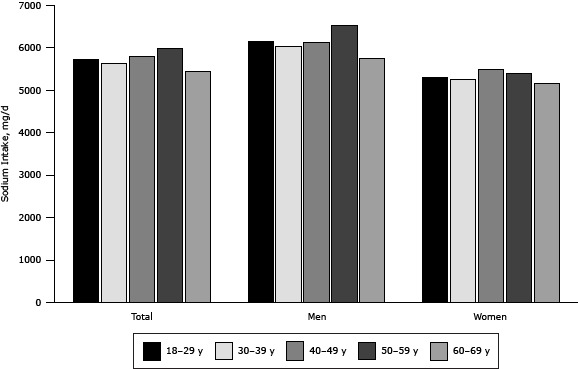
Description:Introduction ; In China, population-based blood pressure levels and prevalence of hypertension are increasing. Meanwhile, sodium intake, a major risk factor for hypertension, is high. In 2011, to develop intervention priorities for a salt reduction and hypertension control project in Shandong Province (population 96 million), a cross-sectional survey was conducted to collect information on sodium intake and hypertension prevalence, awareness, treatment, and control. ; Methods ; Complex, multistage sampling methods were used to select a provincial-representative adult sample. Blood pressure was measured and a survey conducted among all participants; condiments were weighed in the household, a 24-hour dietary recall was conducted, and urine was collected. Hypertension was determined by blood pressure measured on a single occasion and self-reported use of antihypertension medications. ; Results ; Overall, 23.4% (95% confidence interval CI, 20.9%–26.0%) of adults in Shandong were estimated to have hypertension. Among those classified as having hypertension, approximately one-third (34.5%) reported having hypertension, approximately one-fourth (27.5%) reported taking medications, and one-seventh (14.9%) had their blood pressure controlled (<140/<90 mm Hg). Estimated total average daily dietary sodium intake was 5,745 mg (95% CI, 5,428 mg–6,063 mg). Most dietary sodium (80.8%) came from salt and high-salt condiments added during cooking: a sodium intake of 4,640 mg (95% CI, 4,360 mg–4,920 mg). The average daily urinary sodium excretion was 5,398 mg (95% CI, 5,112 mg–5,683 mg). ; Conclusion ; Hypertension and excessive sodium intake in adults are major public health problems in Shandong Province, China.
-
Subjects:
- Original Research
- Adolescent
- Adult
- Aged
- Antihypertensive Agents
- Awareness
- Cluster Analysis
- Cross-Sectional Studies
- Diet Records
- Diet, Sodium-Restricted
- Female
- Health Knowledge, Attitudes, Practice
- Humans
- Hypertension
- Male
- Mental Recall
- Middle Aged
- Prevalence
- Rural Population
- Sampling Studies
- Sodium/urine
- Sodium, Dietary
- Surveys and Questionnaires
- Taste Perception
- Urban Population
- Young Adult
-
Source:Prev Chronic Dis. 11.
-
DOI:
-
ISSN:1545-1151
-
Document Type:
-
Place as Subject:
-
Location:
-
Volume:11
-
Download URL:
-
File Type:
 [PDF - 877.75 KB]
 -
Collection(s):
-
Main Document Checksum:urn:sha-512:ae57eefe7add32491ffe9330ee01dc78fa9af60ec92acbc862ceadd8838ed9f6256f3eddf116e3d86dce973ce45efbdb90456760803d12f6d5a1af3a58f546e2
Supporting Files


File Language:
English
 Was this page helpful?
 Found an issue?



CDC STACKS serves as an archival repository of CDC-published products including
scientific findings, journal articles, guidelines, recommendations, or other public health information authored or
co-authored by CDC or funded partners.
As a repository, CDC STACKS retains documents in their original published format to ensure public access to scientific information.
As a repository, CDC STACKS retains documents in their original published format to ensure public access to scientific information.
You May Also Like
COLLECTION
Preventing Chronic Disease