


Variations in the Hemagglutinin of the 2009 H1N1 Pandemic Virus: Potential for Strains with Altered Virulence Phenotype?
Supporting Files

-
Oct 14 2010
-
File Language:
English
Details
-
Alternative Title:PLoS Pathog
-
Personal Author:
-
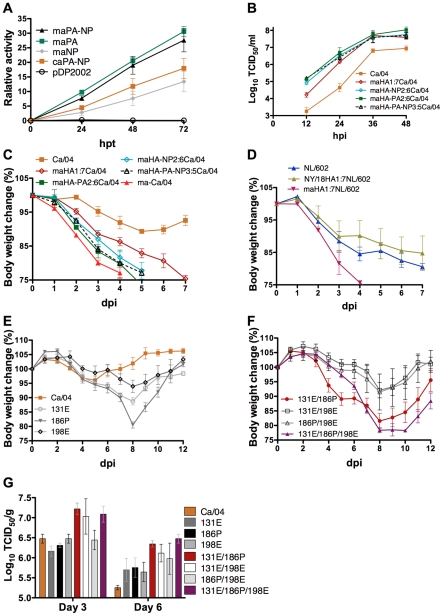
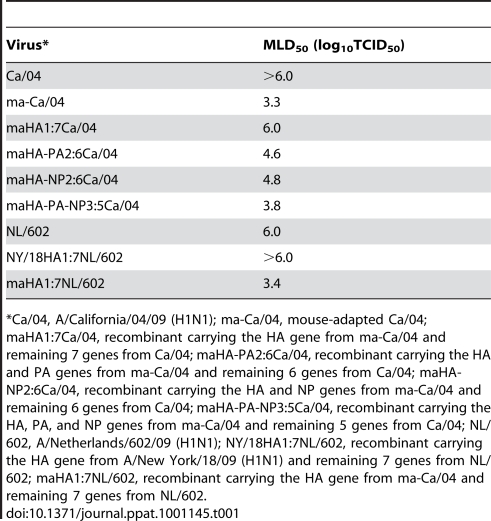
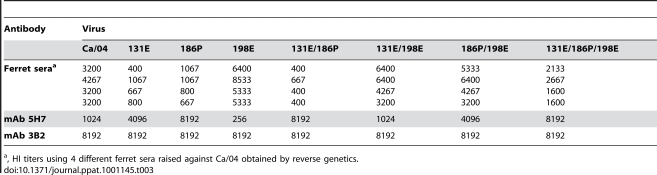
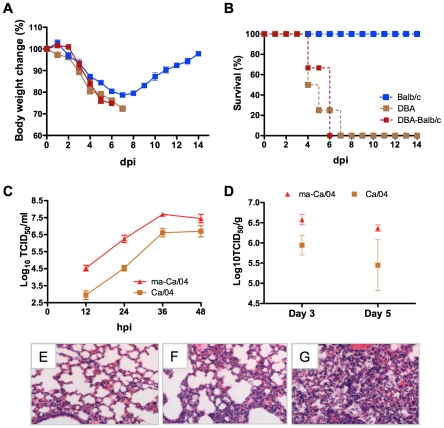
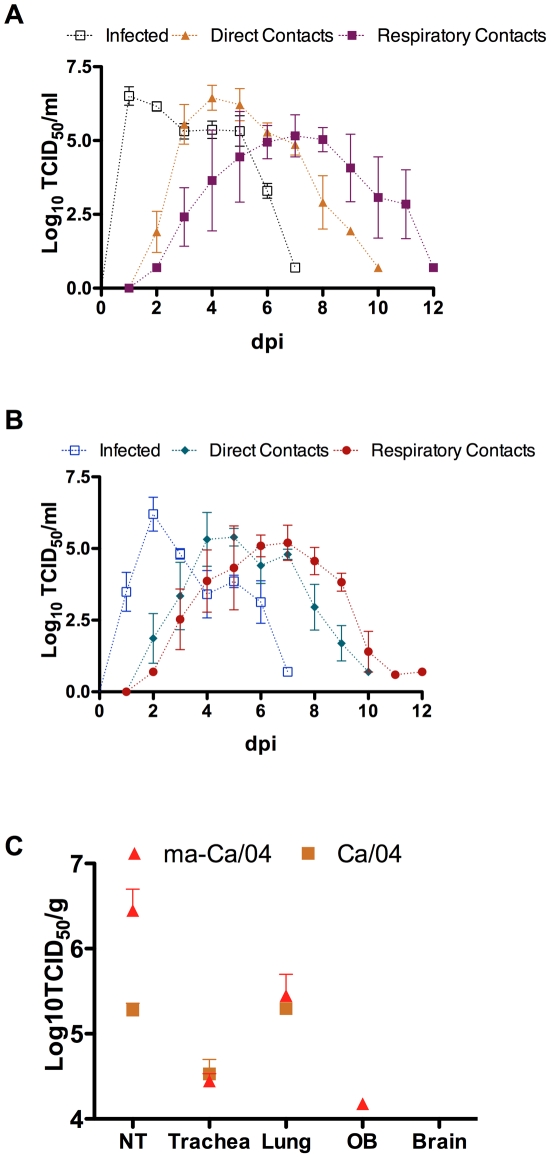
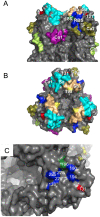
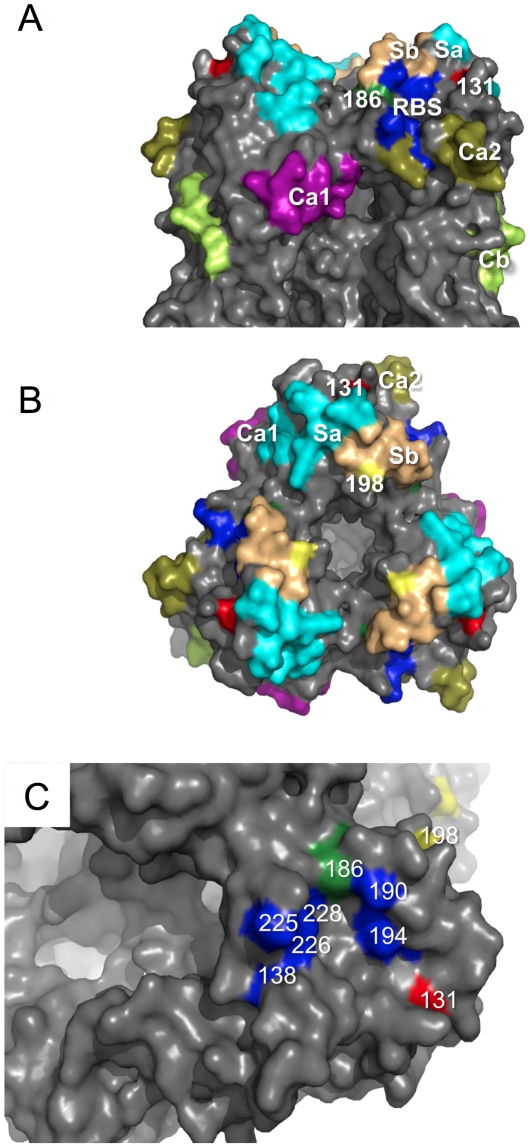
Description:A novel, swine-origin influenza H1N1 virus (H1N1pdm) caused the first pandemic of the 21st century. This pandemic, although efficient in transmission, is mild in virulence. This atypical mild pandemic season has raised concerns regarding the potential of this virus to acquire additional virulence markers either through further adaptation or possibly by immune pressure in the human host. Using the mouse model we generated, within a single round of infection with A/California/04/09/H1N1 (Ca/04), a virus lethal in mice--herein referred to as mouse-adapted Ca/04 (ma-Ca/04). Five amino acid substitutions were found in the genome of ma-Ca/04: 3 in HA (D131E, S186P and A198E), 1 in PA (E298K) and 1 in NP (D101G). Reverse genetics analyses of these mutations indicate that all five mutations from ma-Ca/04 contributed to the lethal phenotype; however, the D131E and S186P mutations--which are also found in the 1918 and seasonal H1N1 viruses-in HA alone were sufficient to confer virulence of Ca/04 in mice. HI assays against H1N1pdm demonstrate that the D131E and S186P mutations caused minor antigenic changes and, likely, affected receptor binding. The rapid selection of ma-Ca/04 in mice suggests that a virus containing this constellation of amino acids might have already been present in Ca/04, likely as minor quasispecies.
-
Subjects:
-
Source:PLoS Pathog. 6(10).
-
Pubmed ID:20976194
-
Pubmed Central ID:PMC2954835
-
Document Type:
-
Funding:
-
Volume:6
-
Issue:10
-
Collection(s):
-
Main Document Checksum:urn:sha256:d49d9a2bfdb083779134781268133b6f0c2db8274d368c1d49aac3418579d20f
-
Download URL:
-
File Type:
 [PDF
- 3.88 MB
]
[PDF
- 3.88 MB
]
Supporting Files


File Language:
English
ON THIS PAGE





CDC STACKS serves as an archival repository of CDC-published products including
scientific findings,
journal articles, guidelines, recommendations, or other public health information authored or
co-authored by CDC or funded partners.
As a repository, CDC STACKS retains documents in their original published format to ensure public access to scientific information.
As a repository, CDC STACKS retains documents in their original published format to ensure public access to scientific information.
You May Also Like
COLLECTION
CDC Public Access