


i
Viral Etiology of Influenza-Like Illnesses in Antananarivo, Madagascar, July 2008 to June 2009
-
Mar 03 2011
Source: PLoS One. 6(3). -
Alternative Title:PLoS One
-
Personal Author:
-
Description:Background
In Madagascar, despite an influenza surveillance established since 1978, little is known about the etiology and prevalence of viruses other than influenza causing influenza-like illnesses (ILIs).
Methodology/Principal Findings
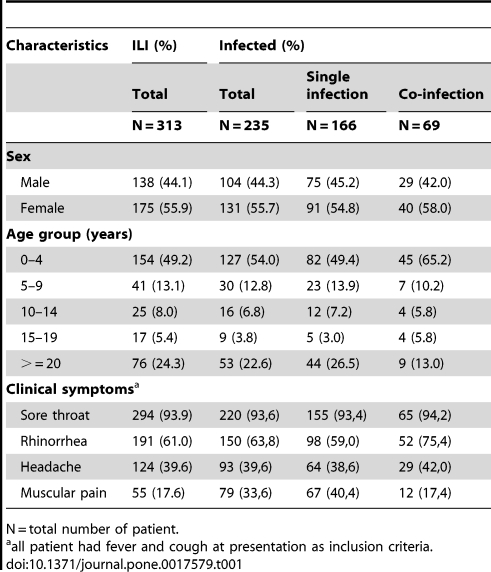
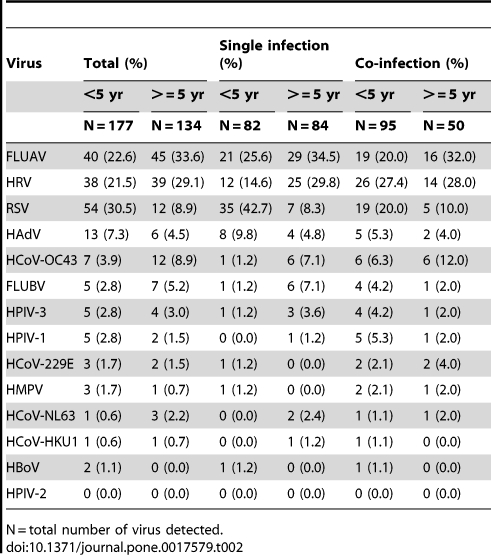
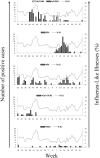
From July 2008 to June 2009, we collected respiratory specimens from patients who presented ILIs symptoms in public and private clinics in Antananarivo (the capital city of Madagascar). ILIs were defined as body temperature ≥38°C and cough and at least two of the following symptoms: sore throat, rhinorrhea, headache and muscular pain, for a maximum duration of 3 days. We screened these specimens using five multiplex real time Reverse Transcription and/or Polymerase Chain Reaction assays for detection of 14 respiratory viruses. We detected respiratory viruses in 235/313 (75.1%) samples. Overall influenza virus A (27.3%) was the most common virus followed by rhinovirus (24.8%), RSV (21.2%), adenovirus (6.1%), coronavirus OC43 (6.1%), influenza virus B (3.9%), parainfluenza virus-3 (2.9%), and parainfluenza virus-1 (2.3%). Co-infections occurred in 29.4% (69/235) of infected patients and rhinovirus was the most detected virus (27.5%). Children under 5 years were more likely to have one or more detectable virus associated with their ILI. In this age group, compared to those ≥5 years, the risk of detecting more than one virus was higher (OR = 1.9), as was the risk of detecting of RSV (OR = 10.1) and adenovirus (OR = 4.7). While rhinovirus and adenovirus infections occurred year round, RSV, influenza virus A and coronavirus OC43 had defined period of circulation.
Conclusions
In our study, we found that respiratory viruses play an important role in ILIs in the Malagasy community, particularly in children under 5 years old. These data provide a better understanding of the viral etiology of outpatients with ILI and describe for the first time importance of these viruses in different age group and their period of circulation.
-
Subjects:
-
Source:
-
Pubmed ID:21390235
-
Pubmed Central ID:PMC3048401
-
Document Type:
-
Place as Subject:
-
Collection(s):
-
Main Document Checksum:
-
Download URL:
-
File Type:
-

jpeg 
gif 
jpeg 
txt 
gif 
jpeg
txt 
doc
doc
doc 
gif
 [PDF-217.79 KB]
Details:
Supporting Files


More +


 Email
CDC-INFO
Email
CDC-INFO