


The Spread of Influenza A(H1N1)pdm09 Virus in Madagascar Described by a Sentinel Surveillance Network
Supporting Files

-
May 16 2012
-
File Language:
English
Details
-
Alternative Title:PLoS One
-
Personal Author:
-
Description:Background
The influenza A(H1N1)pdm09 virus has been a challenge for public health surveillance systems in all countries. In Antananarivo, the first imported case was reported on August 12, 2009. This work describes the spread of A(H1N1)pdm09 in Madagascar.
Methods
The diffusion of influenza A(H1N1)pdm09 in Madagascar was explored using notification data from a sentinel network. Clinical data were charted to identify peaks at each sentinel site and virological data was used to confirm viral circulation.
Results
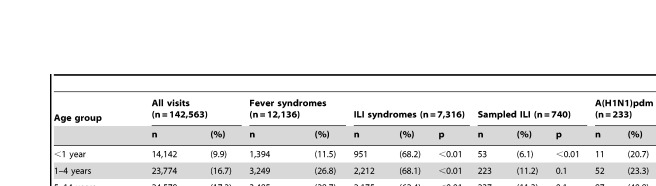
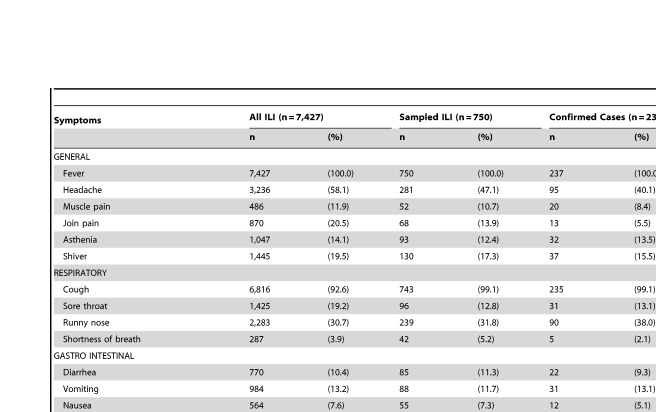
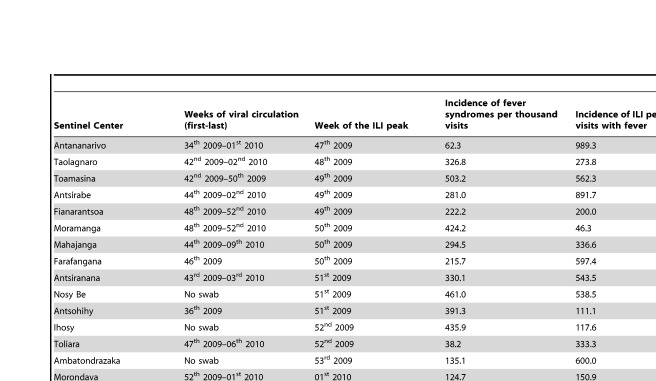
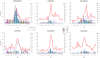
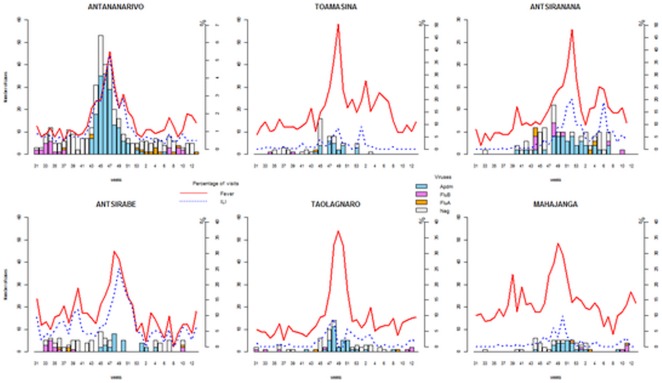
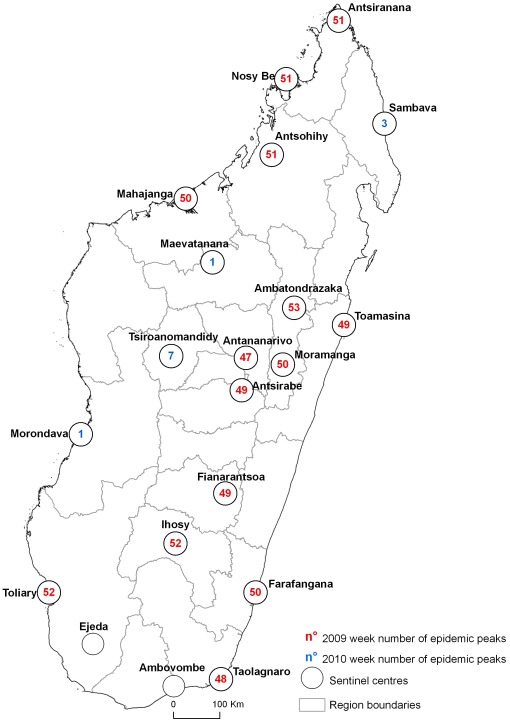
From August 1, 2009 to February 28, 2010, 7,427 patients with influenza-like illness were reported. Most patients were aged 7 to 14 years. Laboratory tests confirmed infection with A(H1N1)pdm09 in 237 (33.2%) of 750 specimens. The incidence of patients differed between regions. By determining the epidemic peaks we traced the diffusion of the epidemic through locations and time in Madagascar. The first peak was detected during the epidemiological week 47-2009 in Antananarivo and the last one occurred in week 07-2010 in Tsiroanomandidy.
Conclusion
Sentinel surveillance data can be used for describing epidemic trends, facilitating the development of interventions at the local level to mitigate disease spread and impact.
-
Subjects:
-
Source:PLoS One. 2012; 7(5).
-
Pubmed ID:22615893
-
Pubmed Central ID:PMC3353907
-
Document Type:
-
Funding:
-
Place as Subject:
-
Volume:7
-
Issue:5
-
Collection(s):
-
Main Document Checksum:urn:sha256:90d42ccdb85f4cbd17630fa60b2ef21e36725ae68ce4160831d79e459e4148ac
-
Download URL:
-
File Type:
 [PDF
- 1.65 MB
]
[PDF
- 1.65 MB
]
Supporting Files


File Language:
English
ON THIS PAGE




CDC STACKS serves as an archival repository of CDC-published products including
scientific findings,
journal articles, guidelines, recommendations, or other public health information authored or
co-authored by CDC or funded partners.
As a repository, CDC STACKS retains documents in their original published format to ensure public access to scientific information.
As a repository, CDC STACKS retains documents in their original published format to ensure public access to scientific information.
You May Also Like
COLLECTION
CDC Public Access