


Comparing GIS-Based Measures in Access to Mammography and Their Validity in Predicting Neighborhood Risk of Late-Stage Breast Cancer
Supporting Files

-
Aug 28 2012
File Language:
English
Details
-
Alternative Title:PLoS One
-
Personal Author:
-
Description:Background
Assessing neighborhood environment in access to mammography remains a challenge when investigating its contextual effect on breast cancer-related outcomes. Studies using different Geographic Information Systems (GIS)-based measures reported inconsistent findings.
Methods
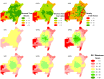
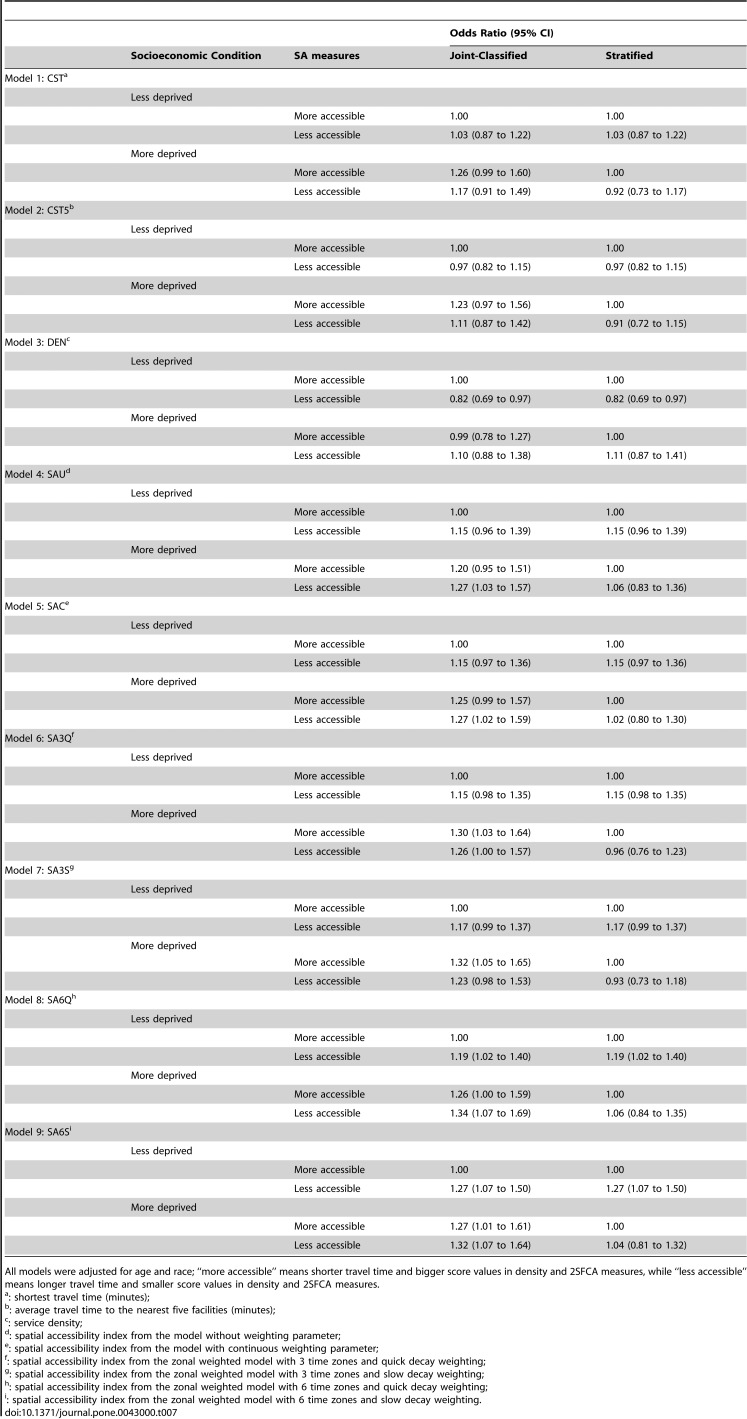
We compared GIS-based measures (travel time, service density, and a two-Step Floating Catchment Area method [2SFCA]) of access to FDA-accredited mammography facilities in terms of their Spearman correlation, agreement (Kappa) and spatial patterns. As an indicator of predictive validity, we examined their association with the odds of late-stage breast cancer using cancer registry data.
Results
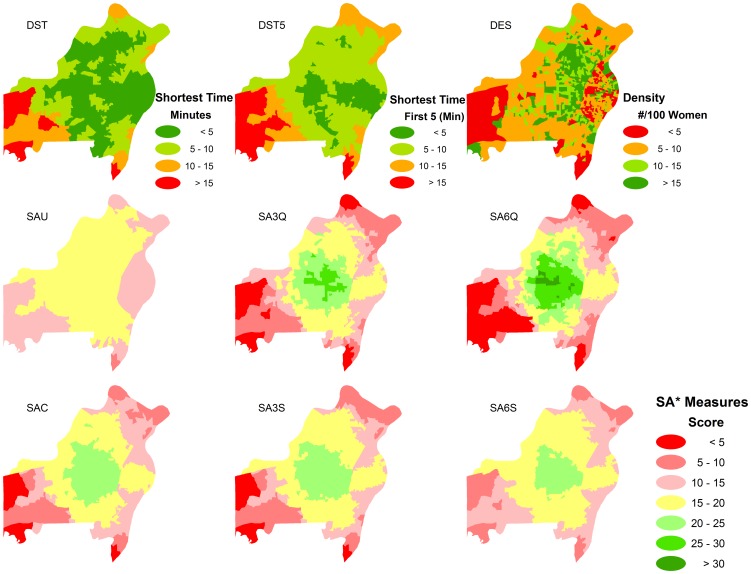
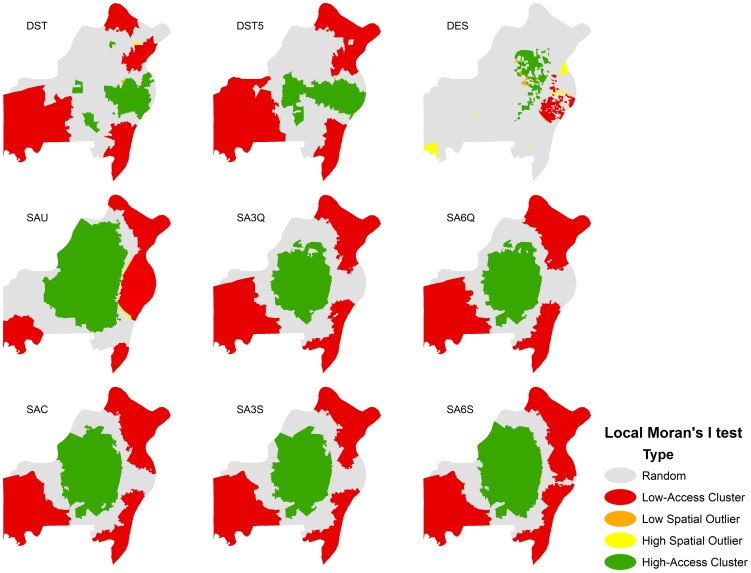
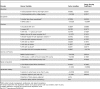
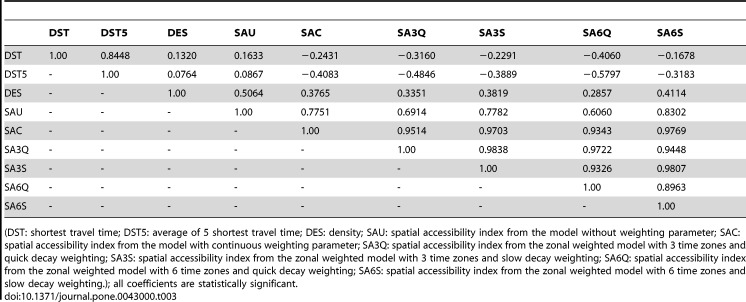
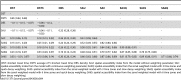
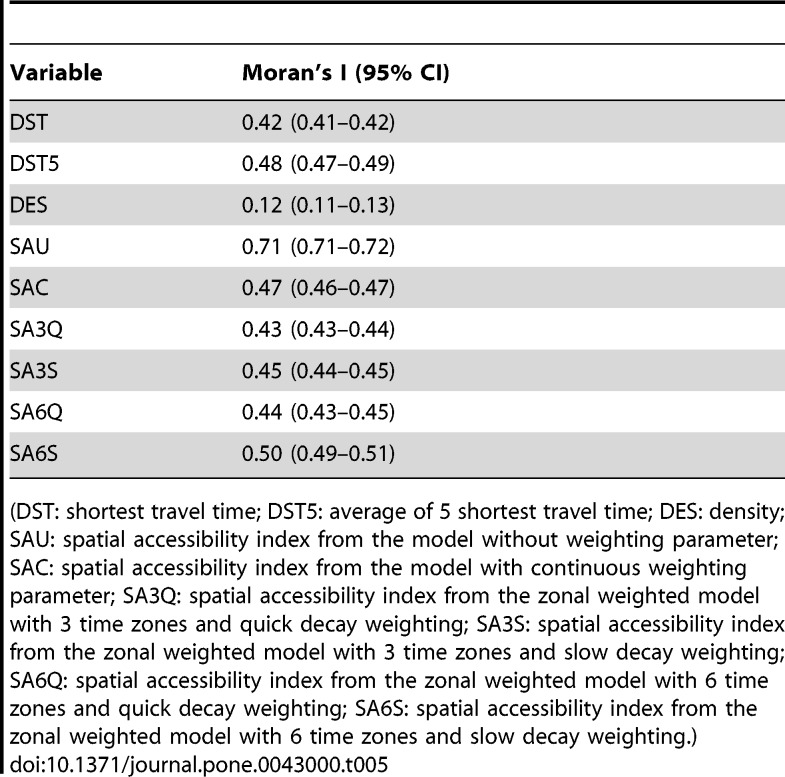
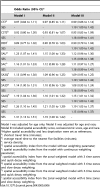
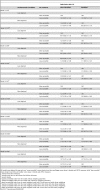
The accessibility measures indicated considerable variation in correlation, Kappa and spatial pattern. Measures using shortest travel time (or average) and service density showed low correlations, no agreement, and different spatial patterns. Both types of measures showed low correlations and little agreement with the 2SFCA measures. Of all measures, only the two measures using 6-timezone-weighted 2SFCA method were associated with increased odds of late-stage breast cancer (quick-distance-decay: odds ratio [OR] = 1.15, 95% confidence interval [CI] = 1.01–1.32; slow-distance-decay: OR = 1.19, 95% CI = 1.03–1.37) after controlling for demographics and neighborhood socioeconomic deprivation.
Conclusions
Various GIS-based measures of access to mammography facilities exist and are not identical in principle and their association with late-stage breast cancer risk. Only the two measures using the 2SFCA method with 6-timezone weighting were associated with increased odds of late-stage breast cancer. These measures incorporate both travel barriers and service competition. Studies may observe different results depending on the measure of accessibility used.
-
Subjects:
-
Source:PLoS One. 2012; 7(8).
-
Pubmed ID:22952626
-
Pubmed Central ID:PMC3429459
-
Document Type:
-
Funding:
-
Volume:7
-
Issue:8
-
Collection(s):
-
Main Document Checksum:urn:sha256:fe4b36e55c96a98956d39c35cb092f8f9af281e89bab48749dce85af76c73182
-
Download URL:
-
File Type:
 [PDF
- 387.58 KB
]
[PDF
- 387.58 KB
]
Supporting Files


File Language:
English
ON THIS PAGE


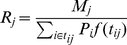


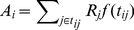
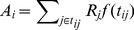

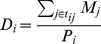











CDC STACKS serves as an archival repository of CDC-published products including
scientific findings,
journal articles, guidelines, recommendations, or other public health information authored or
co-authored by CDC or funded partners.
As a repository, CDC STACKS retains documents in their original published format to ensure public access to scientific information.
As a repository, CDC STACKS retains documents in their original published format to ensure public access to scientific information.
You May Also Like
COLLECTION
CDC Public Access