


Transmitted Antiretroviral Drug Resistance in New York State, 2006-2008: Results from a New Surveillance System
Supporting Files

-
Aug 06 2012
-
File Language:
English
Details
-
Alternative Title:PLoS One
-
Personal Author:
-
Description:Background
HIV transmitted drug resistance (TDR) is a public health concern because it has the potential to compromise antiretroviral therapy (ART) at the population level. In New York State, high prevalence of TDR in a local cohort and a multiclass resistant case cluster led to the development and implementation of a statewide resistance surveillance system.
Methodology
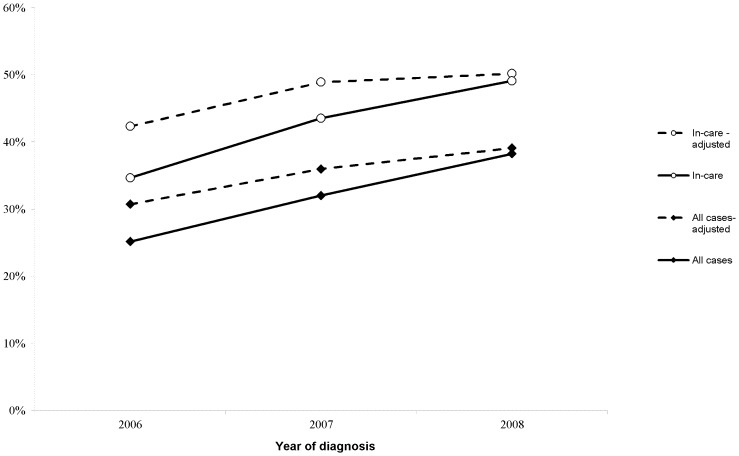
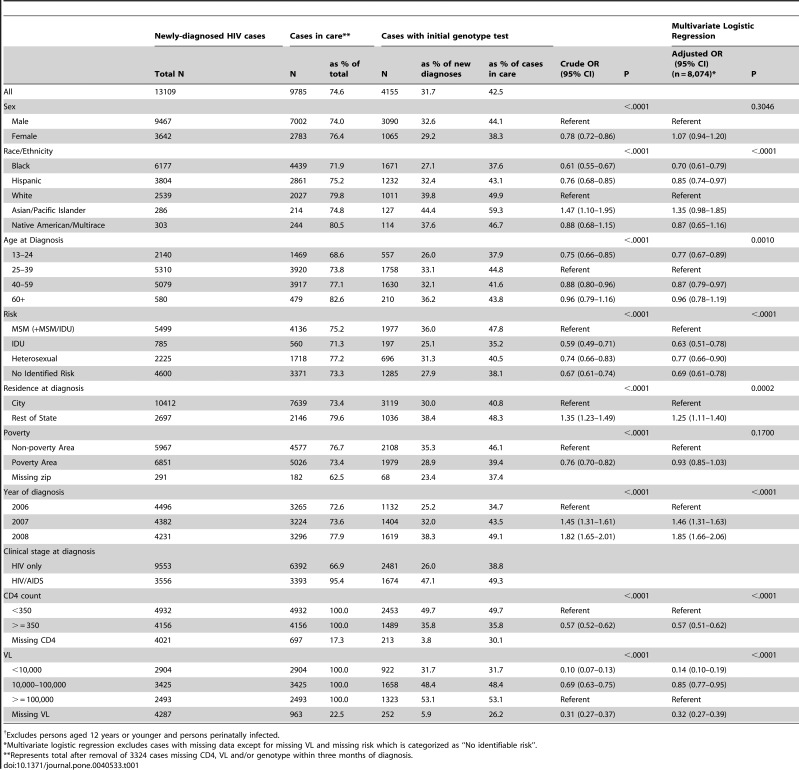
We conducted a cross-sectional analysis of the 13,109 cases of HIV infection that were newly diagnosed and reported in New York State between 2006 and 2008, including 4,155 with HIV genotypes drawn within 3 months of initial diagnosis and electronically reported to the new resistance surveillance system. We assessed compliance with DHHS recommendations for genotypic resistance testing and estimated TDR among new HIV diagnoses.
Principal Findings
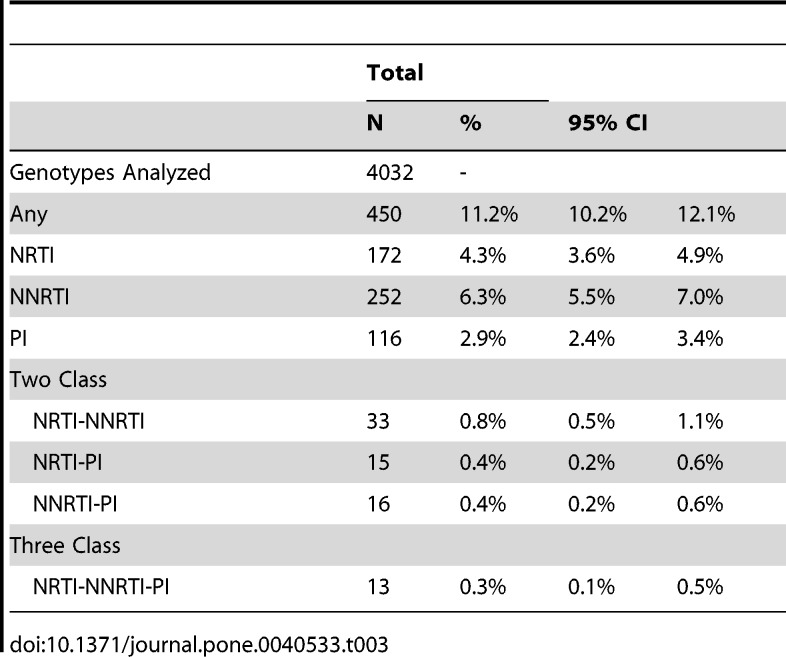
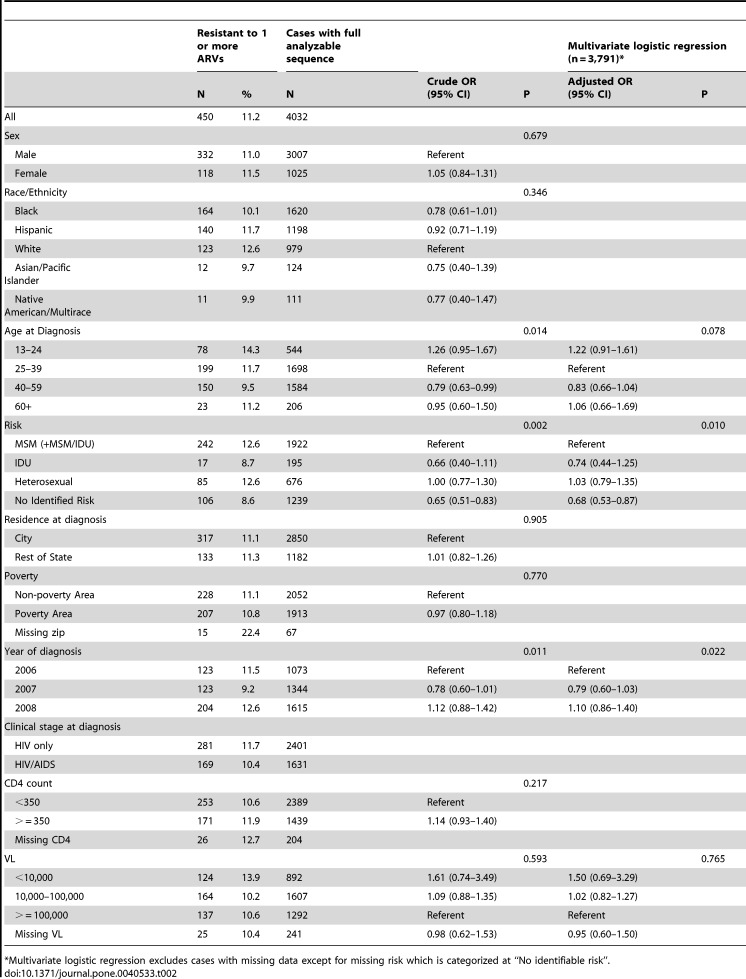
Of 13,109 new HIV diagnoses, 9,785 (75%) had laboratory evidence of utilization of HIV-related medical care, and 4,155 (43%) had a genotype performed within 3 months of initial diagnosis. Of these, 11.2% (95% confidence interval [CI], 10.2%–12.1%) had any evidence of TDR. The proportion with mutations associated with any antiretroviral agent in the NNRTI, NRTI or PI class was 6.3% (5.5%–7.0%), 4.3% (3.6%–4.9%) and 2.9% (2.4%–3.4%), respectively. Multiclass resistance was observed in <1%. TDR did not increase significantly over time (p for trend = 0.204). Men who have sex with men were not more likely to have TDR than persons with heterosexual risk factor (OR 1.0 (0.77–1.30)). TDR to EFV+TDF+FTC and LPV/r+TDF+FTC regimens was 7.1% (6.3%–7.9%) and 1.4% (1.0%–1.8%), respectively.
Conclusions/Significance
TDR appears to be evenly distributed and stable among new HIV diagnoses in New York State; multiclass TDR is rare. Less than half of new diagnoses initiating care received a genotype per DHHS guidelines.
-
Subjects:
-
Source:PLoS One. 2012; 7(8).
-
Pubmed ID:22879878
-
Pubmed Central ID:PMC3412856
-
Document Type:
-
Funding:
-
Place as Subject:
-
Volume:7
-
Issue:8
-
Collection(s):
-
Main Document Checksum:urn:sha256:21cbf4d56aa188c9bd4990d29f2bfb7f640e80b214480e3b8e7192b5398490c8
-
Download URL:
-
File Type:
 [PDF
- 136.50 KB
]
[PDF
- 136.50 KB
]
Supporting Files


File Language:
English
ON THIS PAGE



CDC STACKS serves as an archival repository of CDC-published products including
scientific findings,
journal articles, guidelines, recommendations, or other public health information authored or
co-authored by CDC or funded partners.
As a repository, CDC STACKS retains documents in their original published format to ensure public access to scientific information.
As a repository, CDC STACKS retains documents in their original published format to ensure public access to scientific information.
You May Also Like
COLLECTION
CDC Public Access