


Endocrine Disruptors and Asthma-Associated Chemicals in Consumer Products
Supporting Files

-
Mar 08 2012
-
Details
-
Alternative Title:Environ Health Perspect
-
Personal Author:
-
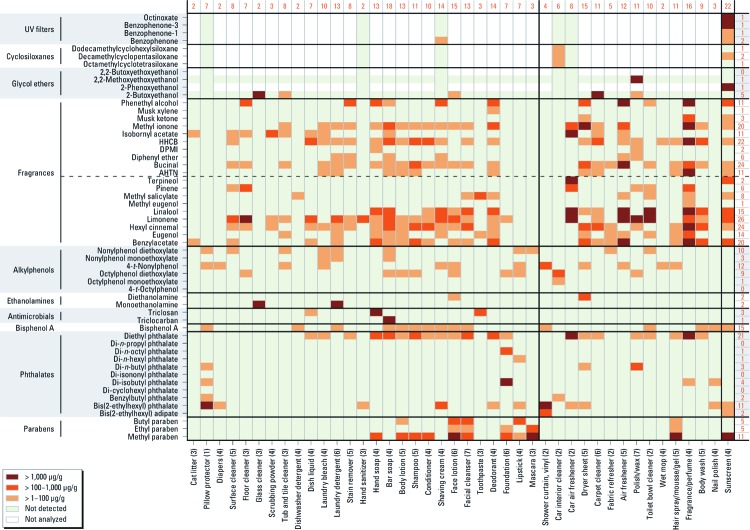
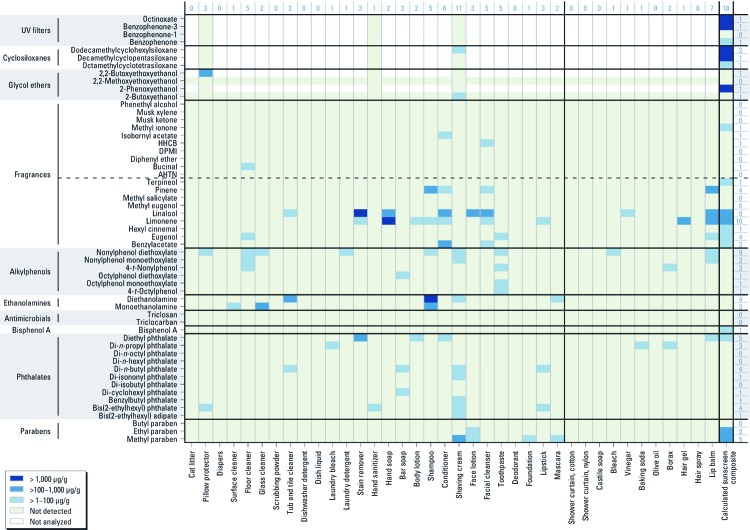
Description:Laboratory and human studies raise concerns about endocrine disruption and asthma resulting from exposure to chemicals in consumer products. Limited labeling or testing information is available to evaluate products as exposure sources.|We analytically quantified endocrine disruptors and asthma-related chemicals in a range of cosmetics, personal care products, cleaners, sunscreens, and vinyl products. We also evaluated whether product labels provide information that can be used to select products without these chemicals.|We selected 213 commercial products representing 50 product types. We tested 42 composited samples of high-market-share products, and we tested 43 alternative products identified using criteria expected to minimize target compounds. Analytes included parabens, phthalates, bisphenol A (BPA), triclosan, ethanolamines, alkylphenols, fragrances, glycol ethers, cyclosiloxanes, and ultraviolet (UV) filters.|We detected 55 compounds, indicating a wide range of exposures from common products. Vinyl products contained > 10% bis(2-ethylhexyl) phthalate (DEHP) and could be an important source of DEHP in homes. In other products, the highest concentrations and numbers of detects were in the fragranced products (e.g., perfume, air fresheners, and dryer sheets) and in sunscreens. Some products that did not contain the well-known endocrine-disrupting phthalates contained other less-studied phthalates (dicyclohexyl phthalate, diisononyl phthalate, and di-n-propyl phthalate; also endocrine-disrupting compounds), suggesting a substitution. Many detected chemicals were not listed on product labels.|Common products contain complex mixtures of EDCs and asthma-related compounds. Toxicological studies of these mixtures are needed to understand their biological activity. Regarding epidemiology, our findings raise concern about potential confounding from co-occurring chemicals and misclassification due to variability in product composition. Consumers should be able to avoid some target chemicals-synthetic fragrances, BPA, and regulated active ingredients-using purchasing criteria. More complete product labeling would enable consumers to avoid the rest of the target chemicals.
-
Subjects:
-
Source:Environ Health Perspect. 2012; 120(7):935-943.
-
Pubmed ID:22398195
-
Pubmed Central ID:PMC3404651
-
Document Type:
-
Funding:
-
Volume:120
-
Issue:7
-
Collection(s):
-
Main Document Checksum:urn:sha256:50c0b361d9645db39fc098ea3f46629997f9a3a9d4be43409dc4170600b60be6
-
Download URL:
-
File Type:
 [PDF
- 402.72 KB
]
[PDF
- 402.72 KB
]
Supporting Files


ON THIS PAGE

CDC STACKS serves as an archival repository of CDC-published products including
scientific findings,
journal articles, guidelines, recommendations, or other public health information authored or
co-authored by CDC or funded partners.
As a repository, CDC STACKS retains documents in their original published format to ensure public access to scientific information.
As a repository, CDC STACKS retains documents in their original published format to ensure public access to scientific information.
You May Also Like
COLLECTION
CDC Public Access