


Vaccinia and influenza A viruses select rather than adjust tRNAs to optimize translation
Supporting Files

-
Dec 18 2012
-
Details
-
Alternative Title:Nucleic Acids Res
-
Personal Author:
-
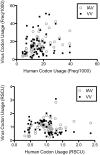
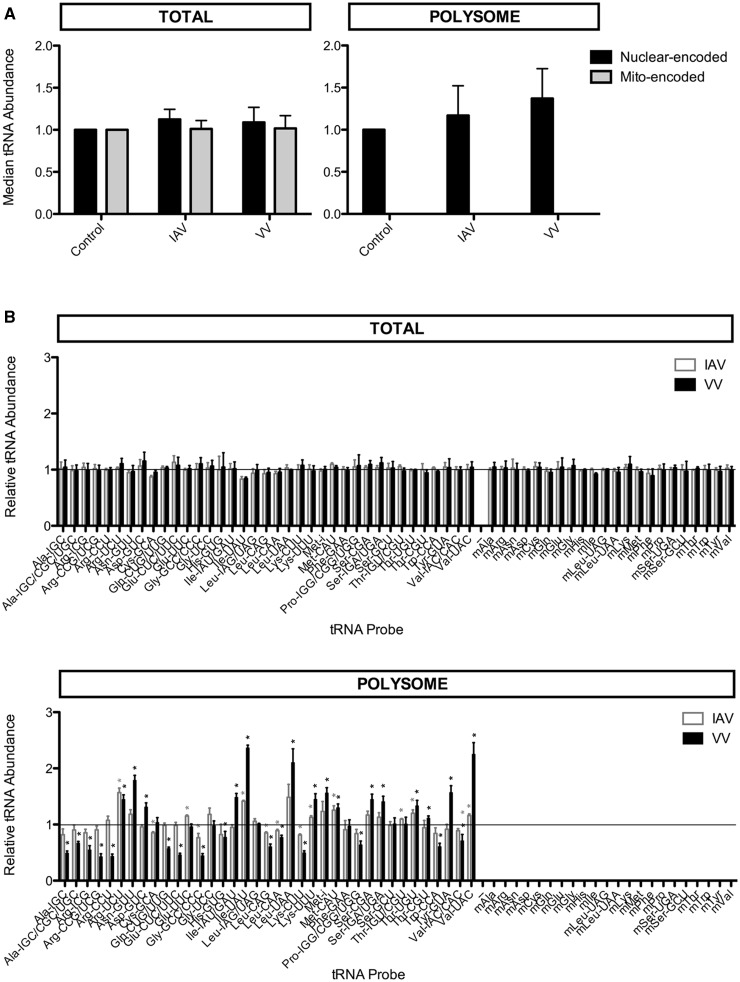
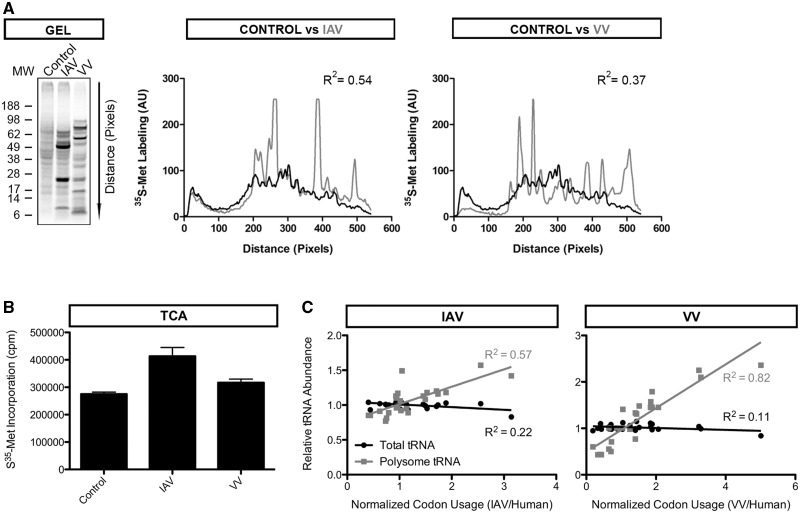
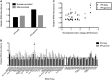
Description:Transfer RNAs (tRNAs) are central to protein synthesis and impact translational speed and fidelity by their abundance. Here we examine the extent to which viruses manipulate tRNA populations to favor translation of their own genes. We study two very different viruses: influenza A virus (IAV), a medium-sized (13 kB genome) RNA virus; and vaccinia virus (VV), a large (200 kB genome) DNA virus. We show that the total cellular tRNA population remains unchanged following viral infection, whereas the polysome-associated tRNA population changes dramatically in a virus-specific manner. The changes in polysome-associated tRNA levels reflect the codon usage of viral genes, suggesting the existence of local tRNA pools optimized for viral translation.
-
Subjects:
-
Source:Nucleic Acids Res. 2012; 41(3):1914-1921.
-
Pubmed ID:23254333
-
Pubmed Central ID:PMC3561966
-
Document Type:
-
Funding:
-
Volume:41
-
Issue:3
-
Collection(s):
-
Main Document Checksum:urn:sha256:53e085f0323e5ad54ca29d128307adef825efa48bcc1ea37d35b50a8a60d513d
-
Download URL:
-
File Type:
 [PDF
- 3.43 MB
]
[PDF
- 3.43 MB
]
Supporting Files


ON THIS PAGE




CDC STACKS serves as an archival repository of CDC-published products including
scientific findings,
journal articles, guidelines, recommendations, or other public health information authored or
co-authored by CDC or funded partners.
As a repository, CDC STACKS retains documents in their original published format to ensure public access to scientific information.
As a repository, CDC STACKS retains documents in their original published format to ensure public access to scientific information.
You May Also Like
COLLECTION
CDC Public Access