


Two Homologous EF-G Proteins from Pseudomonas aeruginosa Exhibit Distinct Functions
Supporting Files

-
Nov 08 2013
-
File Language:
English
Details
-
Alternative Title:PLoS One
-
Personal Author:
-
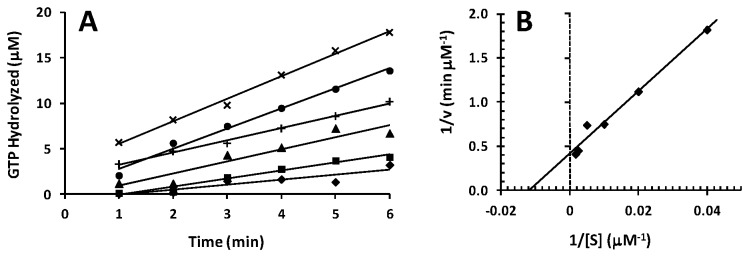
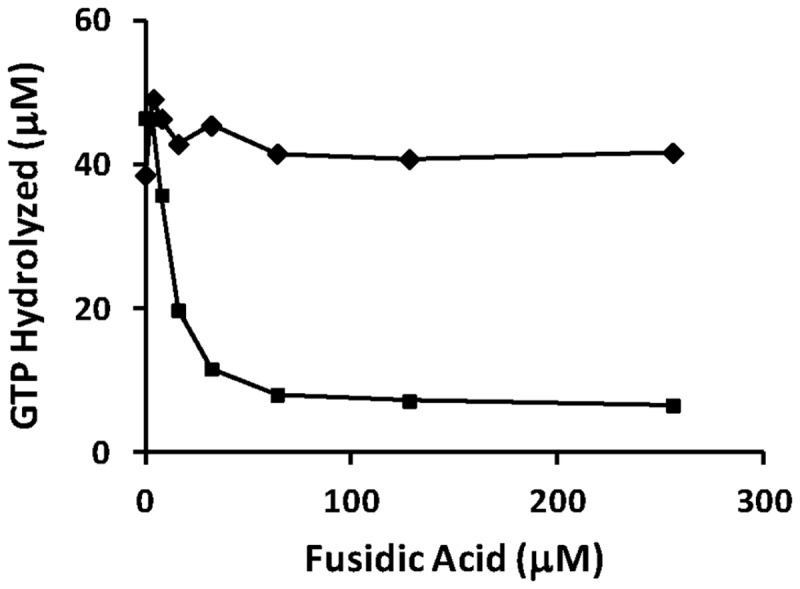
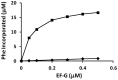
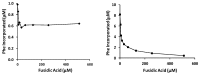
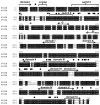
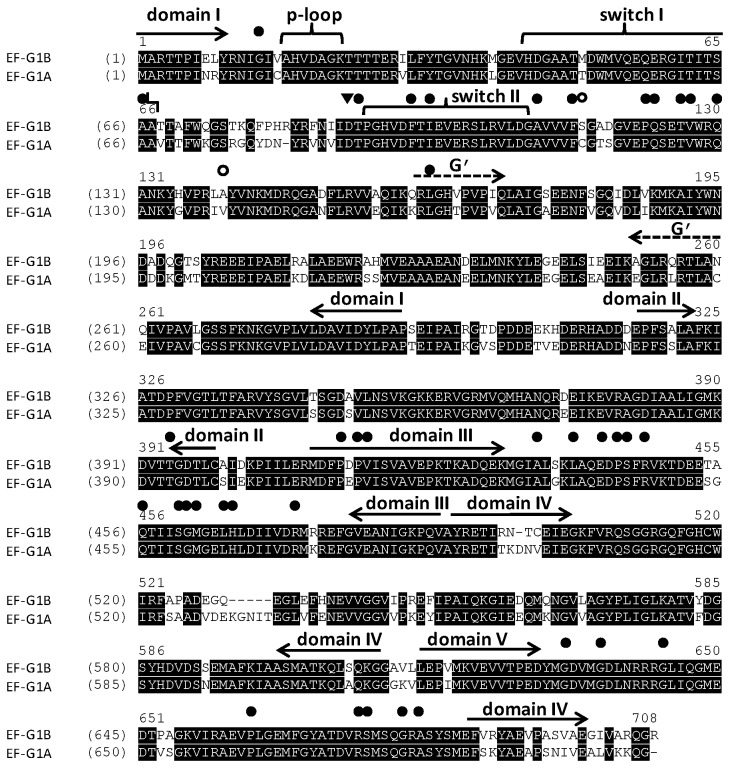
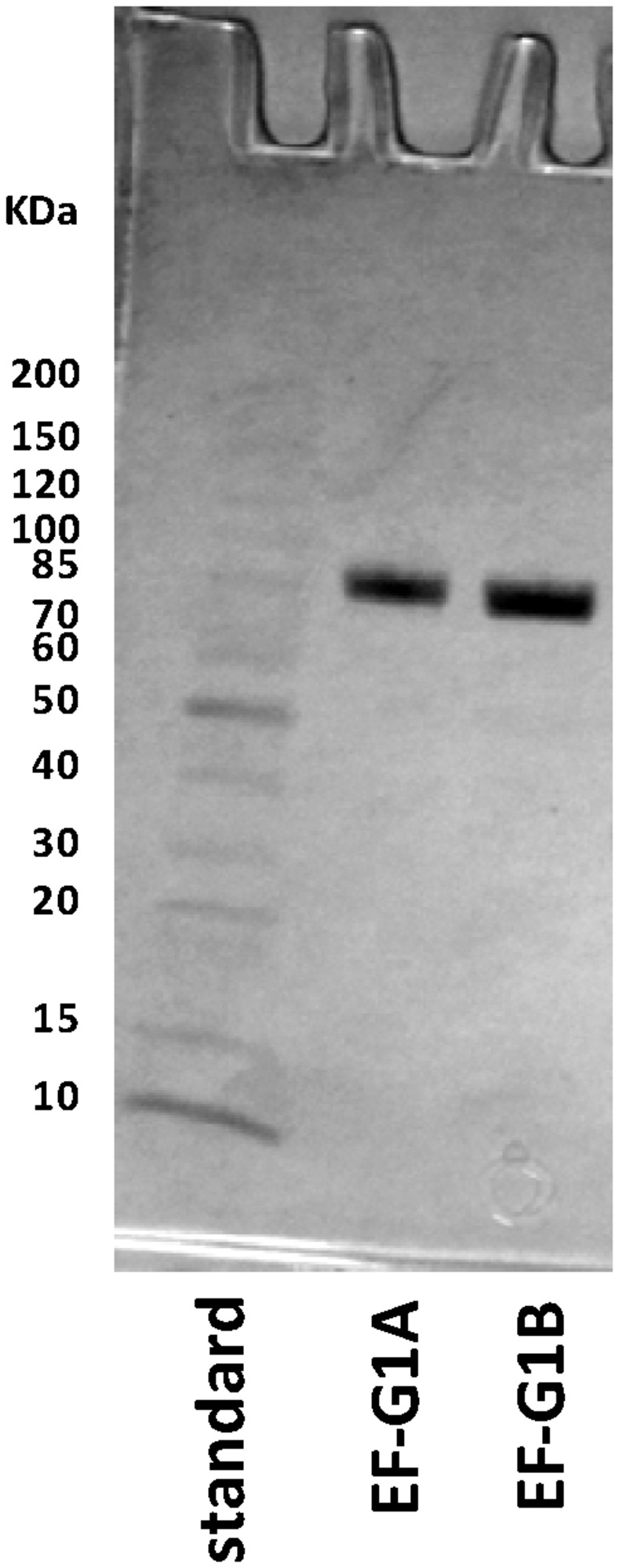
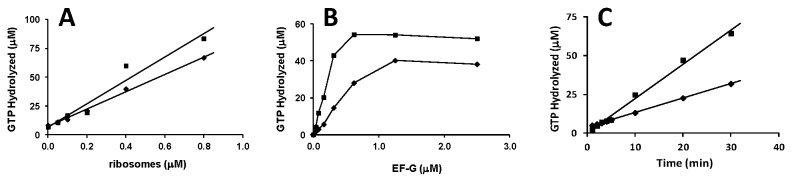
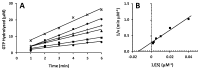
Description:Genes encoding two proteins corresponding to elongation factor G (EF-G) were cloned from Pseudomonas aeruginosa. The proteins encoded by these genes are both members of the EFG I subfamily. The gene encoding one of the forms of EF-G is located in the str operon and the resulting protein is referred to as EF-G1A while the gene encoding the other form of EF-G is located in another part of the genome and the resulting protein is referred to as EF-G1B. These proteins were expressed and purified to 98% homogeneity. Sequence analysis indicated the two proteins are 90/84% similar/identical. In other organisms containing multiple forms of EF-G a lower degree of similarity is seen. When assayed in a poly(U)-directed poly-phenylalanine translation system, EF-G1B was 75-fold more active than EF-G1A. EF-G1A pre-incubate with ribosomes in the presence of the ribosome recycling factor (RRF) decreased polymerization of poly-phenylalanine upon addition of EF-G1B in poly(U)-directed translation suggesting a role for EF-G1A in uncoupling of the ribosome into its constituent subunits. Both forms of P. aeruginosa EF-G were active in ribosome dependent GTPase activity. The kinetic parameters (K M) for the interaction of EF-G1A and EF-G1B with GTP were 85 and 70 μM, respectively. However, EF-G1B exhibited a 5-fold greater turnover number (observed k cat) for the hydrolysis of GTP than EF-G1A; 0.2 s(-1) vs. 0.04 s(-1). These values resulted in specificity constants (k cat (obs)/K M) for EF-G1A and EF-G1B of 0.5 x 10(3) s(-1) M(-1) and 3.0 x 10(3) s(-1) M(-1), respectively. The antibiotic fusidic acid (FA) completely inhibited poly(U)-dependent protein synthesis containing P. aeruginosa EF-G1B, but the same protein synthesis system containing EF-G1A was not affected. Likewise, the activity of EF-G1B in ribosome dependent GTPase assays was completely inhibited by FA, while the activity of EF-G1A was not affected.
-
Subjects:
-
Source:PLoS One. 2013; 8(11).
-
Pubmed ID:24260360
-
Pubmed Central ID:PMC3832671
-
Document Type:
-
Funding:
-
Volume:8
-
Issue:11
-
Collection(s):
-
Main Document Checksum:urn:sha256:87b1b0d3e4584ac0e6003e4652bb36ecb5ab2a85ed5dcd490607ef7137e622f3
-
Download URL:
-
File Type:
 [PDF
- 467.52 KB
]
[PDF
- 467.52 KB
]
Supporting Files


File Language:
English
ON THIS PAGE








CDC STACKS serves as an archival repository of CDC-published products including
scientific findings,
journal articles, guidelines, recommendations, or other public health information authored or
co-authored by CDC or funded partners.
As a repository, CDC STACKS retains documents in their original published format to ensure public access to scientific information.
As a repository, CDC STACKS retains documents in their original published format to ensure public access to scientific information.
You May Also Like
COLLECTION
CDC Public Access