



The oxysterol–CXCR2 axis plays a key role in the recruitment of tumor-promoting neutrophils
Supporting Files

-
Jul 29 2013
Details
-
Alternative Title:J Exp Med
-
Personal Author:Raccosta, Laura ; Fontana, Raffaella ; Maggioni, Daniela ; Lanterna, Claudia ; Villablanca, Eduardo J. ; Paniccia, Aida ; Musumeci, Andrea ; Chiricozzi, Elena ; Trincavelli, Maria Letizia ; Daniele, Simona ; Martini, Claudia ; Gustafsson, Jan-Ake ; Doglioni, Claudio ; Feo, Safiyè Gonzalvo ; Leiva, Andrea ; Ciampa, Maria Grazia ; Mauri, Laura ; Sensi, Cristina ; Prinetti, Alessandro ; Eberini, Ivano ; Mora, J. Rodrigo ; Bordignon, Claudio ; Steffensen, Knut R. ; Sonnino, Sandro ; Sozzani, Silvano ; Traversari, Catia ; Russo, Vincenzo
-
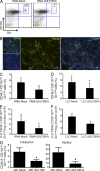
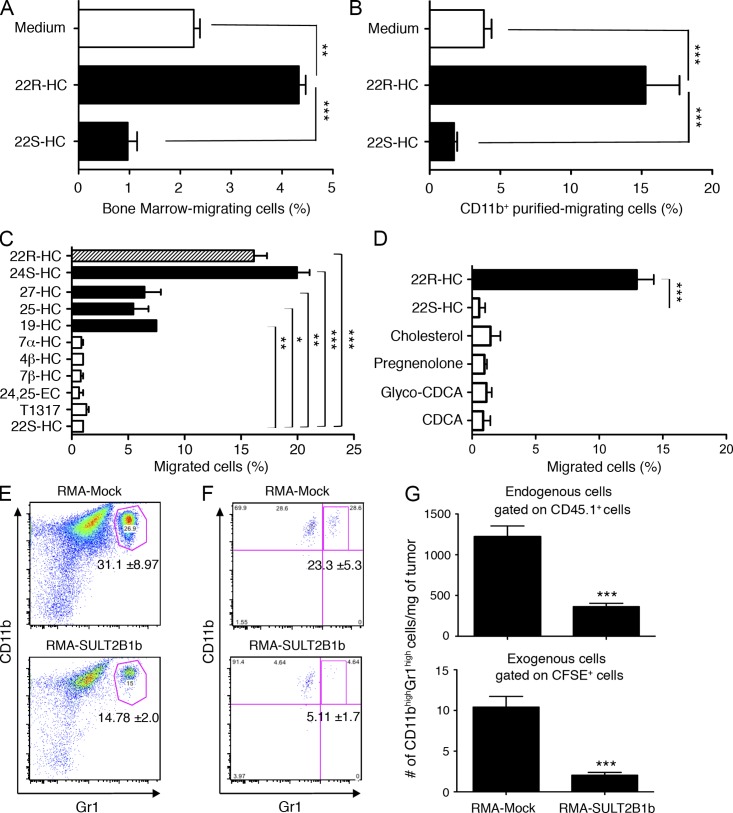
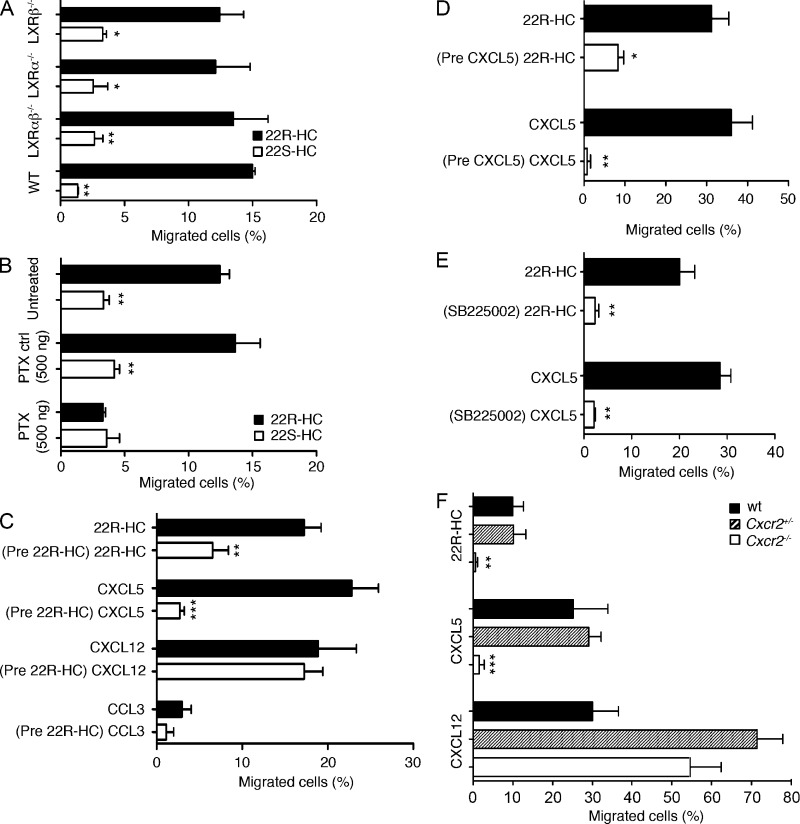
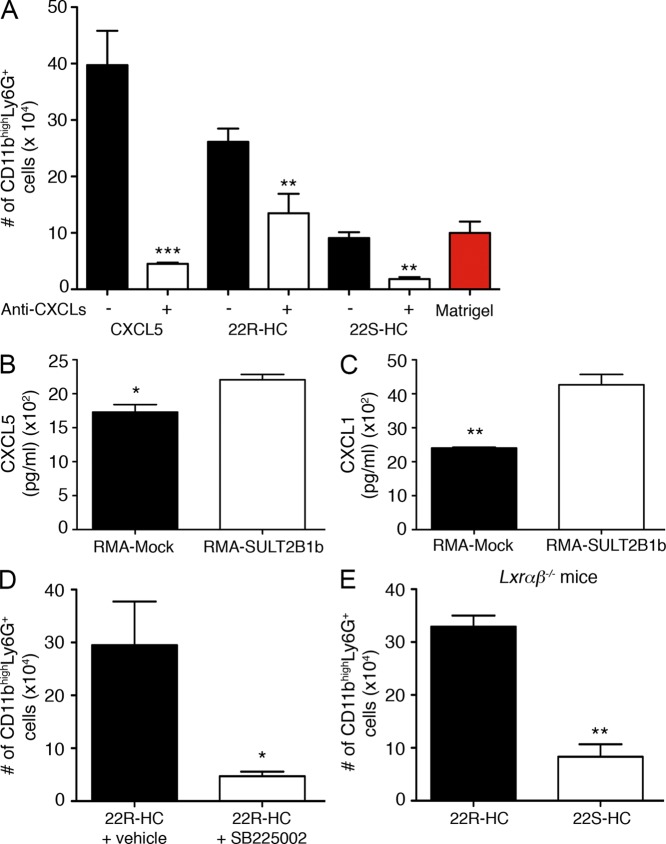
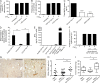
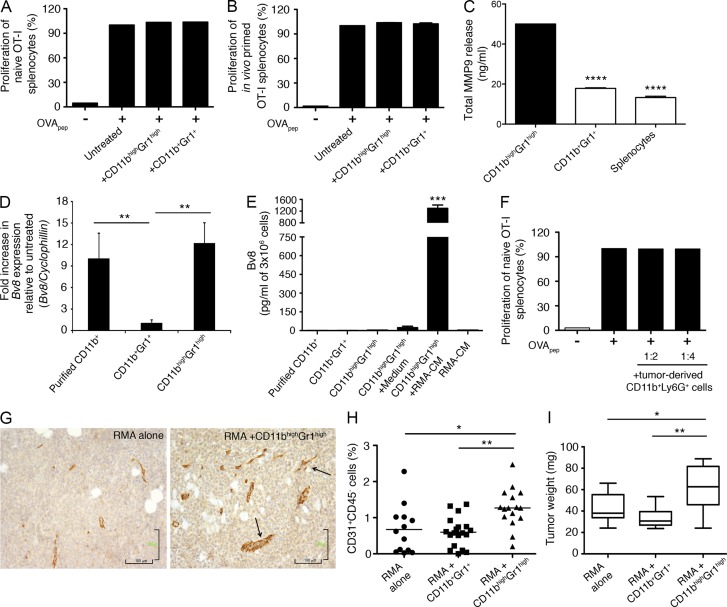
Description:Tumor-infiltrating immune cells can be conditioned by molecules released within the microenvironment to thwart antitumor immune responses, thereby facilitating tumor growth. Among immune cells, neutrophils play an important protumorigenic role by favoring neoangiogenesis and/or by suppressing antitumor immune responses. Tumor-derived oxysterols have recently been shown to favor tumor growth by inhibiting dendritic cell migration toward lymphoid organs. We report that tumor-derived oxysterols recruit protumor neutrophils in a liver X receptor (LXR)-independent, CXCR2-dependent manner, thus favoring tumor growth by promoting neoangiogenesis and immunosuppression. We demonstrate that interfering with the oxysterol-CXCR2 axis delays tumor growth and prolongs the overall survival of tumor-bearing mice. These results identify an unanticipated protumor function of the oxysterol-CXCR2 axis and a possible target for cancer therapy.
-
Subjects:
- Article
- Animals
- Antigens, CD11b
- Antigens, Ly
- Cell Proliferation
- Chemotaxis
- Chromatography, High Pressure Liquid
- Disease Models, Animal
- HEK293 Cells
- Humans
- Hydroxycholesterols
- Immunosuppression
- Ligands
- Mass Spectrometry
- Mice
- Myeloid Cells
- Neoplasms
- Neovascularization, Pathologic
- Neutrophils
- Orphan Nuclear Receptors
- Receptors, G-Protein-Coupled
- Receptors, Interleukin-8B
- Signal Transduction
- Sterols
-
Source:J Exp Med. 2013; 210(9):1711-1728.
-
Document Type:
-
Funding:
-
Volume:210
-
Issue:9
-
Download URL:
-
File Type:
 [PDF - 2.58 MB]
 -
Collection(s):
-
Main Document Checksum:urn:sha256:18665edb124553c2bfc71710cb52c7d4ddc726035cab8fe474f73b27eda6c71a
Supporting Files
-
html


 Was this page helpful?
 Found an issue?








CDC STACKS serves as an archival repository of CDC-published products including
scientific findings, journal articles, guidelines, recommendations, or other public health information authored or
co-authored by CDC or funded partners.
As a repository, CDC STACKS retains documents in their original published format to ensure public access to scientific information.
As a repository, CDC STACKS retains documents in their original published format to ensure public access to scientific information.
You May Also Like
COLLECTION
CDC Public Access