



Recombinant Viruses Initiated the Early HIV-1 Epidemic in Burkina Faso
Supporting Files
Public Domain

-
Mar 19 2014
File Language:
English
Details
-
Alternative Title:PLoS One
-
Personal Author:
-
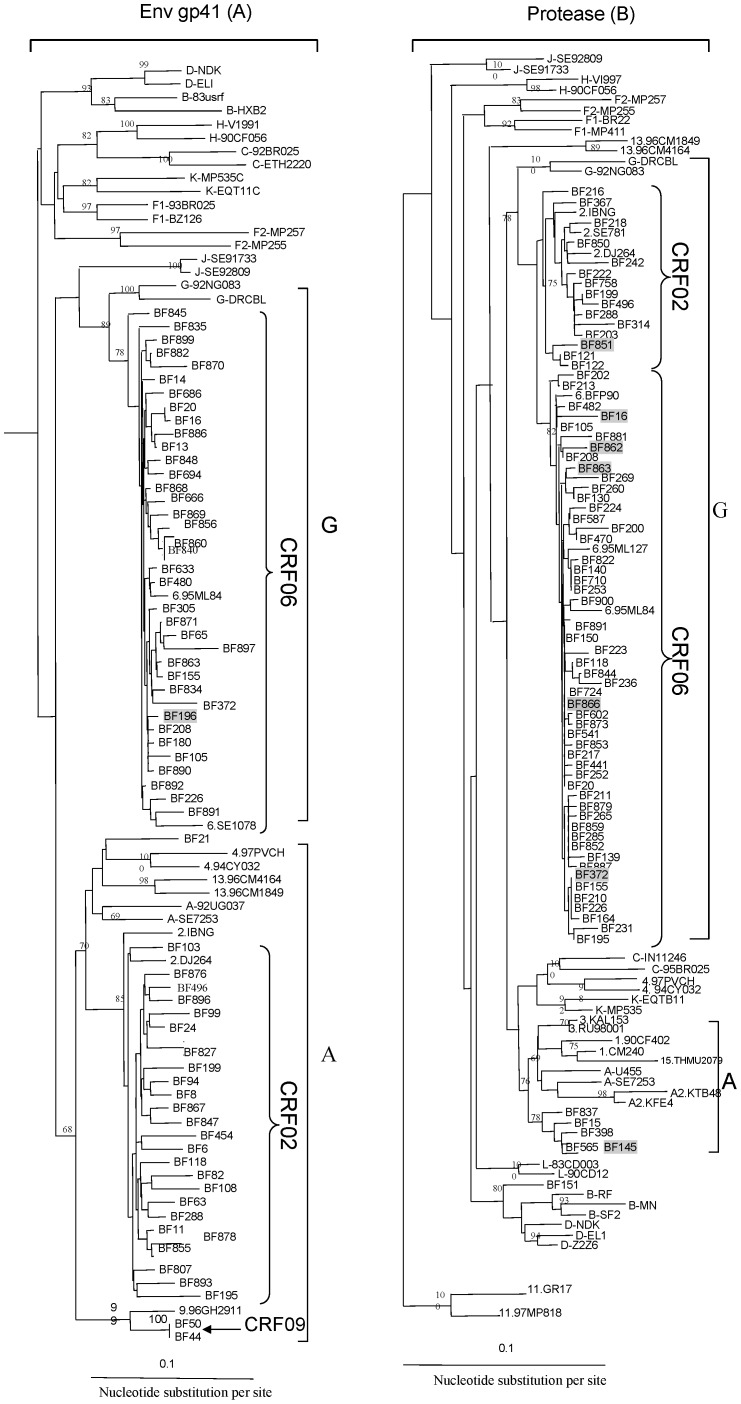
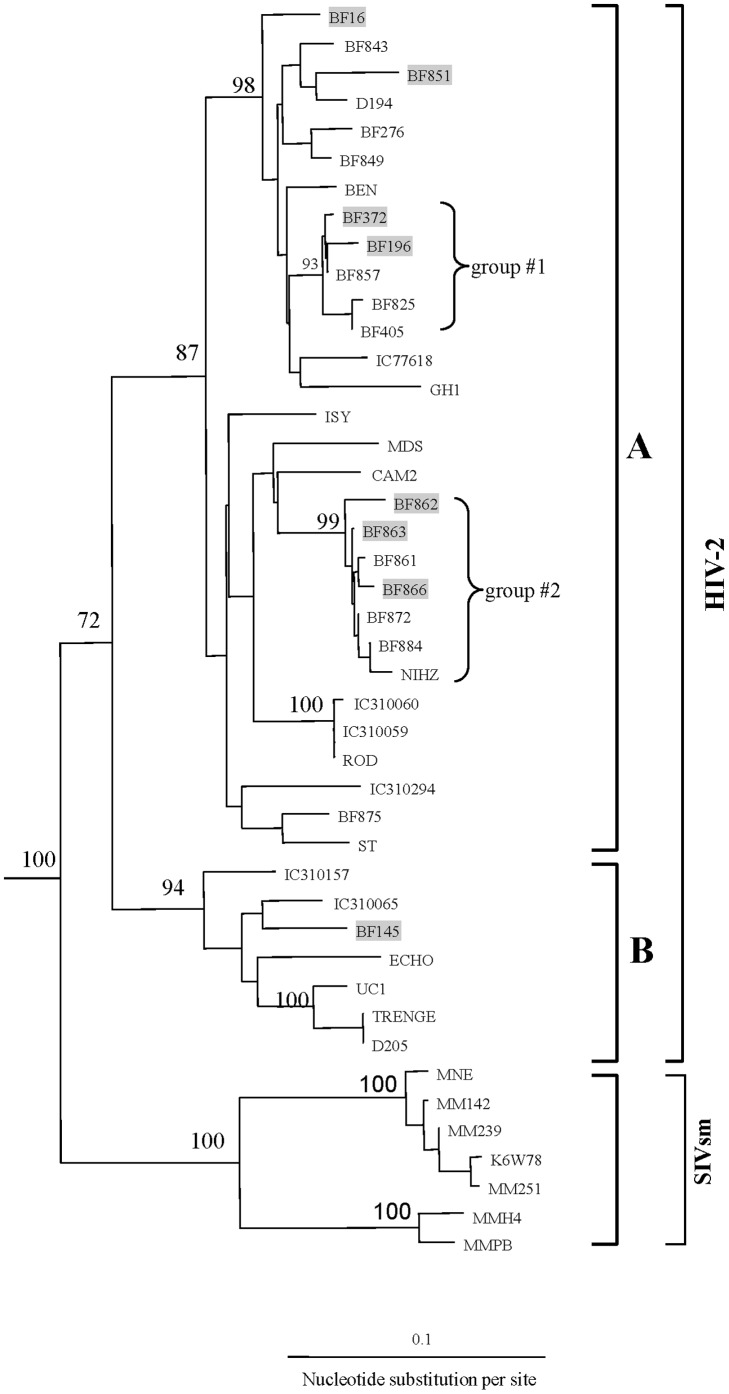
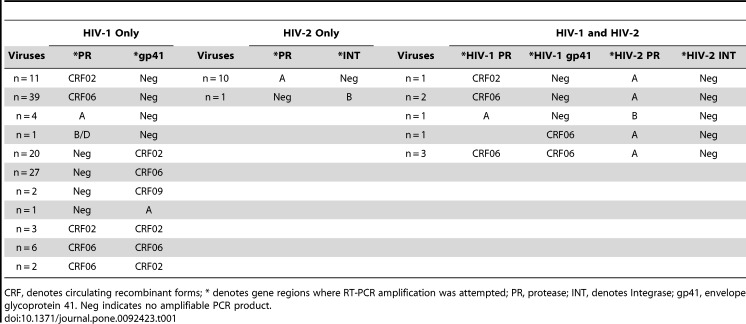
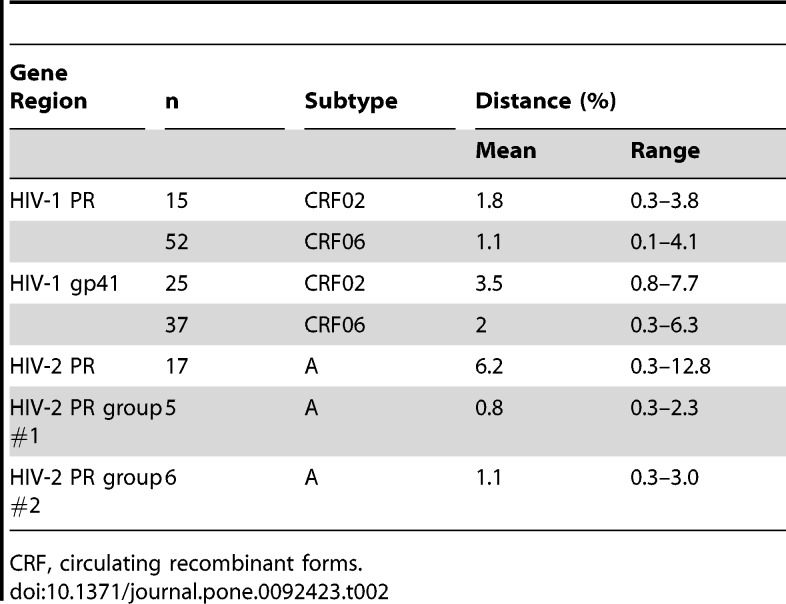
Description:We analyzed genetic diversity and phylogenetic relationships among 124 HIV-1 and 19 HIV-2 strains in sera collected in 1986 from patients of the state hospital in Ouagadougou, Burkina Faso. Phylogenetic analysis of the HIV-1 env gp41 region of 65 sequences characterized 37 (56.9%) as CRF06_cpx strains, 25 (38.5%) as CRF02_AG, 2 (3.1%) as CRF09_cpx, and 1 (1.5%) as subtype A. Similarly, phylogenetic analysis of the protease (PR) gene region of 73 sequences identified 52 (71.2%) as CRF06_cpx, 15 (20.5%) as CRF02_AG, 5 (6.8%) as subtype A, and 1 (1.4%) was a unique strain that clustered along the B/D lineage but basal to the node connecting the two lineages. HIV-2 PR or integrase (INT) groups A (n = 17 89.5%) and B (n = 2 10.5%) were found in both monotypic (n = 11) and heterotypic HIV-1/HIV-2 (n = 8) infections, with few HIV-2 group B infections. Based on limited available sampling, evidence suggests two recombinant viruses, CRF06_cpx and CRF02_AG, appear to have driven the beginning of the mid-1980s HIV-1 epidemic in Burkina Faso.
-
Subjects:
-
Source:PLoS One. 2014; 9(3).
-
Pubmed ID:24647246
-
Pubmed Central ID:PMC3960253
-
Document Type:
-
Place as Subject:
-
Volume:9
-
Issue:3
-
Download URL:
-
File Type:
 [PDF - 468.28 KB]
 -
Collection(s):
-
Main Document Checksum:urn:sha256:d0263b6910e2faed88c0e50e14c8cca59a98300d585f551fae3958725f7fd7c5
Supporting Files


File Language:
English
 Was this page helpful?
 Found an issue?



CDC STACKS serves as an archival repository of CDC-published products including
scientific findings, journal articles, guidelines, recommendations, or other public health information authored or
co-authored by CDC or funded partners.
As a repository, CDC STACKS retains documents in their original published format to ensure public access to scientific information.
As a repository, CDC STACKS retains documents in their original published format to ensure public access to scientific information.
You May Also Like
COLLECTION
CDC Public Access