



The Peculiar Epidemiology of Dracunculiasis in Chad
Supporting Files

-
-
By Show All

-
File Language:
English
Details
-
Alternative Title:Am J Trop Med Hyg
-
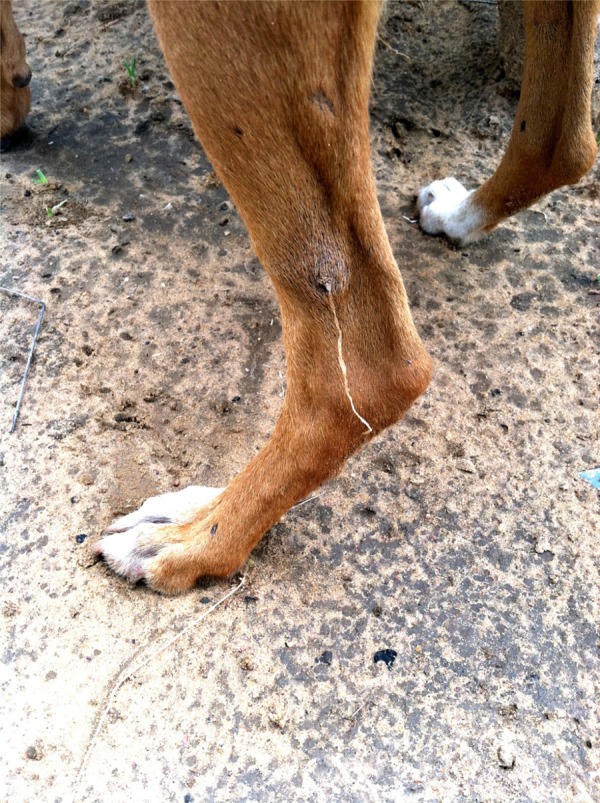
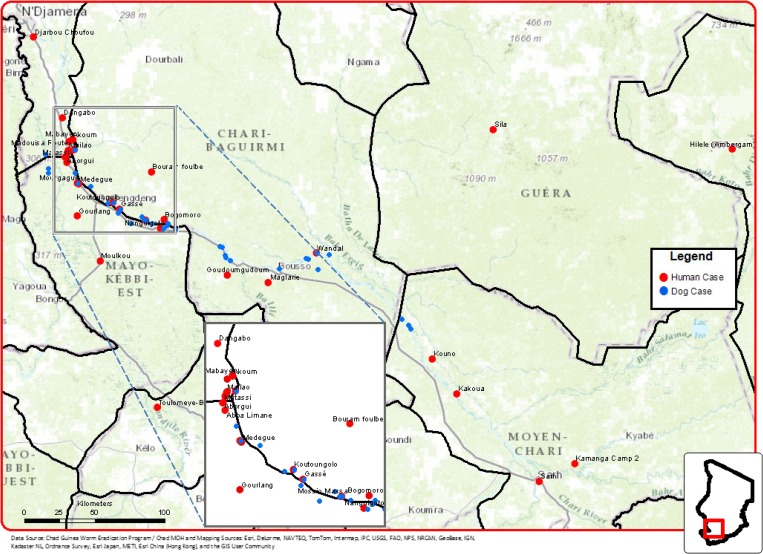
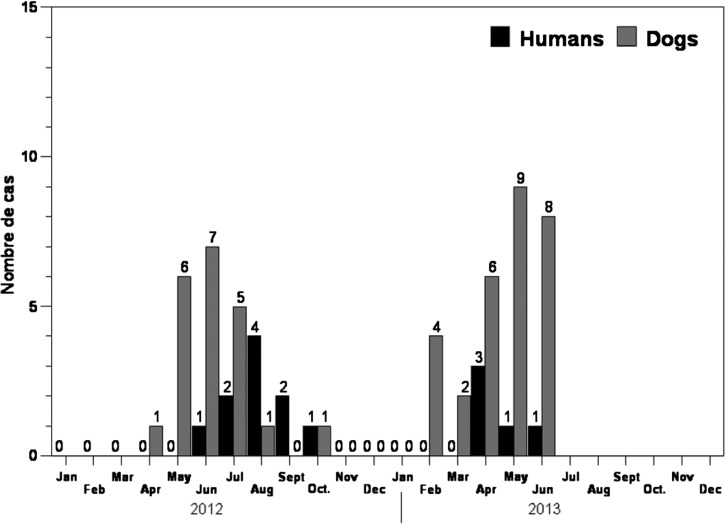
Description:Dracunculiasis was rediscovered in Chad in 2010 after an apparent absence of 10 years. In April 2012 active village-based surveillance was initiated to determine where, when, and how transmission of the disease was occurring, and to implement interventions to interrupt it. The current epidemiologic pattern of the disease in Chad is unlike that seen previously in Chad or other endemic countries, i.e., no clustering of cases by village or association with a common water source, the average number of worms per person was small, and a large number of dogs were found to be infected. Molecular sequencing suggests these infections were all caused by Dracunculus medinensis. It appears that the infection in dogs is serving as the major driving force sustaining transmission in Chad, that an aberrant life cycle involving a paratenic host common to people and dogs is occurring, and that the cases in humans are sporadic and incidental.
-
Subjects:
-
Document Type:
-
Funding:
-
Place as Subject:
-
Volume:90
-
Issue:1
-
Download URL:
-
File Type:
 [PDF - 2.05 MB]
-
Collection(s):
-
Main Document Checksum:urn:sha256:75a56bdda15d1f8d00efe8f17e00638f41914e073167fa144de02bb525f9e9ef
Supporting Files


File Language:
English
 Was this page helpful?
 Found an issue?










CDC STACKS serves as an archival repository of CDC-published products including
scientific findings, journal articles, guidelines, recommendations, or other public health information authored or
co-authored by CDC or funded partners.
As a repository, CDC STACKS retains documents in their original published format to ensure public access to scientific information.
You May Also Like
COLLECTION
CDC Public Access