



First Detection of Heartland Virus (Bunyaviridae: Phlebovirus) from Field Collected Arthropods
Supporting Files
Public Domain

-
Jul 22 2013
-
Available in CDC Stacks on September 04, 2013, 12:00 AM
File Language:
English
Details
-
Alternative Title:Am J Trop Med Hyg
-
Personal Author:
-
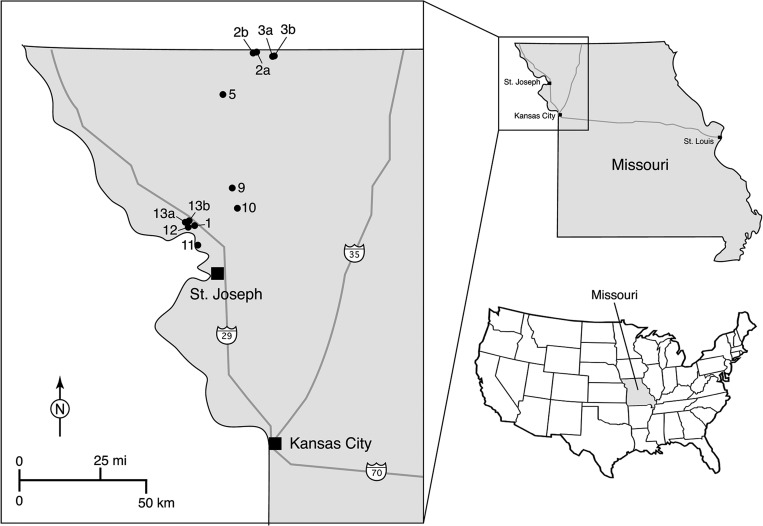
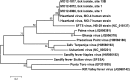
Description:Heartland virus (HRTV), the first pathogenic Phlebovirus (Family: Bunyaviridae) discovered in the United States, was recently described from two Missouri farmers. In 2012, we collected 56,428 ticks representing three species at 12 sites including both patients' farms. Amblyomma americanum and Dermacentor variabilis accounted for nearly all ticks collected. Ten pools composed of deplete nymphs of A. americanum collected at a patient farm and a nearby conservation area were reverse transcription-polymerase chain reaction positive, and eight pools yielded viable viruses. Sequence data from the nonstructural protein of the Small segment indicates that tick strains and human strains are very similar, ≥ 97.6% sequence identity. This is the first study to isolate HRTV from field-collected arthropods and to implicate ticks as potential vectors. Amblyomma americanum likely becomes infected by feeding on viremic hosts during the larval stage, and transmission to humans occurs during the spring and early summer when nymphs are abundant and actively host seeking.
-
Subjects:
-
Source:Am J Trop Med Hyg. 2013; 89(3):445-452.
-
Document Type:
-
Place as Subject:
-
Volume:89
-
Issue:3
-
Download URL:
-
File Type:
 [PDF - 719.16 KB]
 -
Collection(s):
-
Main Document Checksum:urn:sha256:056e8ad0d2e38170d011194b8ffc5ffb81c2518df1bc47f09007c7feaa8087be
Supporting Files


File Language:
English
 Was this page helpful?
 Found an issue?



CDC STACKS serves as an archival repository of CDC-published products including
scientific findings, journal articles, guidelines, recommendations, or other public health information authored or
co-authored by CDC or funded partners.
As a repository, CDC STACKS retains documents in their original published format to ensure public access to scientific information.
As a repository, CDC STACKS retains documents in their original published format to ensure public access to scientific information.
You May Also Like
COLLECTION
CDC Public Access