



The history of 20th century malaria control in Peru
Supporting Files
Public Domain

-
Aug 30 2013
File Language:
English
Details
-
Alternative Title:Malar J
-
Personal Author:
-
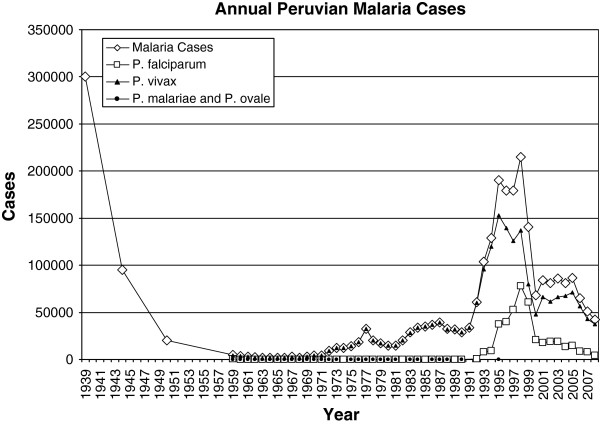
Description:Malaria has been part of Peruvian life since at least the 1500s. While Peru gave the world quinine, one of the first treatments for malaria, its history is pockmarked with endemic malaria and occasional epidemics. In this review, major increases in Peruvian malaria incidence over the past hundred years are described, as well as the human factors that have facilitated these events, and concerted private and governmental efforts to control malaria. Political support for malaria control has varied and unexpected events like vector and parasite resistance have adversely impacted morbidity and mortality. Though the ready availability of novel insecticides like DDT and efficacious medications reduced malaria to very low levels for a decade after the post eradication era, malaria reemerged as an important modern day challenge to Peruvian public health. Its reemergence sparked collaboration between domestic and international partners towards the elimination of malaria in Peru.
-
Subjects:
-
Source:Malar J. 2013; 12:303.
-
Document Type:
-
Genre:
-
Place as Subject:
-
Volume:12
-
Download URL:
-
File Type:
 [PDF - 248.93 KB]
 -
Collection(s):
-
Main Document Checksum:urn:sha256:674e72e42fc713757d3bbcd116bba12838370556b95a154f48c62ecc4c793a44
Supporting Files


File Language:
English
 Was this page helpful?
 Found an issue?

CDC STACKS serves as an archival repository of CDC-published products including
scientific findings, journal articles, guidelines, recommendations, or other public health information authored or
co-authored by CDC or funded partners.
As a repository, CDC STACKS retains documents in their original published format to ensure public access to scientific information.
As a repository, CDC STACKS retains documents in their original published format to ensure public access to scientific information.
You May Also Like
COLLECTION
CDC Public Access