


IgA and Neutralizing Antibodies to Influenza A Virus in Human Milk: A Randomized Trial of Antenatal Influenza Immunization
Supporting Files

-
Aug 14 2013
-
File Language:
English
Details
-
Alternative Title:PLoS One
-
Personal Author:
-
Description:Background
Antenatal immunization of mothers with influenza vaccine increases serum antibodies and reduces the rates of influenza illness in mothers and their infants. We report the effect of antenatal immunization on the levels of specific anti-influenza IgA levels in human breast milk. (ClinicalTrials.gov identifier NCT00142389; http://clinicaltrials.gov/ct2/show/NCT00142389).
Methods and Findings
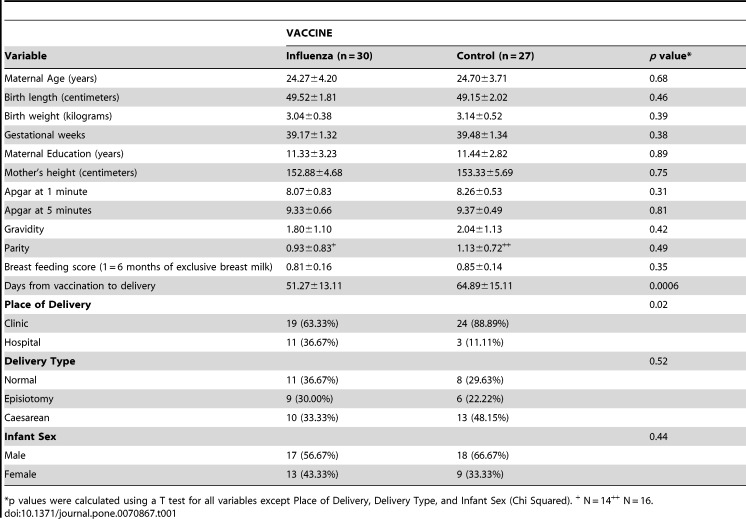
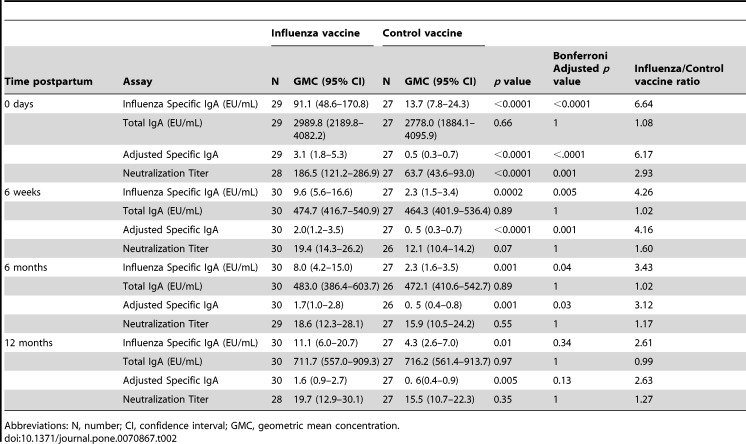
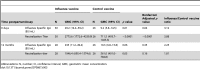
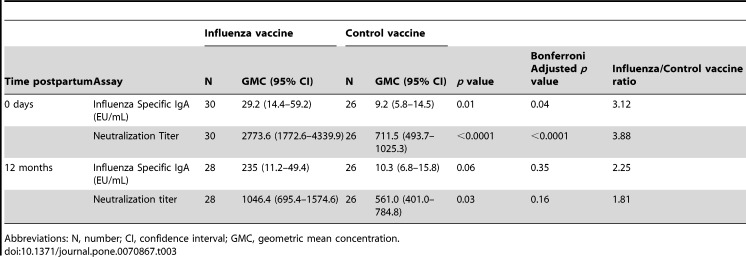
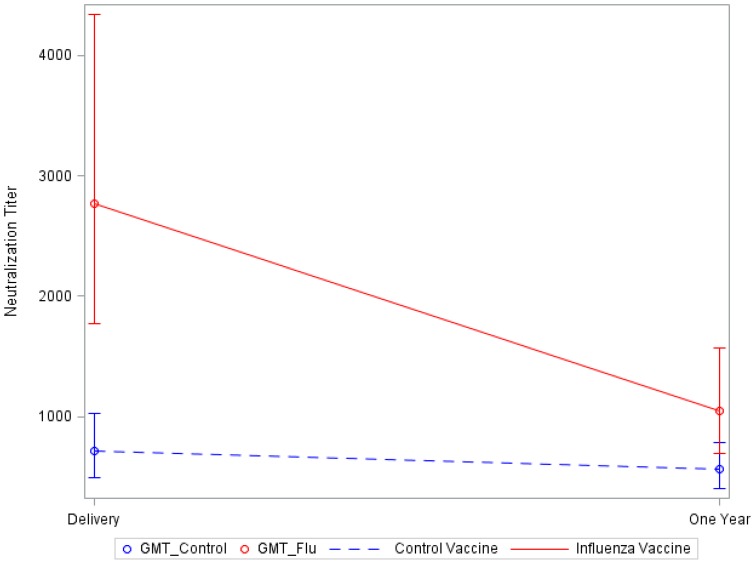
The Mother's Gift study was a prospective, blinded, randomized controlled trial that assigned 340 pregnant Bangladeshi mothers to receive either trivalent inactivated influenza vaccine, or 23-valent pneumococcal polysaccharide vaccine during the third trimester. We evaluated breast milk at birth, 6 weeks, 6 months, and 12 months, and serum at 10 weeks and 12 months. Milk and serum specimens from 57 subjects were assayed for specific IgA antibody to influenza A/New Caledonia (H1N1) using an enzyme-linked immunosorbent assay (ELISA) and a virus neutralization assay, and for total IgA using ELISA. Influenza-specific IgA levels in breast milk were significantly higher in influenza vaccinees than in pneumococcal controls for at least 6 months postpartum (p = 0.04). Geometric mean concentrations ranged from 8.0 to 91.1 ELISA units/ml in vaccinees, versus 2.3 to 13.7 ELISA units/mL in controls. Virus neutralization titers in milk were 1.2 to 3 fold greater in vaccinees, and correlated with influenza-specific IgA levels (r = 0.86). Greater exclusivity of breastfeeding in the first 6 months of life significantly decreased the expected number of respiratory illness with fever episodes in infants of influenza-vaccinated mothers (p = 0.0042) but not in infants of pneumococcal-vaccinated mothers (p = 0.4154).
Conclusions
The sustained high levels of actively produced anti-influenza IgA in breast milk and the decreased infant episodes of respiratory illness with fever suggest that breastfeeding may provide local mucosal protection for the infant for at least 6 months. Studies are needed to determine the cellular and immunologic mechanisms of breast milk-mediated protection after antepartum immunization.
Trial Registration
ClinicalTrials.gov NCT00142389
-
Subjects:
-
Source:PLoS One. 2013; 8(8).
-
Document Type:
-
Funding:
-
Volume:8
-
Issue:8
-
Collection(s):
-
Main Document Checksum:urn:sha256:514ba336ecf5f7b3a44fc6ddb4996271beb4d09c7c9d2630b9cc0d2bba91cccd
-
Download URL:
-
File Type:
 [PDF
- 397.98 KB
]
[PDF
- 397.98 KB
]
Supporting Files


File Language:
English
ON THIS PAGE



CDC STACKS serves as an archival repository of CDC-published products including
scientific findings,
journal articles, guidelines, recommendations, or other public health information authored or
co-authored by CDC or funded partners.
As a repository, CDC STACKS retains documents in their original published format to ensure public access to scientific information.
As a repository, CDC STACKS retains documents in their original published format to ensure public access to scientific information.
You May Also Like
COLLECTION
CDC Public Access