



The Costs of an Outreach Intervention for Low-Income Women With Abnormal Pap Smears
Supporting Files
Public Domain

-
Dec 15 2006
File Language:
English
Details
-
Journal Article:Preventing Chronic Disease (PCD)
-
Personal Author:
-
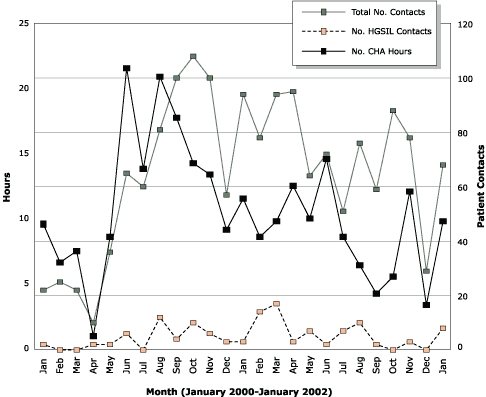
Description:Introduction ; Follow-up among women who have had an abnormal Papanicolaou (Pap) smear is often poor in public hospitals that serve women at increased risk for cervical cancer. This randomized controlled trial evaluated and compared the total cost and cost per follow-up of a tailored outreach intervention plus usual care with the total cost and cost per follow-up of usual care alone. ; Methods ; Women with an abnormal Pap smear (n = 348) receiving care at Alameda County Medical Center (Alameda County, California) were randomized to intervention or usual care. The intervention used trained community health advisors to complement the clinic's protocol for usual care. We assessed the costs of the intervention and the cost per follow-up within 6 months of the abnormal Pap smear test result. ; Results ; The intervention increased the rate of 6-month follow-up by 29 percentage points, and the incremental cost per follow-up was $959 (2005 dollars). The cost per follow-up varied by the severity of the abnormality. The cost per follow-up for the most severe abnormality (high-grade squamous intraepithelial lesion) was $681, while the cost per follow-up for less severe abnormalities was higher. ; Conclusion ; In a health care system in which many women fail to get follow-up care for an abnormal Pap smear, outreach workers were more effective than usual care (mail or telephone reminders) at increasing follow-up rates. The results suggest that outreach workers should manage their effort based on the degree of abnormality; most effort should be placed on women with the most severe abnormality (high-grade squamous intraepithelial lesion).
-
Subjects:
-
Source:Prev Chronic Dis. 2007; 4(1).
-
ISSN:1545-1151
-
Document Type:
-
Place as Subject:
-
Location:
-
Volume:4
-
Issue:1
-
Download URL:
-
File Type:
 [PDF - 335.63 KB]
 -
Collection(s):
-
Main Document Checksum:urn:sha-512:7ea7051153185878626fa071122bf03f1b0423f5687befc2035bc65bf4a65593a136e96e98ced1afda865bbfc9272bd300876c4194a499484d78e2e5620106be
Supporting Files


File Language:
English
 Was this page helpful?
 Found an issue?


CDC STACKS serves as an archival repository of CDC-published products including
scientific findings, journal articles, guidelines, recommendations, or other public health information authored or
co-authored by CDC or funded partners.
As a repository, CDC STACKS retains documents in their original published format to ensure public access to scientific information.
As a repository, CDC STACKS retains documents in their original published format to ensure public access to scientific information.
You May Also Like
COLLECTION
Preventing Chronic Disease