



Ilheus Virus Isolation in the Pantanal, West-Central Brazil
Supporting Files
Public Domain

-
Jul 18 2013
File Language:
English
Details
-
Alternative Title:PLoS Negl Trop Dis
-
Personal Author:
-
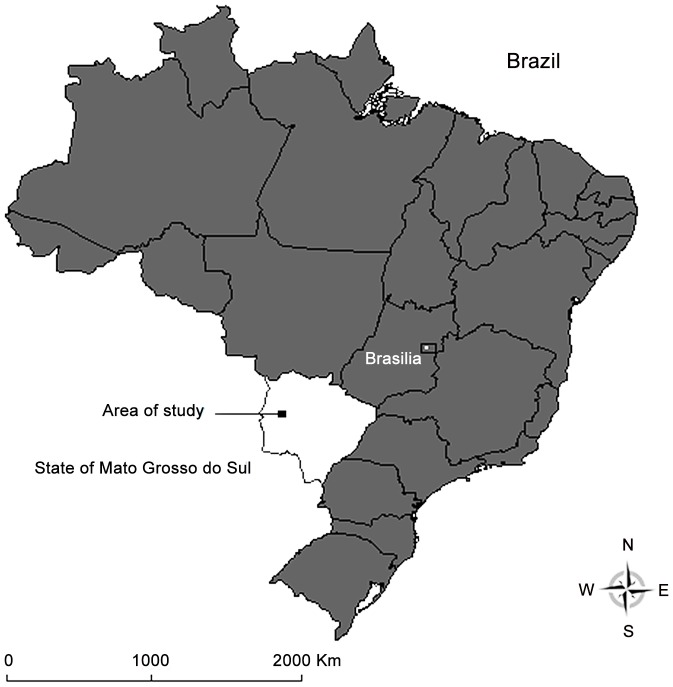
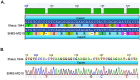
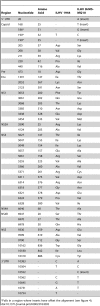
Description:The wetlands of the Brazilian Pantanal host large concentrations of diverse wildlife species and hematophagous arthropods, conditions that favor the circulation of zoonotic arboviruses. A recent study from the Nhecolândia sub-region of Pantanal reported serological evidence of various flaviviruses, including West Nile virus and Ilheus virus (ILHV). According to the age of seropositive horses, at least three flaviviruses, including ILHV, circulated in the Brazilian Pantanal between 2005 and 2009. To extend this study, we collected 3,234 adult mosquitoes of 16 species during 2009 and 2010 in the same sub-region. Mosquito pool homogenates were assayed for infectious virus on C6/36 and Vero cell monolayers and also tested for flaviviral RNA by a group-specific real-time RT-PCR. One pool containing 50 non-engorged female specimens of Aedes scapularis tested positive for ILHV by culture and for ILHV RNA by real-time RT-PCR, indicating a minimum infection rate of 2.5 per 1000. Full-length genomic sequence exhibited 95% identity to the only full genome sequence available for ILHV. The present data confirm the circulation of ILHV in the Brazilian Pantanal.
-
Subjects:
-
Source:PLoS Negl Trop Dis. 2013; 7(7).
-
Pubmed ID:23875051
-
Pubmed Central ID:PMC3715421
-
Document Type:
-
Place as Subject:
-
Volume:7
-
Issue:7
-
Download URL:
-
File Type:
 [PDF - 1.93 MB]
 -
Collection(s):
-
Main Document Checksum:urn:sha256:46c8e4797f66dfbfb955addd28c63979f3203470ce2e8f427ac5305d99eb3f5d
Supporting Files


File Language:
English
 Was this page helpful?
 Found an issue?







CDC STACKS serves as an archival repository of CDC-published products including
scientific findings, journal articles, guidelines, recommendations, or other public health information authored or
co-authored by CDC or funded partners.
As a repository, CDC STACKS retains documents in their original published format to ensure public access to scientific information.
As a repository, CDC STACKS retains documents in their original published format to ensure public access to scientific information.
You May Also Like
COLLECTION
CDC Public Access