


Pneumonia Hospitalizations among Children, Kenya
Supporting Files
Public Domain

-
Feb 2013
-
File Language:
English
Details
-
Alternative Title:Emerg Infect Dis
-
Personal Author:
-
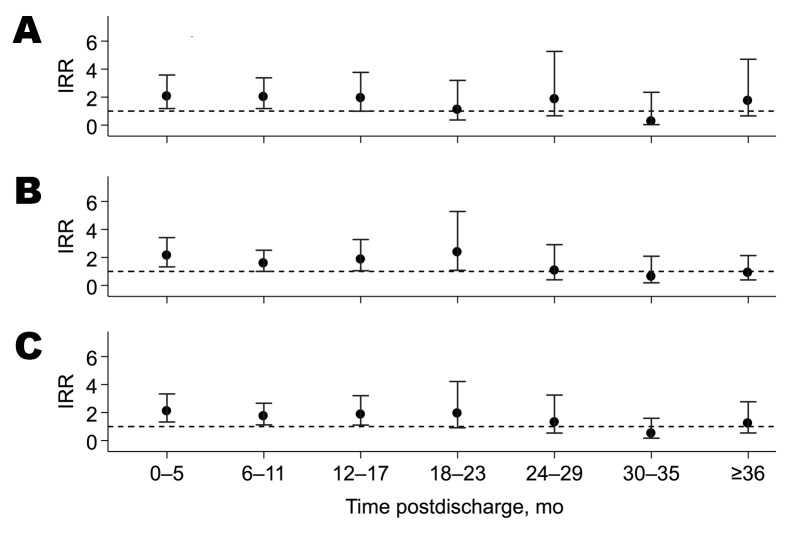
Description:Severe lower respiratory tract infection (LRTI) in infants caused by respiratory syncytial virus (RSV) has been associated with later pneumonia hospitalization among children. To determine risk for pneumonia after RSV hospitalization in infancy, we conducted a retrospective cohort analysis of 2,813 infants admitted to a hospital in Kenya and identified readmissions for pneumonia among this group during early childhood (<60 months of age). Incidence of readmission for pneumonia was higher for children whose first admission as infants was for LRTI and who were <3 months of age than for children who were first admitted as infants for non-LRTI, irrespective of RSV status. Incidence of readmission for pneumonia with wheeze was higher for children whose first admission involved RSV compared with those who had non-RSV LRTI. Excess pneumonia risk persisted for 2 years after the initial hospitalization. Close postdischarge follow-up of infants with LRTI, with or without RSV, could help prevent severe pneumonia later in childhood.
-
Subjects:
-
Source:Emerg Infect Dis. 19(2):223-229.
-
Document Type:
-
Place as Subject:
-
Location:
-
Volume:19
-
Issue:2
-
Collection(s):
-
Main Document Checksum:urn:sha256:7d757b273be53a79f190fc1053809b7b710d9b58c0c28fc4396a2c7f67a503ec
-
Download URL:
-
File Type:
 [PDF
- 466.92 KB
]
[PDF
- 466.92 KB
]
Supporting Files


File Language:
English
ON THIS PAGE


CDC STACKS serves as an archival repository of CDC-published products including
scientific findings,
journal articles, guidelines, recommendations, or other public health information authored or
co-authored by CDC or funded partners.
As a repository, CDC STACKS retains documents in their original published format to ensure public access to scientific information.
As a repository, CDC STACKS retains documents in their original published format to ensure public access to scientific information.
You May Also Like
COLLECTION
Emerging Infectious Diseases