



Epidemic of Plasmodium falciparum Malaria Involving Substandard Antimalarial Drugs, Pakistan, 2003
Supporting Files
Public Domain

-
Nov 2009
File Language:
English
Details
-
Alternative Title:Emerg Infect Dis
-
Personal Author:
-
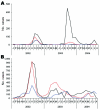
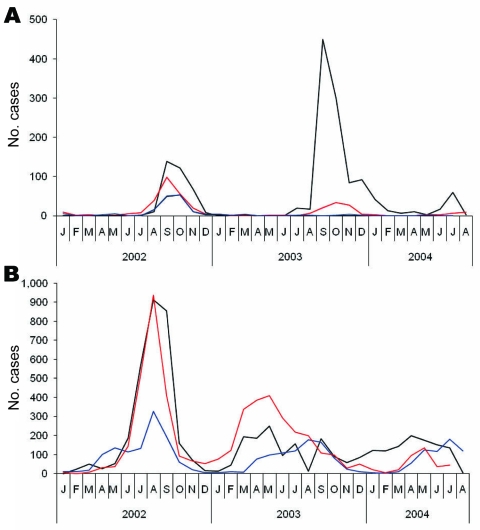
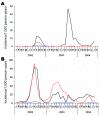
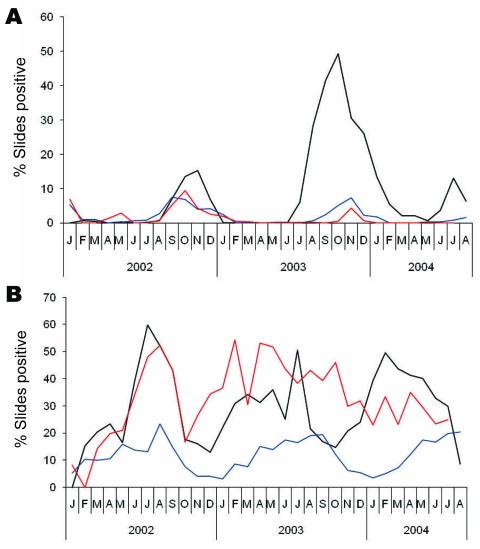
Description:Because of instability in eastern Afghanistan, new refugees crossed into the federally administered tribal areas of northwestern Pakistan in 2002. In 2003, we investigated an epidemic of Plasmodium falciparum malaria in 1 of the camps. Incidence was 100.4 cases/1,000 person-years; in other nearby camps it was only 2.1/1,000 person-years. Anopheline mosquitoes were found despite an earlier spray campaign. Documented clinical failures at the basic health unit prompted a drug resistance survey of locally manufactured sulfadoxine-pyrimethamine used for routine treatment. The in vivo failure rate was 28.5%. PCR analysis of the P. falciparum dihydrofolate reductase and dihyropteroate synthase genes showed no mutations associated with clinical failure. However, chemical analysis of the drug showed that it was substandard. As global incidence decreases and epidemics become more of a threat, enhanced quality assurance of control interventions is essential.
-
Subjects:
-
Source:Emerg Infect Dis. 15(11):1753-1759.
-
Document Type:
-
Place as Subject:
-
Location:
-
Volume:15
-
Issue:11
-
Download URL:
-
File Type:
 [PDF - 260.36 KB]
 -
Collection(s):
-
Main Document Checksum:urn:sha256:31768ae2b8156304bfc4cb7eeffab26a038ce1d0dd502398fca3b6551b567d4a
Supporting Files


File Language:
English
 Was this page helpful?
 Found an issue?



CDC STACKS serves as an archival repository of CDC-published products including
scientific findings, journal articles, guidelines, recommendations, or other public health information authored or
co-authored by CDC or funded partners.
As a repository, CDC STACKS retains documents in their original published format to ensure public access to scientific information.
As a repository, CDC STACKS retains documents in their original published format to ensure public access to scientific information.
You May Also Like
COLLECTION
Emerging Infectious Diseases