



Racial and ethnic disparities in diagnosis and treatment outcomes among US-born people diagnosed with tuberculosis, 2003–19: an analysis of national surveillance data
Supporting Files

-
1 2024 ; 1-2024
-
Available in CDC Stacks on 2024-12-23T00:00:00Z
File Language:
English
Details
-
Alternative Title:Lancet Public Health
-
Personal Author:Regan, Mathilda ; Li, Yunfei ; Swartwood, Nicole A ; Barham, Terrika ; Beeler Asay, Garrett R ; Cohen, Ted ; Hill, Andrew N ; Horsburgh, C Robert ; Khan, Awal ; Marks, Suzanne M ; Myles, Ranell L ; Salomon, Joshua A ; Self, Julie L ; Menzies, Nicolas A
-
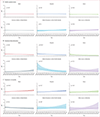
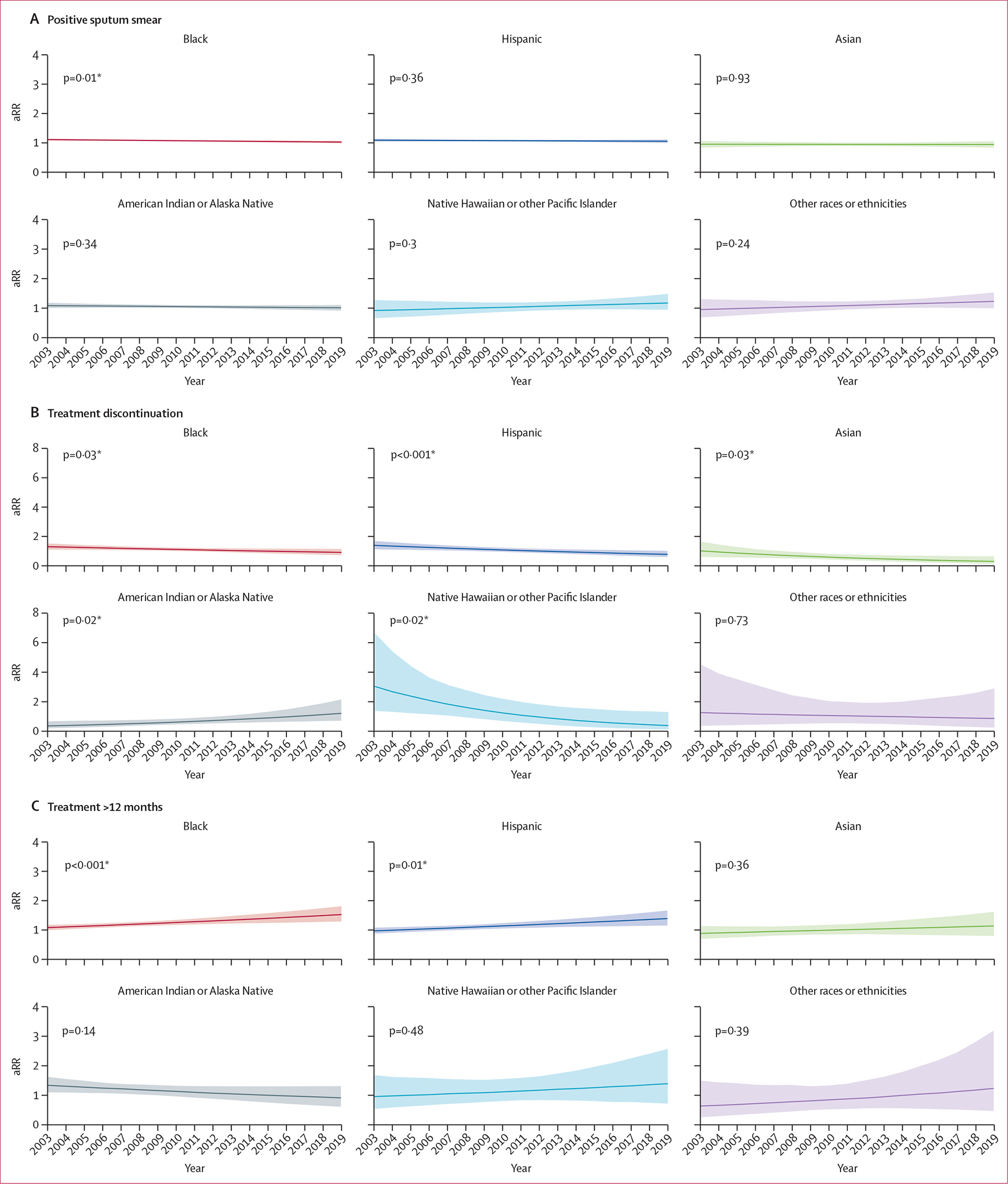
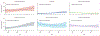
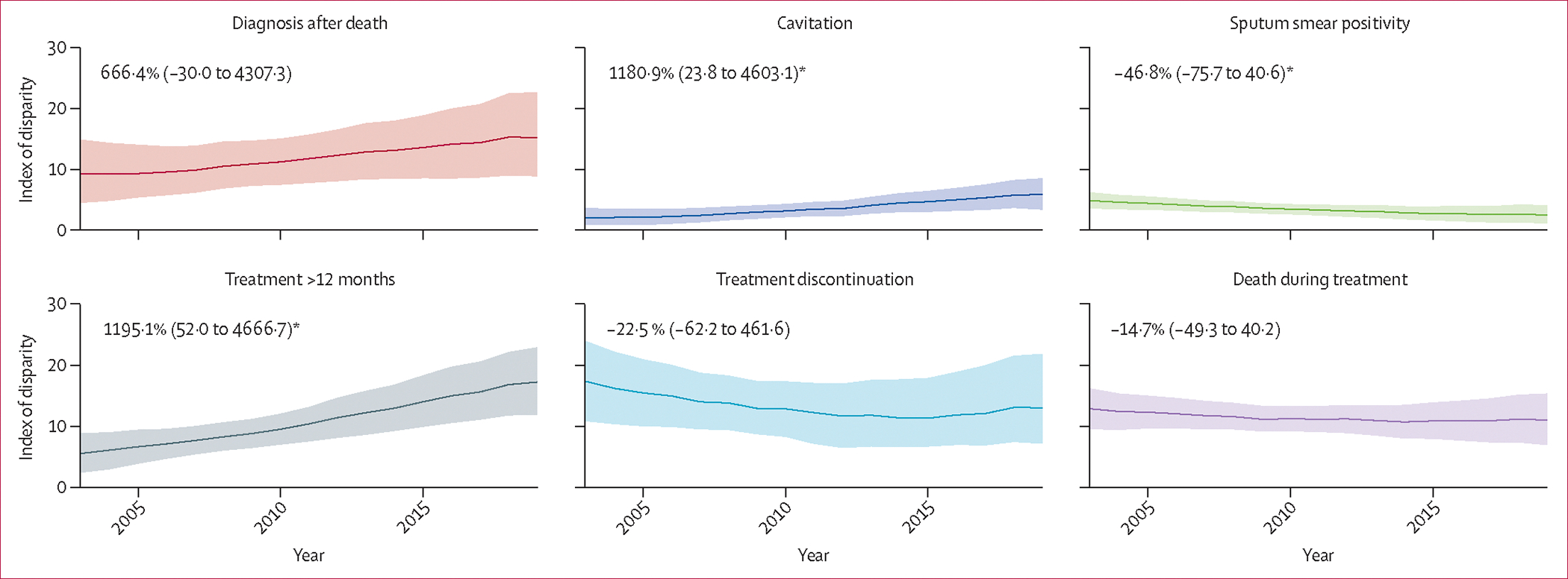
Description:Background ; Persistent racial and ethnic disparities in tuberculosis incidence exist in the USA, however, less is known about disparities along the tuberculosis continuum of care. This study aimed to describe how race and ethnicity are associated with tuberculosis diagnosis and treatment outcomes. ; Methods ; In this analysis of national surveillance data, we extracted data from the US National Tuberculosis Surveillance System on US-born patients with tuberculosis during 2003–19. To estimate the association between race and ethnicity and tuberculosis diagnosis (diagnosis after death, cavitation, and sputum smear positivity) and treatment outcomes (treatment for more than 12 months, treatment discontinuation, and death during treatment), we fitted log-binomial regression models adjusting for calendar year, sex, age category, and regional division. Race and ethnicity were defined based on US Census Bureau classification as White, Black, Hispanic, Asian, American Indian or Alaska Native, Native Hawaiian or Pacific Islander, and people of other ethnicities. We quantified racial and ethnic disparities as adjusted relative risks (aRRs) using non-Hispanic White people as the reference group. We also calculated the Index of Disparity as a summary measure that quantifies the dispersion in a given outcome across all racial and ethnic groups, relative to the population mean. We estimated time trends in each outcome to evaluate whether disparities were closing or widening. ; Findings ; From 2003 to 2019, there were 72 809 US-born individuals diagnosed with tuberculosis disease of whom 72 369 (35·7% women and 64·3% men) could be included in analyses. We observed an overall higher risk of any adverse outcome (defined as diagnosis after death, treatment discontinuation, or death during treatment) for non-Hispanic Black people (aRR 1·27, 95% CI 1·22–1·32), Hispanic people (1·20, 1·14–1·27), and American Indian or Alaska Native people (1·24, 1·12–1·37), relative to non-Hispanic White people. The Index of Disparity for this summary outcome remained unchanged over the study period. ; Interpretation ; This study, based on national surveillance data, indicates racial and ethnic disparaties among US-born tuberculosis patients along the tuberculosis continuum of care. Initiatives are needed to reduce diagnostic delays and improve treatment outcomes for US-born racially marginalised people in the USA. ; Funding ; US Centers for Disease Control and Prevention.
-
Subjects:
-
Source:Lancet Public Health. 9(1):e47-e56
-
Pubmed ID:38176842
-
Pubmed Central ID:PMC11665086
-
Document Type:
-
Funding:
-
Volume:9
-
Issue:1
-
Download URL:
-
File Type:
 [PDF - 619.21 KB]
 -
Collection(s):
-
Main Document Checksum:urn:sha-512:9c499cc8b319fe673aff656ef9e5dc41b1e156ba179270488c96cbb9cb985e96c42275a835d2e29d5e686d58d8097cf1d7e5ee4d24fbd77f9ab2a4e3a9999184
Supporting Files


File Language:
English
 Was this page helpful?
 Found an issue?

CDC STACKS serves as an archival repository of CDC-published products including
scientific findings, journal articles, guidelines, recommendations, or other public health information authored or
co-authored by CDC or funded partners.
As a repository, CDC STACKS retains documents in their original published format to ensure public access to scientific information.
As a repository, CDC STACKS retains documents in their original published format to ensure public access to scientific information.
You May Also Like
COLLECTION
CDC Public Access