



Maternal Lipids in Pregnancy and Later Life Dyslipidemia: The POUCHmoms longitudinal cohort study
Supporting Files

-
1 2025 ; 1-2025
-
Available in CDC Stacks on 2026-01-01T00:00:00Z
File Language:
English
Details
-
Alternative Title:BJOG
-
Personal Author:
-
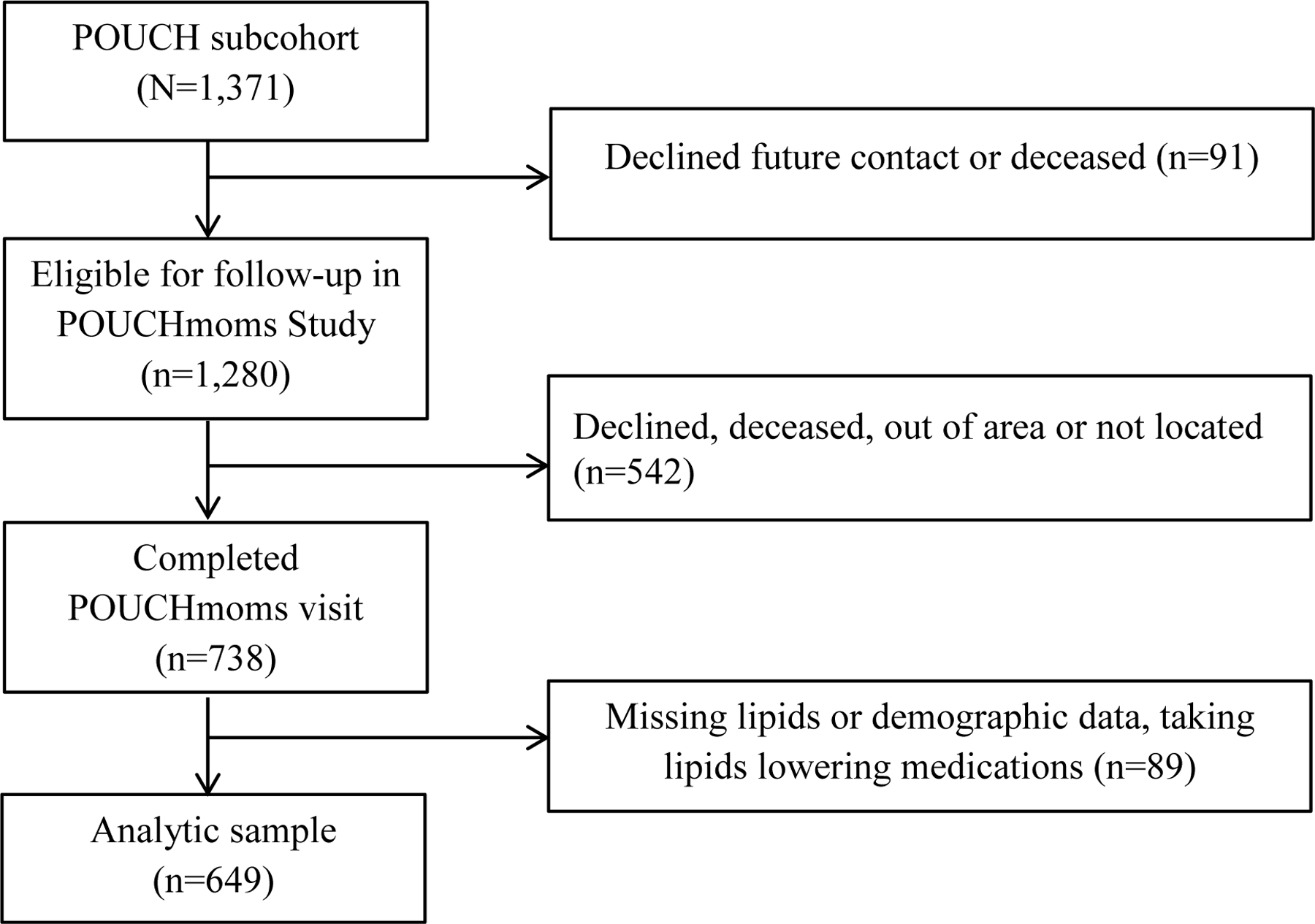
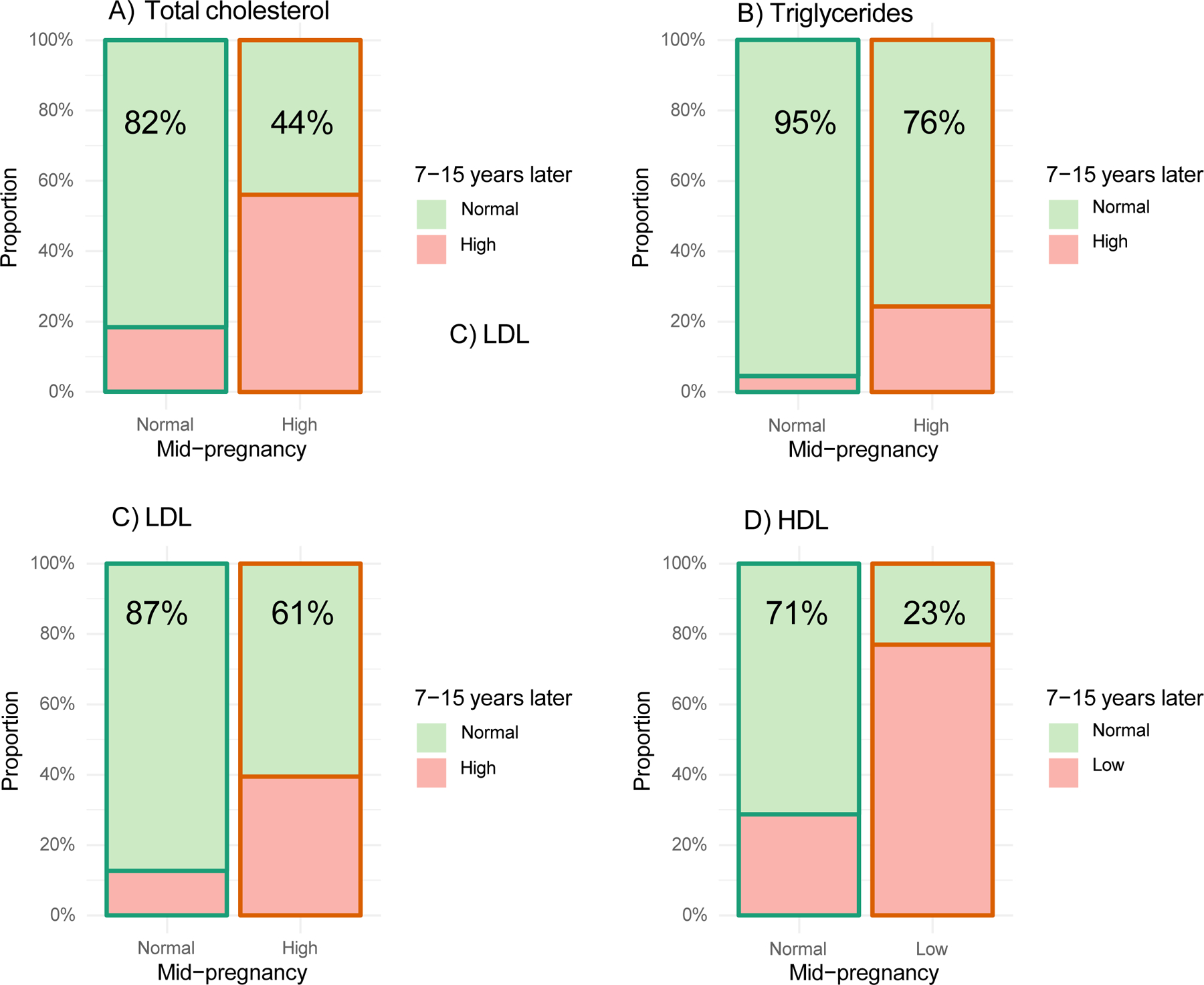
Description:Objective ; Maternal lipid levels increase in normal pregnancies. Here we examine whether pregnancies with the highest total cholesterol, Low-density lipoprotein (LDL) or triglyceride levels, or the lowest High-density lipoprotein (HDL) levels predict future dyslipidemia post-pregnancy. ; Design ; Longitudinal cohort study ; Setting ; Five communities in Michigan, USA ; Sample ; Pregnant women (n=649) with blood lipid levels measured at mid-pregnancy in the Pregnancy Outcomes and Community Health (POUCH) Study and at the POUCHmoms Study follow-up, 7–15y later. ; Methods ; Maternal mid-pregnancy lipid levels were defined as ‘high’ (upper quartile of triglycerides≥216 mg/dL, LDL≥145 mg/dL, total cholesterol≥256 mg/dL) or ‘low’ (lower quartile, HDL<58mg/dL) using whole sample lipid distributions. At follow-up, dyslipidemia was classified by clinical cutoffs of triglycerides and total cholesterol≥200 mg/dL, LDL≥130 mg/dL and HDL<50 mg/dL. Weighted regression models estimated risk of dyslipidemia at follow-up in relation to pregnancy lipid levels, adjusted for baseline confounders. ; Main Outcome Measure ; Dyslipidemia later in life. ; Results ; Mid-pregnancy triglycerides, LDL, and total cholesterol levels at the upper quartile were associated with at least 3-fold increase in risk of abnormal triglycerides, LDL, and total cholesterol levels later in life. Women with low mid-pregnancy HDL levels had just over a twofold increased risk of abnormally low HDL levels at follow-up. These associations persisted following adjustment for covariates, i.e. demographics, lifestyle, and years of follow-up. ; Conclusion ; Higher mid-pregnancy LDL, total cholesterol and triglycerides, and lower levels of HDL may signal future dyslipidemia risk and the need for closer lipid monitoring to ensure timely interventions that can attenuate cardiovascular disease risk.
-
Subjects:
-
Keywords:
-
Source:BJOG. 132(2):212-219
-
Pubmed ID:39377111
-
Pubmed Central ID:PMC11625654
-
Document Type:
-
Funding:R01-HD34543/Thrasher Research Fund/ ; 20FY01-38/March of Dimes Foundation/ ; R01 HD034543/HD/NICHD NIH HHSUnited States/ ; R01-HL103825/HL/NHLBI NIH HHSUnited States/ ; U01-DP000143-01/CC/CDC HHSUnited States/ ; 20FY04-37/March of Dimes Foundation/ ; K01 HL144914/HL/NHLBI NIH HHSUnited States/ ; Eunice Kennedy Shriver National Institute of Child Health and Human Development/ ; U01 DP000143/DP/NCCDPHP CDC HHSUnited States/ ; 02816-7/NR/NINR NIH HHSUnited States/
-
Volume:132
-
Issue:2
-
Download URL:
-
File Type:
 [PDF - 389.82 KB]
 -
Collection(s):
-
Main Document Checksum:urn:sha-512:8aa09445cca473534845d8910528425e8c77cf3ca260d80ba1aa06e6986d9b0ea745e0887b6ded1d99e92d39345836a94f8afc6e516e0ff4fe9d2d121d702fc7
Supporting Files


File Language:
English
 Was this page helpful?
 Found an issue?

CDC STACKS serves as an archival repository of CDC-published products including
scientific findings, journal articles, guidelines, recommendations, or other public health information authored or
co-authored by CDC or funded partners.
As a repository, CDC STACKS retains documents in their original published format to ensure public access to scientific information.
As a repository, CDC STACKS retains documents in their original published format to ensure public access to scientific information.
You May Also Like
COLLECTION
CDC Public Access