



Changing adolescent activity patterns and the correlation of self-esteem and externalizing mental health symptoms across time: results from the USA from 1991 through 2020
Supporting Files

-
1 2024 ; 1-2024
-
Available in CDC Stacks on January 01, 2025, 12:00 AM

File Language:
English
Details
-
Alternative Title:Psychol Med
-
Personal Author:
-
Description:Background.
Common adolescent psychiatric symptoms cluster into two dominant domains: internalizing and externalizing. Both domains are linked to self-esteem, which serves as a protective factor against a wide range of internalizing and externalizing problems. This study examined trends in US adolescents’ self-esteem and externalizing symptoms, and their correlation, by sex and patterns of time use.
Methods.
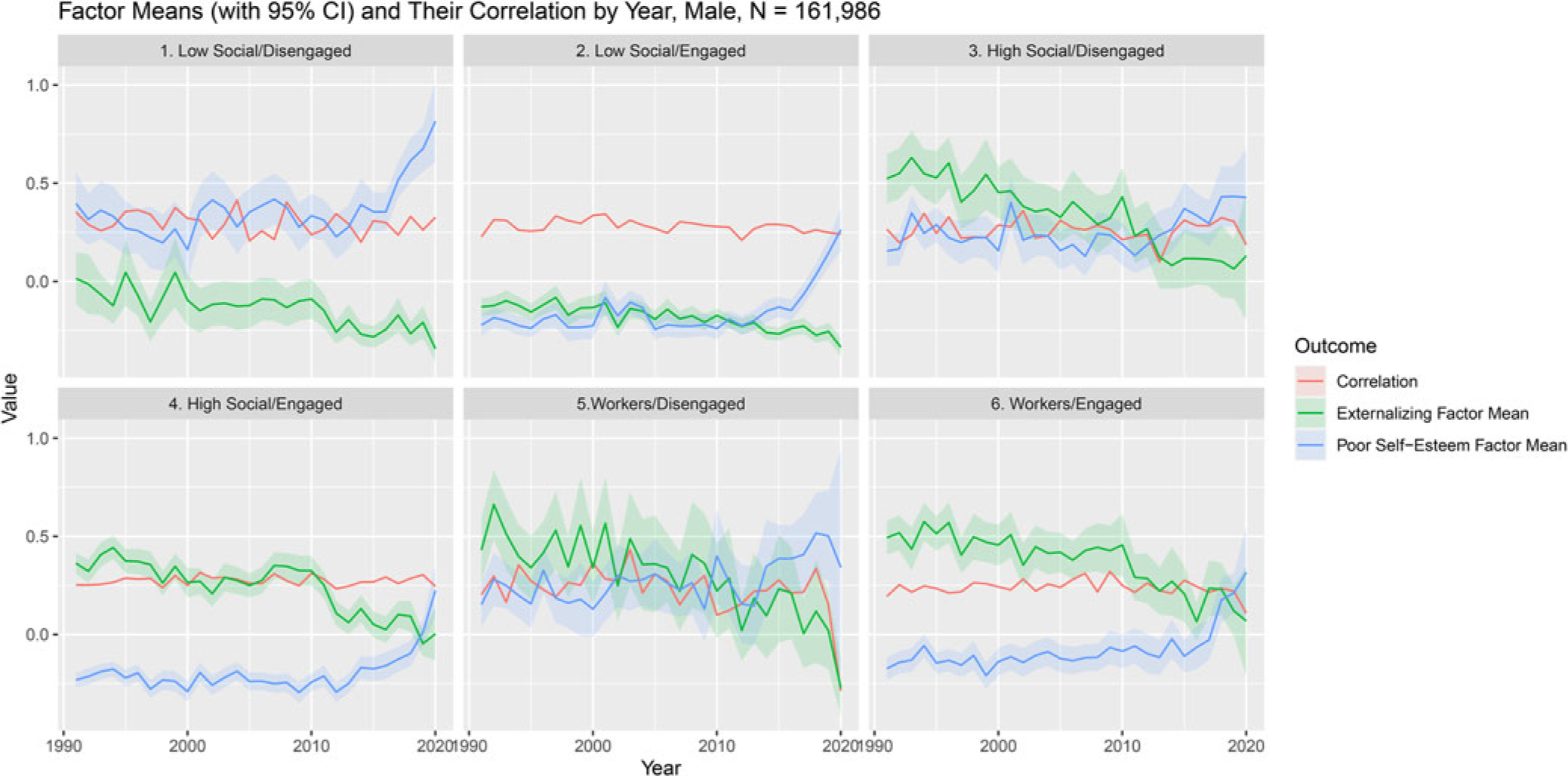
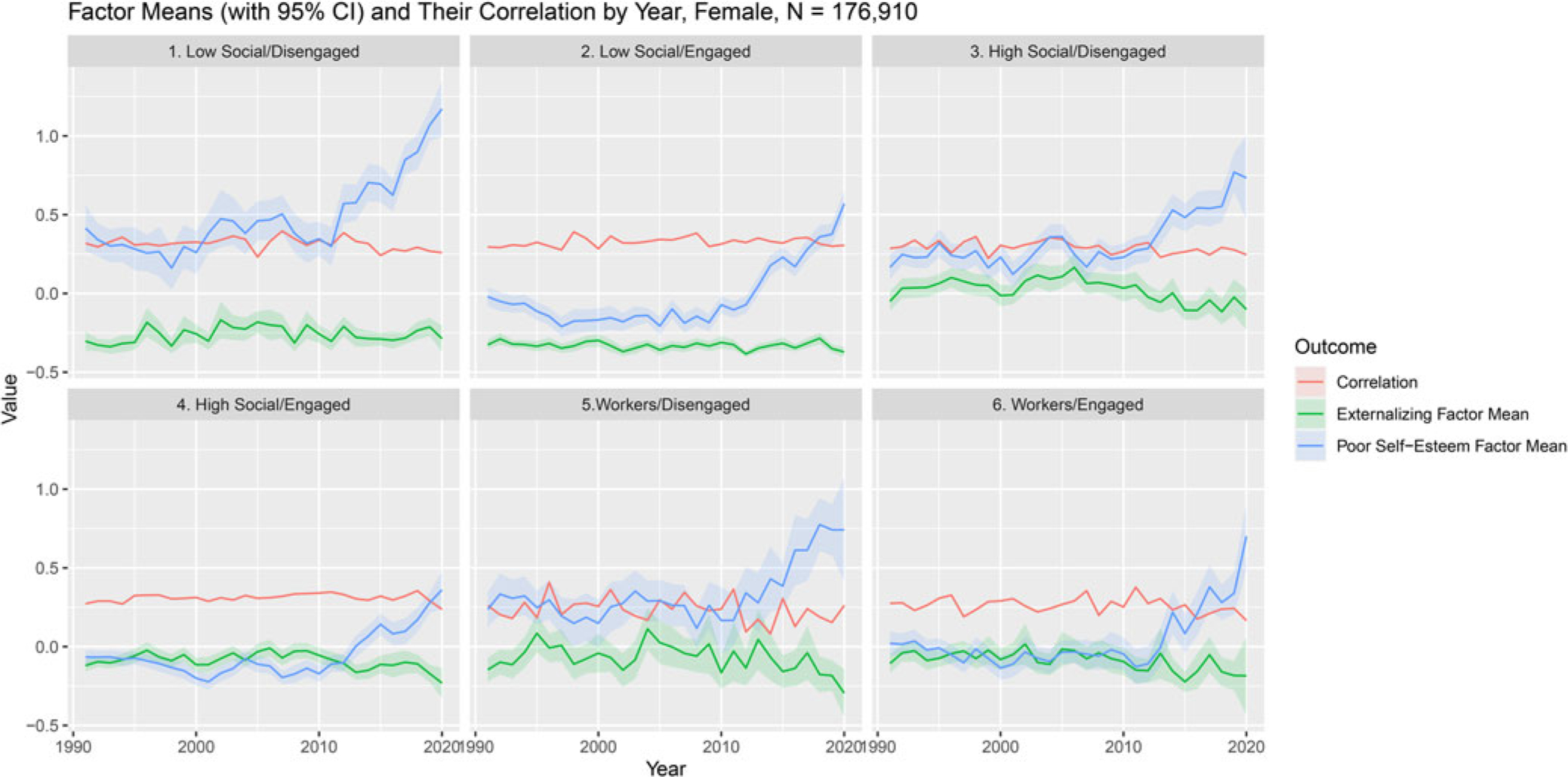
Using Monitoring the Future data (N = 338 896 adolescents, grades:8/10/12, years:1991–2020), we generated six patterns of time use using latent profile analysis with 17 behavior items (e.g. sports participation, parties, paid work). Groups were differentiated by high/low engagement in sports and either paid work or high/low peer socialization. Within each group, we mapped annual, sex-stratified means of (and correlation between) self-esteem and externalizing factors. We also examined past-decade rates of change for factor means using linear regression and mapped proportions with top-quartile levels of poor self-esteem, externalizing symptoms, or both.
Results.
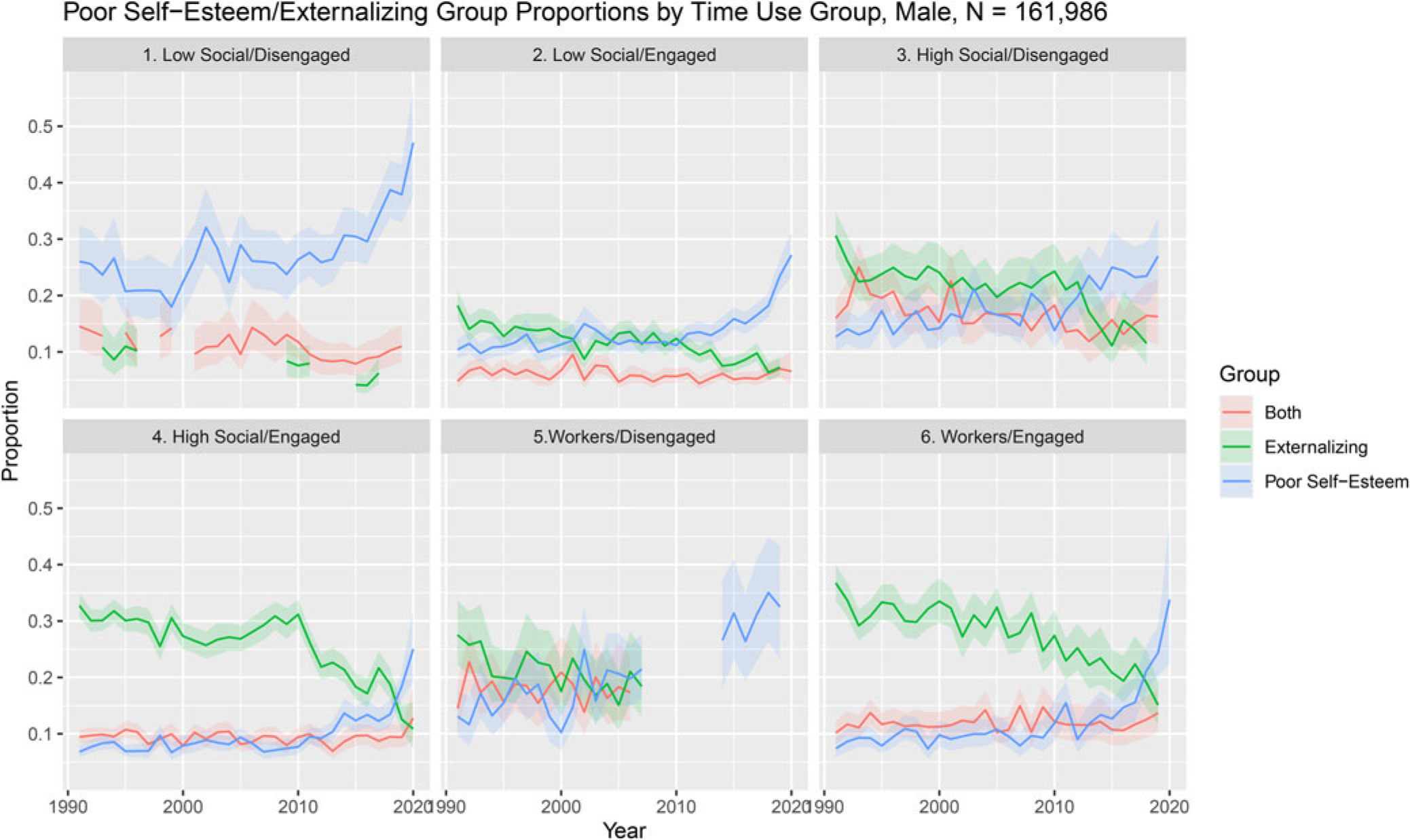
We found consistent increases in poor self-esteem, decreases in externalizing symptoms, and a positive correlation between the two across nearly all activity groups. We also identified a relatively constant proportion of those with high levels of both in every group. Increases in poor self-esteem were most pronounced for female adolescents with low levels of socializing, among whom externalizing symptoms also increased.
Conclusions.
Rising trends in poor self-esteem are consistent across time use groups, as is the existence of a group facing poor self-esteem and externalizing symptoms. Effective interventions for adolescents’ poor self-esteem/co-occurring symptoms are needed broadly, but especially among female adolescents with low peer socialization. -
Subjects:
-
Keywords:
-
Source:Psychol Med. 54(1):169-177
-
Pubmed ID:37183659
-
Pubmed Central ID:PMC11618880
-
Document Type:
-
Funding:R01DA048860/DA/NIDA NIH HHSUnited States/ ; R01 DA048860/DA/NIDA NIH HHSUnited States/ ; K01 DA045224/DA/NIDA NIH HHSUnited States/ ; R01 DA048853/DA/NIDA NIH HHSUnited States/ ; R01 DA037866/DA/NIDA NIH HHSUnited States/ ; R49-CE003094/CE/NCIPC CDC HHSUnited States/ ; R49 CE003094/CE/NCIPC CDC HHSUnited States/
-
Volume:54
-
Issue:1
-
Download URL:
-
File Type:
 [PDF - 1.24 MB]
 -
Collection(s):
-
Main Document Checksum:urn:sha-512:68cb6a5746950da3bd1bc27e4787fec7d6291fb69182b2eb14f3e66de9c67d9e25811b275c681e22b63ca0475b03ef933ff42bc0268ec9202777c8109a02131c
Supporting Files


File Language:
English
 Was this page helpful?
 Found an issue?



CDC STACKS serves as an archival repository of CDC-published products including
scientific findings, journal articles, guidelines, recommendations, or other public health information authored or
co-authored by CDC or funded partners.
As a repository, CDC STACKS retains documents in their original published format to ensure public access to scientific information.
As a repository, CDC STACKS retains documents in their original published format to ensure public access to scientific information.
You May Also Like
COLLECTION
CDC Public Access