



Simian T-Lymphotropic Virus Diversity among Nonhuman Primates, Cameroon
Supporting Files
Public Domain

-
Feb 2009
Details
-
Alternative Title:Emerg Infect Dis
-
Personal Author:
-
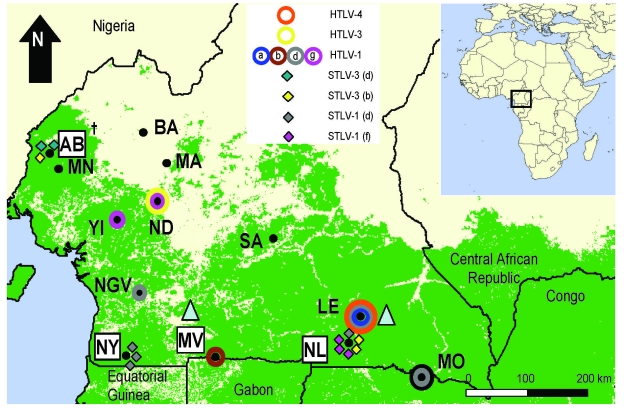
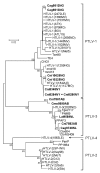
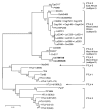
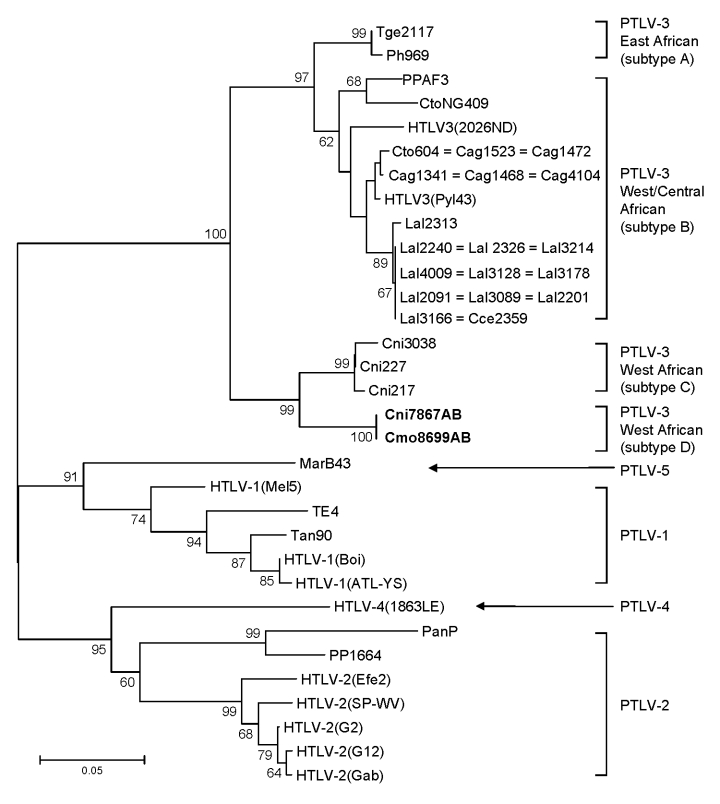
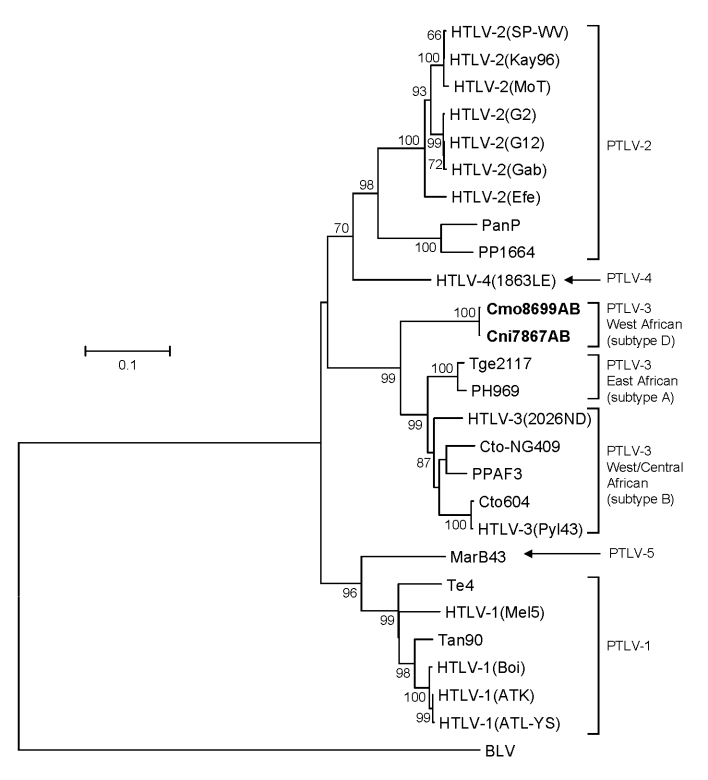
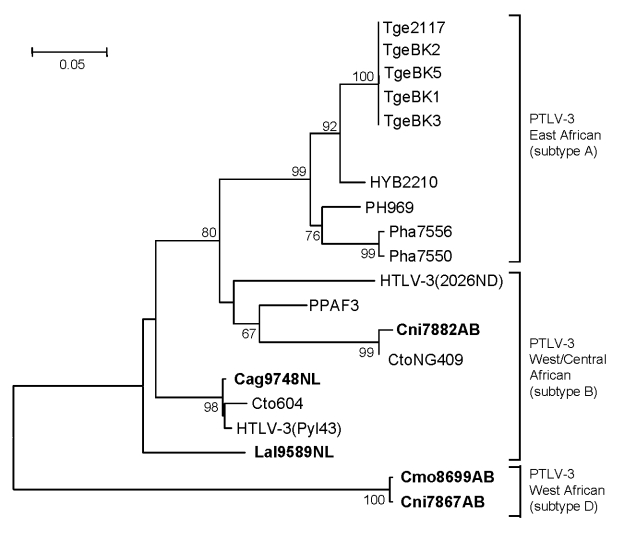
Description:Cross-species transmission of retroviruses is common in Cameroon. To determine risk for simian T-cell lymphotropic virus (STLV) transmission from nonhuman primates to hunters, we examined 170 hunter-collected dried blood spots (DBS) from 12 species for STLV. PCR with generic tax and group-specific long terminal repeat primers showed that 12 (7%) specimens from 4 nonhuman primate species were infected with STLV. Phylogenetic analyses showed broad diversity of STLV, including novel STLV-1 and STLV-3 sequences and a highly divergent STLV-3 subtype found in Cercopithecus mona and C. nictitans monkeys. Screening of peripheral blood mononuclear cell DNA from 63 HTLV-seroreactive, PCR-negative hunters did not identify human infections with this divergent STLV-3. Therefore, hunter-collected DBS can effectively capture STLV diversity at the point where pathogen spillover occurs. Broad screening using this relatively easy collection strategy has potential for large-scale monitoring of retrovirus cross-species transmission among highly exposed human populations.
-
Subjects:
-
Source:Emerg Infect Dis. 15(2):175-184.
-
Document Type:
-
Place as Subject:
-
Location:
-
Volume:15
-
Issue:2
-
Download URL:
-
File Type:
 [PDF - 274.82 KB]
 -
Collection(s):
-
Main Document Checksum:urn:sha256:8ba5aed323226e90ba86d7e56f22e3c5bf32537df808a96f33caf54e78c87d03
Supporting Files


 Was this page helpful?
 Found an issue?





CDC STACKS serves as an archival repository of CDC-published products including
scientific findings, journal articles, guidelines, recommendations, or other public health information authored or
co-authored by CDC or funded partners.
As a repository, CDC STACKS retains documents in their original published format to ensure public access to scientific information.
As a repository, CDC STACKS retains documents in their original published format to ensure public access to scientific information.
You May Also Like
COLLECTION
Emerging Infectious Diseases