



Longitudinal Changes in Diffusion Tensor Imaging in Hemodialysis Patients
Supporting Files

-
4 2024 ; 4-2024
-
Available in CDC Stacks on 2025-04-01T00:00:00Z
File Language:
English
Details
-
Alternative Title:Hemodial Int
-
Personal Author:
-
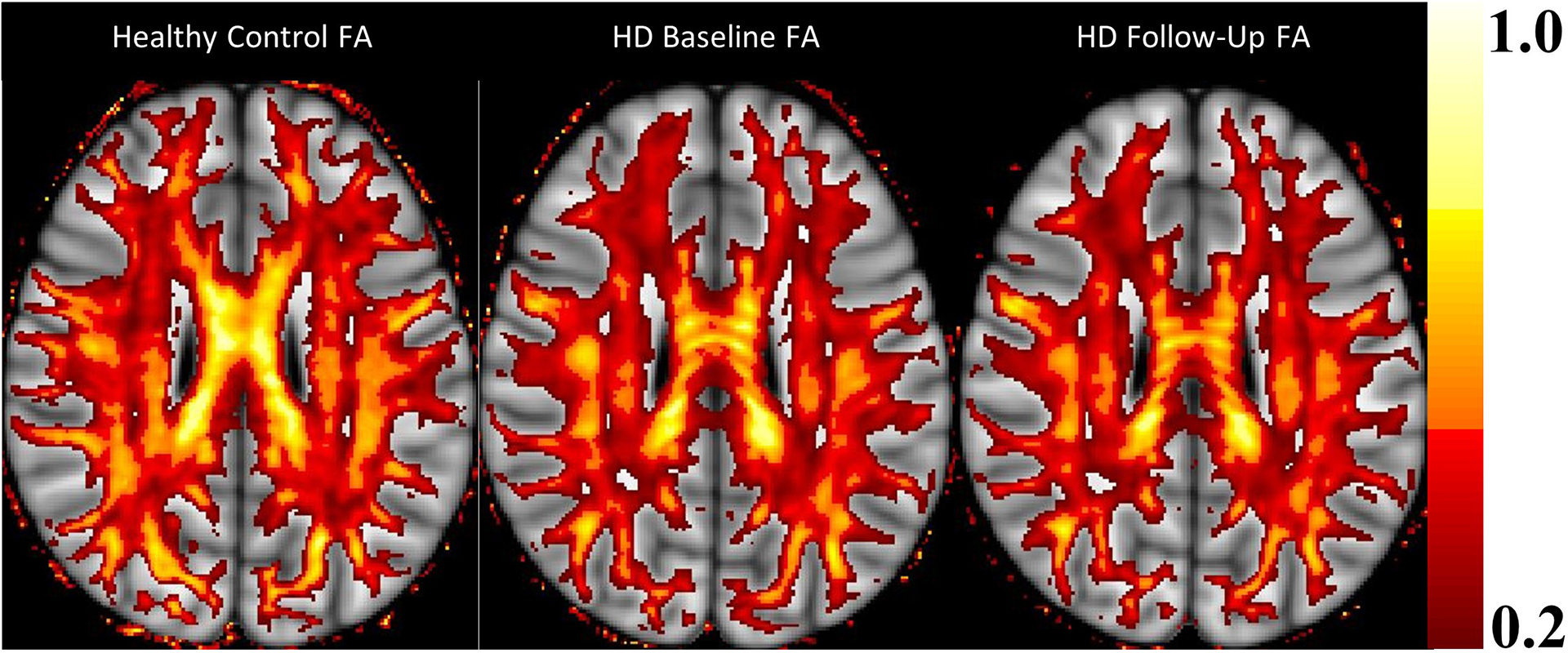
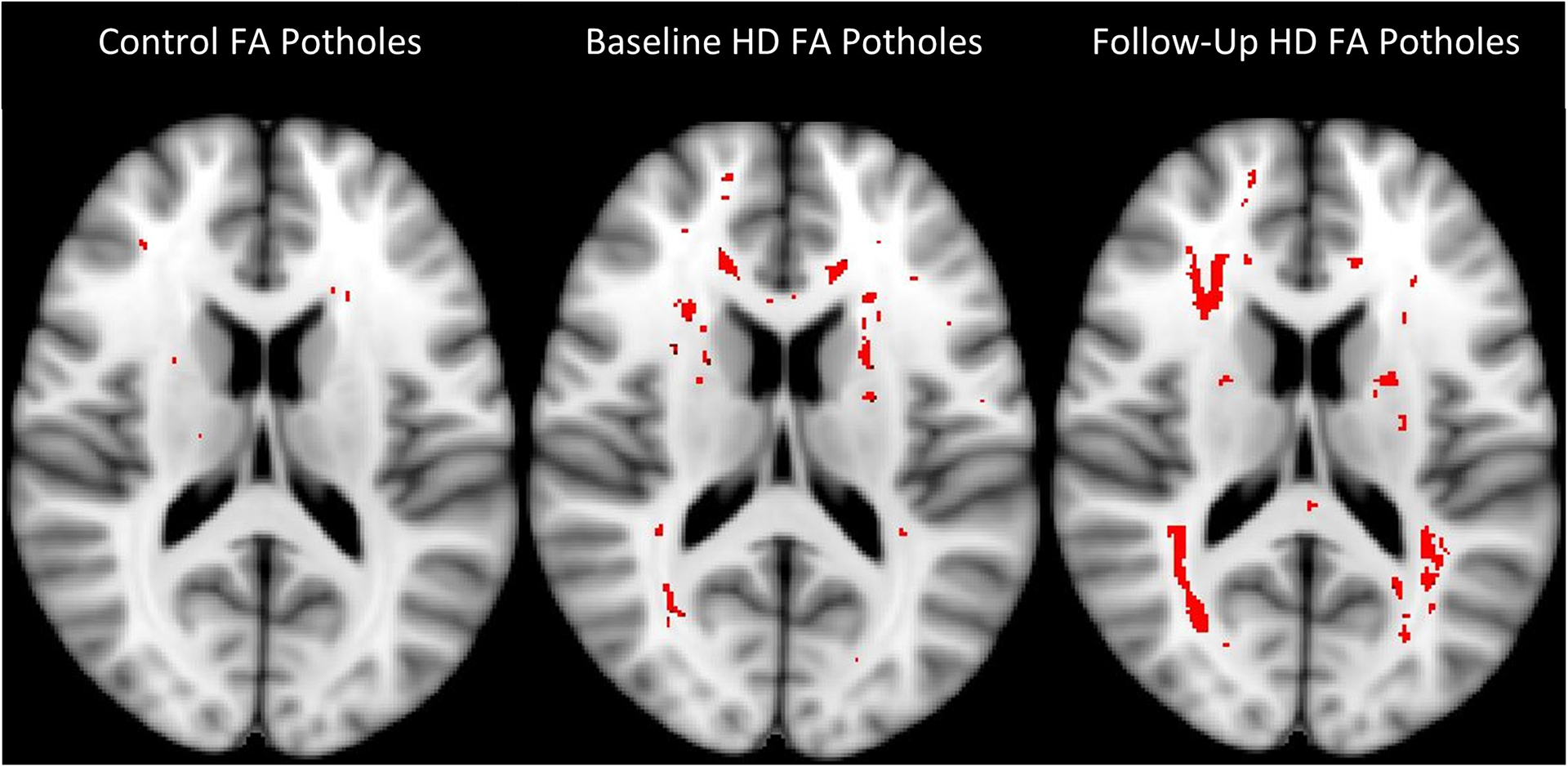
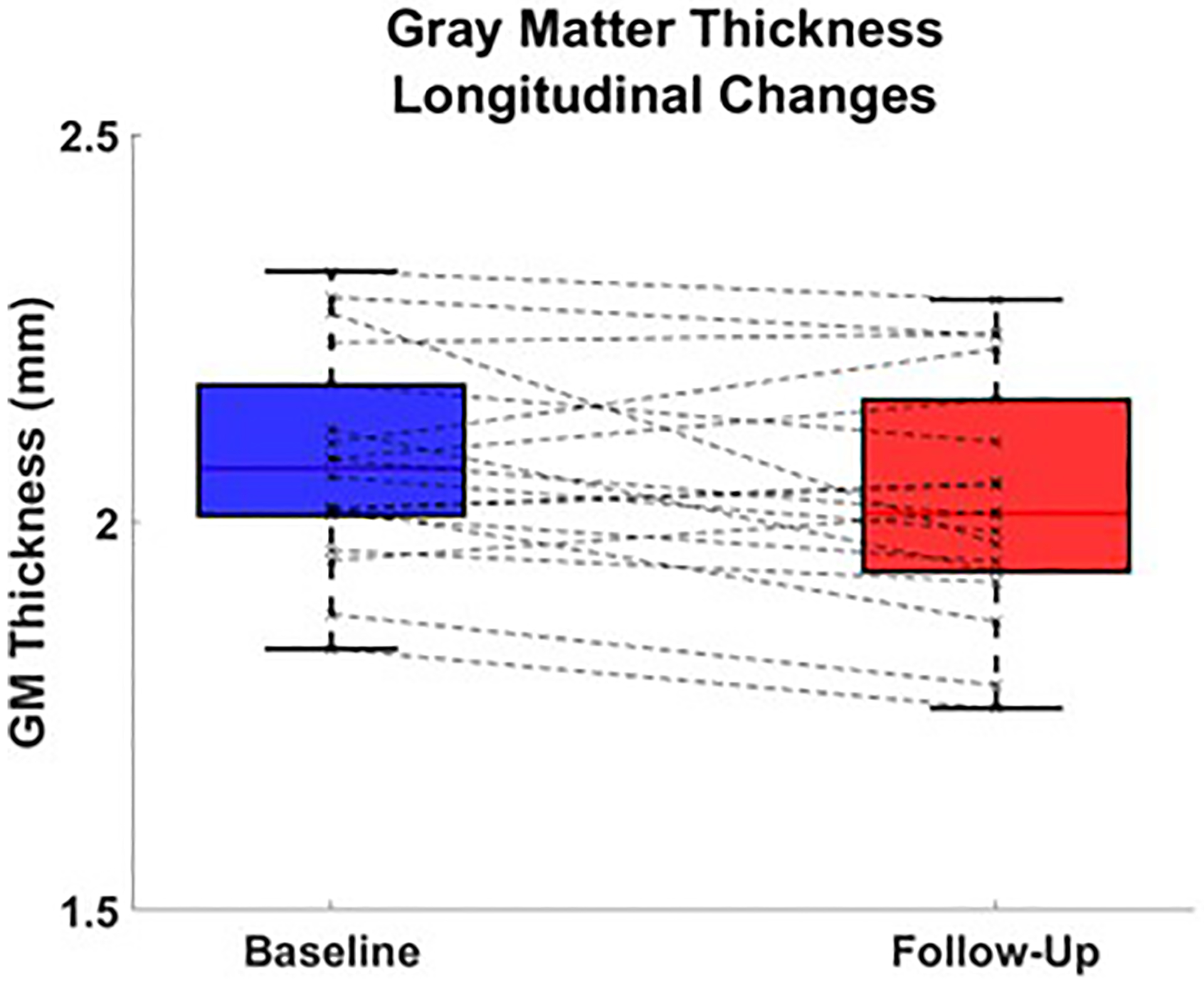
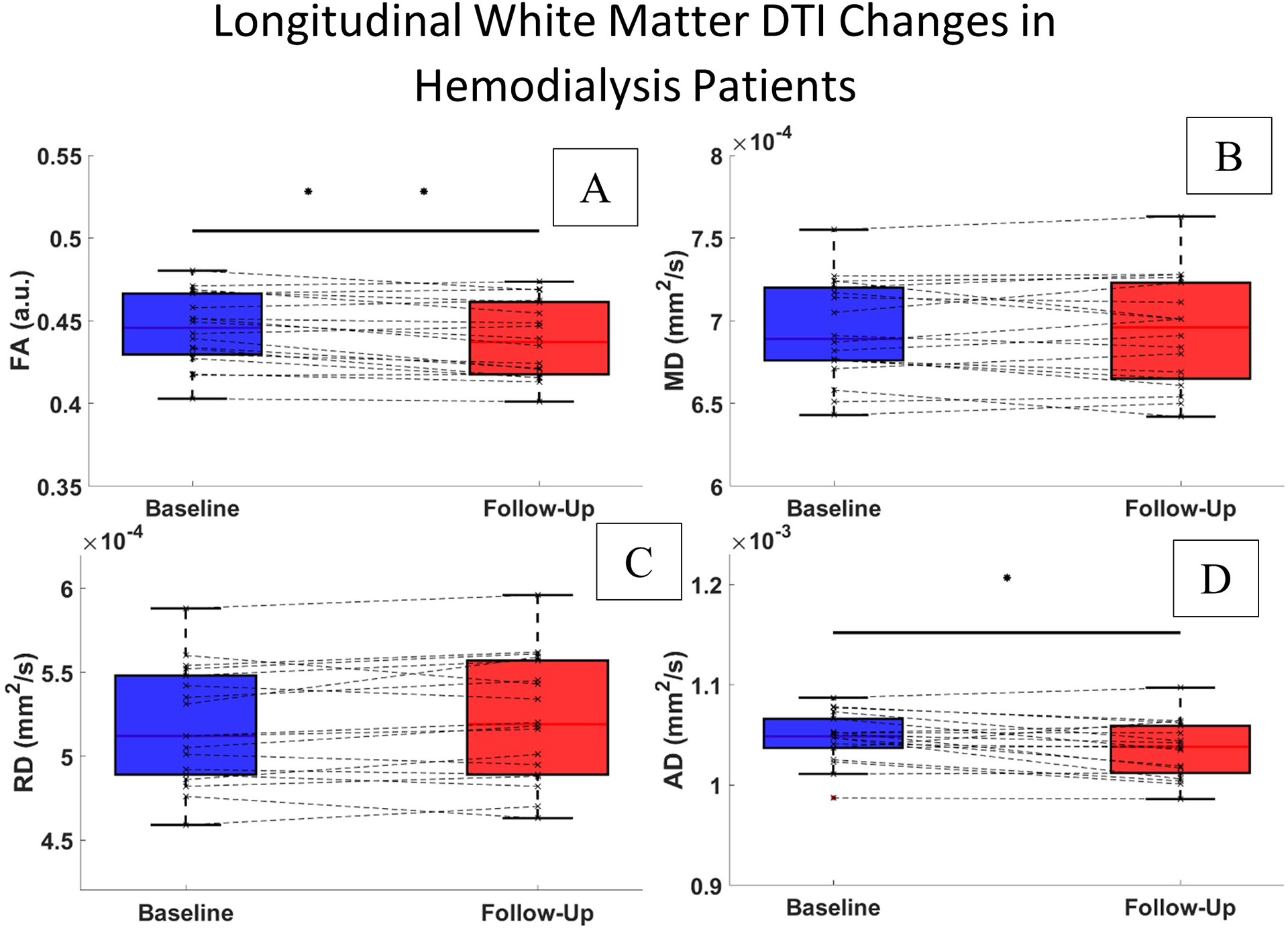
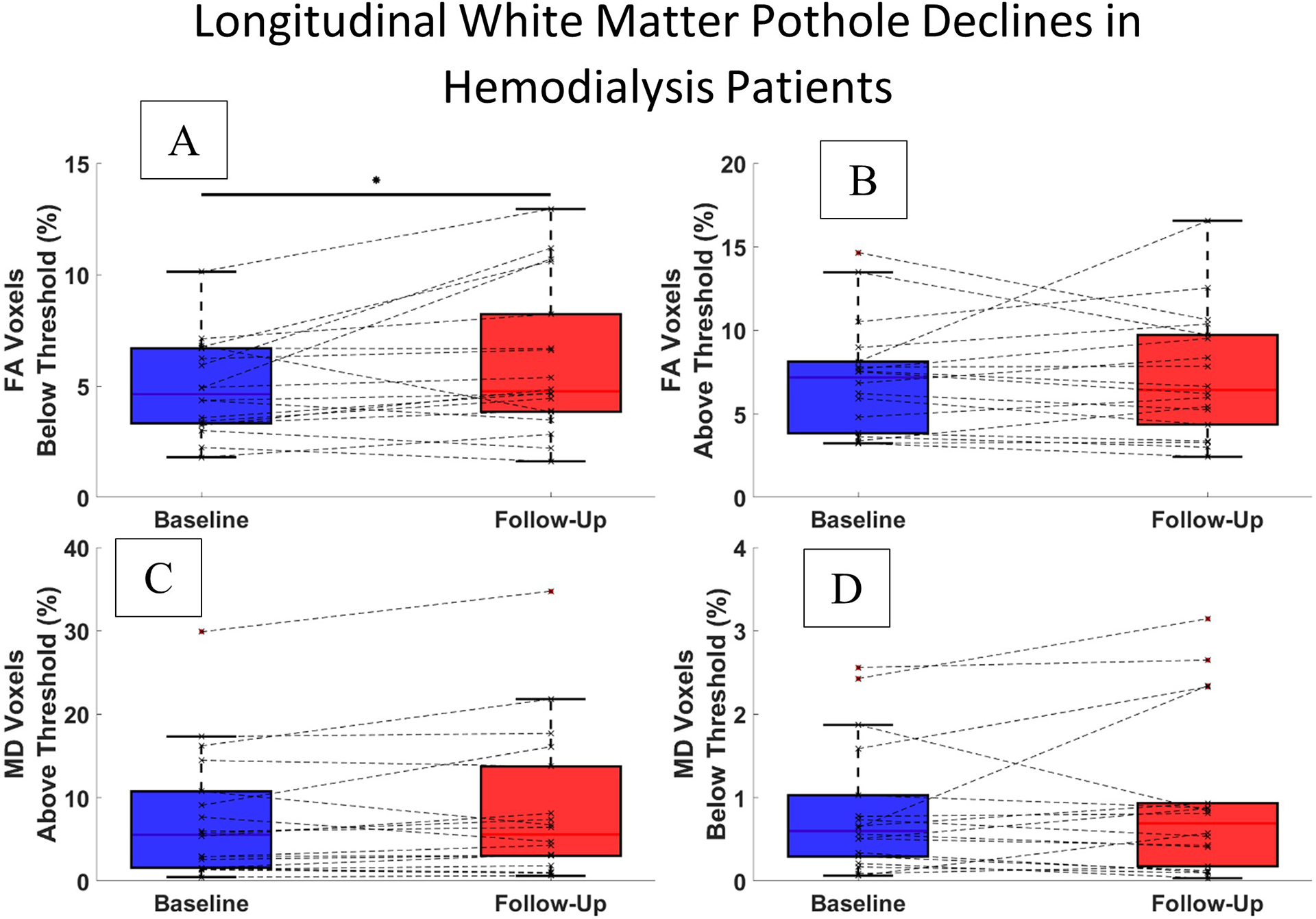
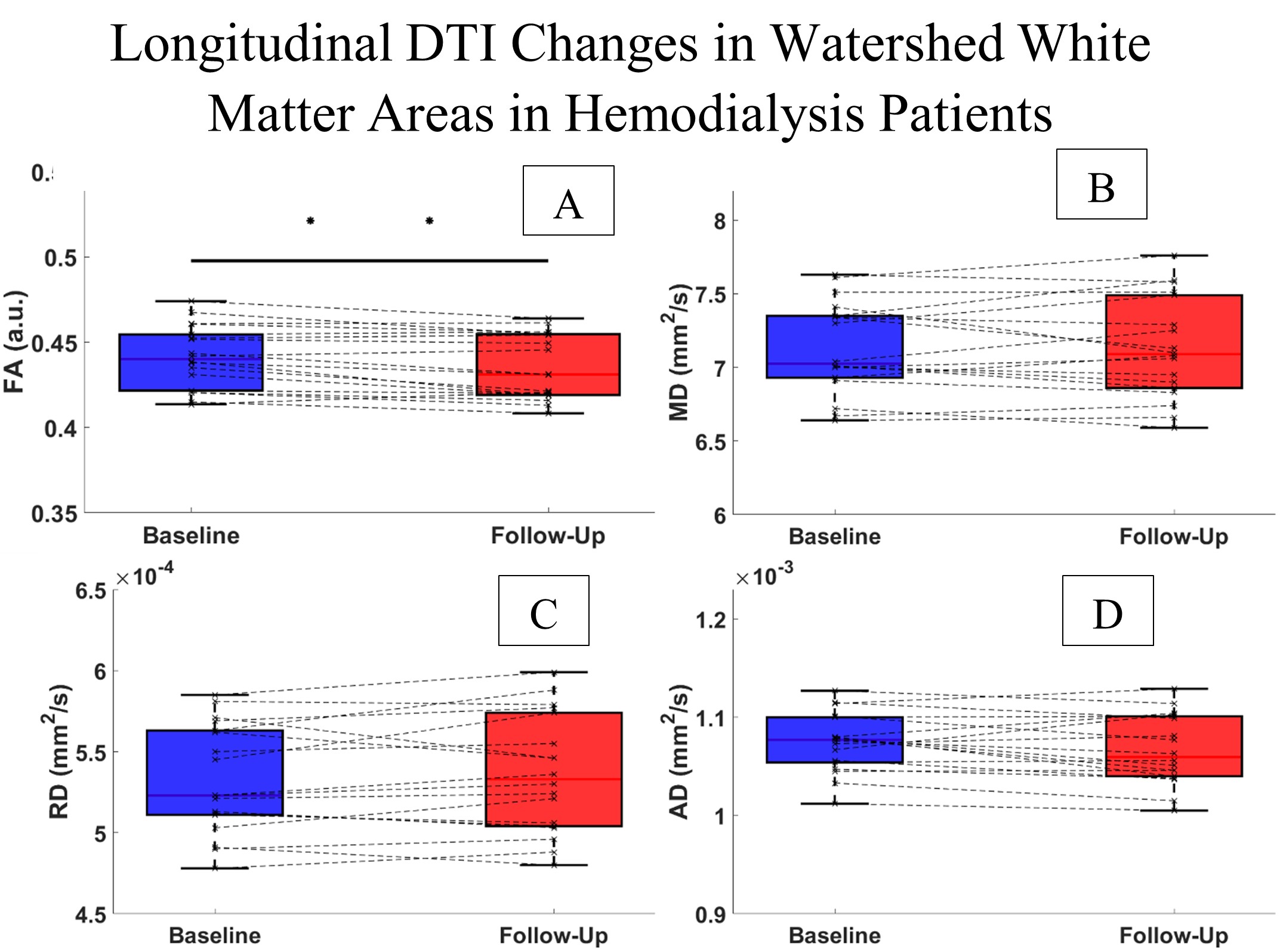
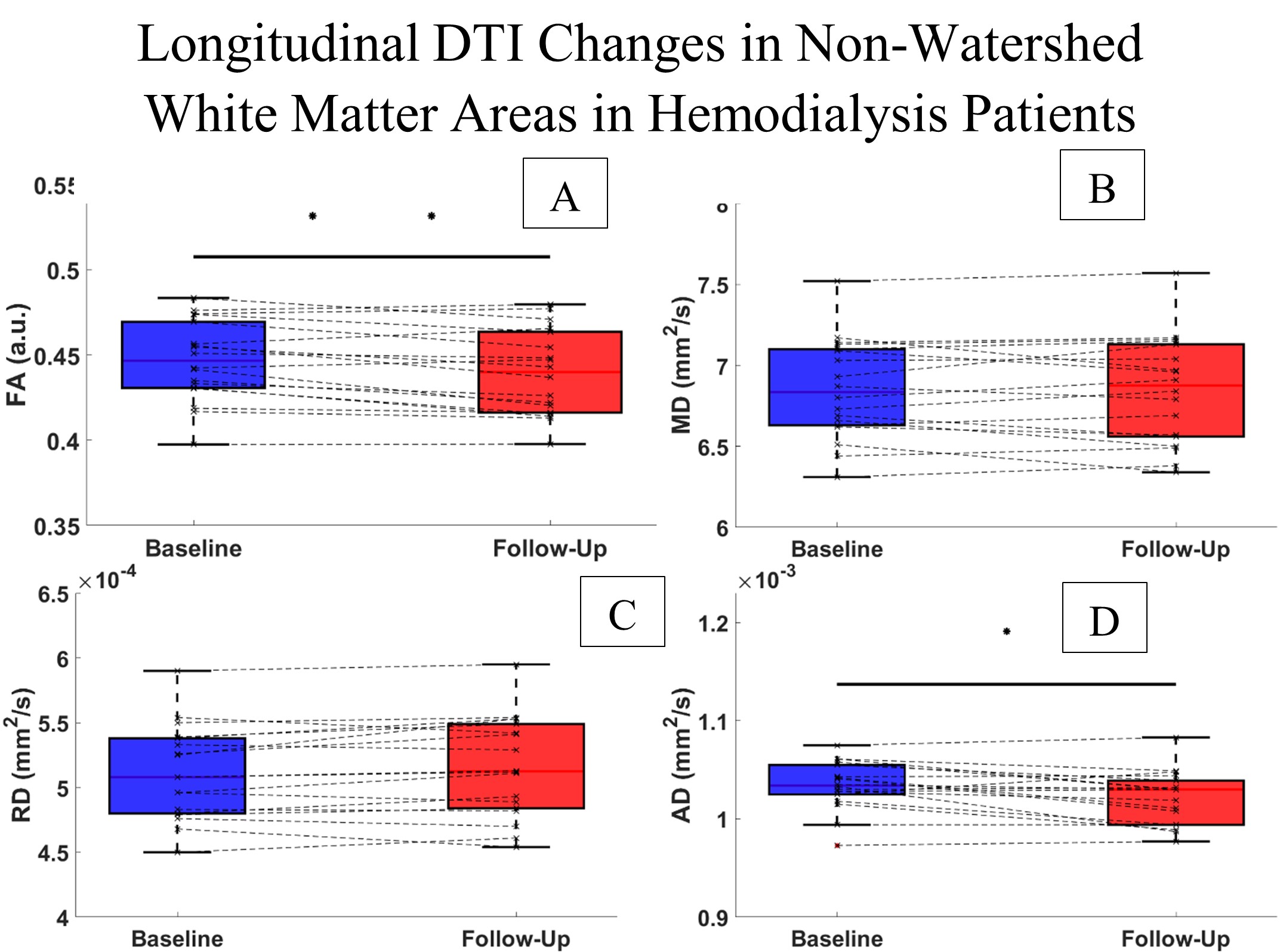
Description:Introduction: ; Hemodialysis patients have increased white matter and gray matter pathology in the brain relative to controls based on MRI. Diffusion tensor imaging is useful in detecting differences between hemodialysis and controls but has not identified the expected longitudinal decline in hemodialysis patients. In this study we implemented specialized post processing techniques to reduce noise to detect longitudinal changes in diffusion tensor imaging parameters and evaluated for any association with changes in cognition. ; Methods: ; We collected anatomical and diffusion MRIs as well as cognitive testing from in-center hemodialysis patients at baseline and one year later. Gray matter thickness, white matter volume, and white matter diffusion tensor imaging parameters were measured to identify longitudinal changes. We analyzed the diffusion tensor imaging parameters by averaging the whole white matter and using a pothole analysis. 18 hemodialysis patients were included in the longitudinal analysis and 15 controls were used for the pothole analysis. We used the NIH Toolbox Cognition Battery to assess cognitive performance over the same time frame. ; Findings: ; Over the course of a year on hemodialysis, we found a decrease in white matter fractional anisotropy across the entire white matter (p < 0.01), and an increase in the number of white matter fractional anisotropy voxels below pothole threshold (p = 0.03). We did not find any relationship between changes in whole brain structural parameters and cognitive performance. ; Discussion: ; By employing noise reducing techniques, we were able to detect longitudinal changes in diffusion tensor imaging parameters in hemodialysis patients. The fractional anisotropy declines over the year indicate significant decreases in white matter health. However, we did not find that declines in fractional anisotropy was associated with declines in cognitive performance.
-
Subjects:
-
Keywords:
-
Source:Hemodial Int. 28(2):178-187
-
Pubmed ID:38351365
-
Pubmed Central ID:PMC11014772
-
Document Type:
-
Funding:
-
Volume:28
-
Issue:2
-
Download URL:
-
File Type:
 [PDF - 1.34 MB]
 -
Collection(s):
-
Main Document Checksum:urn:sha-512:2098aa0415165613a5c659f8fda84e7cb96c1313e7dfdf41543620a3bccce48334a2867d450e984918d0dd8315145600119dbb340b78dfd3d79e53494ff5ccc8
Supporting Files


File Language:
English
 Was this page helpful?
 Found an issue?


CDC STACKS serves as an archival repository of CDC-published products including
scientific findings, journal articles, guidelines, recommendations, or other public health information authored or
co-authored by CDC or funded partners.
As a repository, CDC STACKS retains documents in their original published format to ensure public access to scientific information.
As a repository, CDC STACKS retains documents in their original published format to ensure public access to scientific information.
You May Also Like
COLLECTION
CDC Public Access