



Streptococcus pneumoniae Serotype 19A in Children, South Korea
Supporting Files
Public Domain

-
Feb 2008
Details
-
Alternative Title:Emerg Infect Dis
-
Personal Author:
-
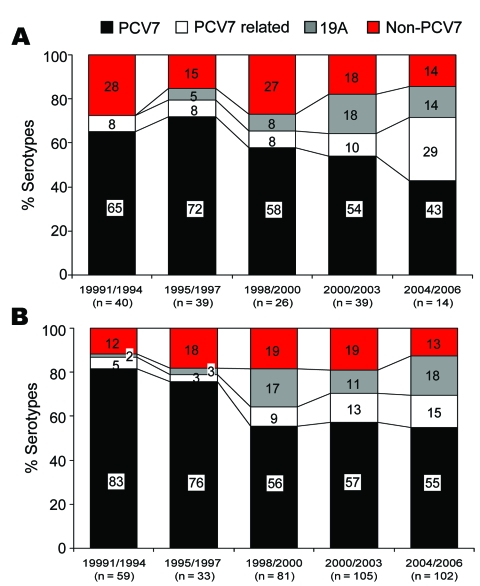
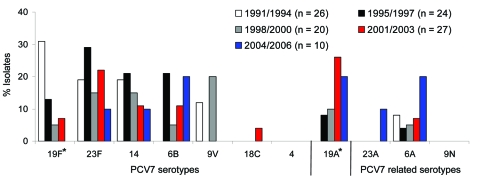
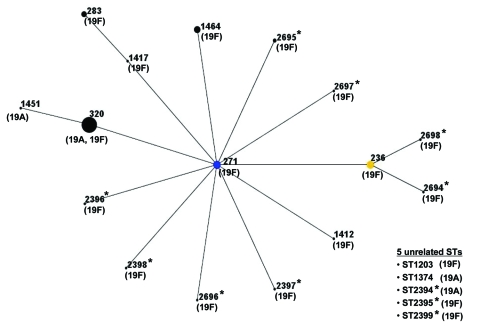
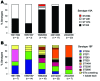
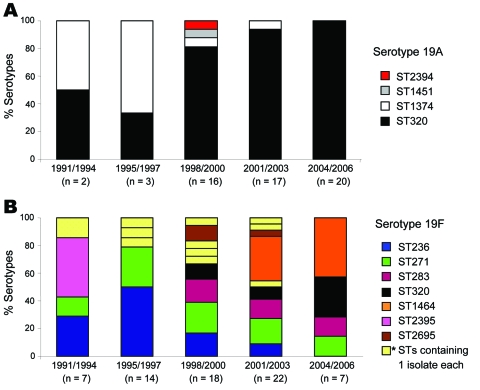
Description:Despite the concern of replacement disease, notably by serotype 19A after 7-valent conjugate vaccine (PCV7) use, serotype 19A was increasingly recognized in Korean children before the introduction of PCV7. To understand the dynamics of serogroup 19 prevalence from 1991-2006, we serotyped 538 pediatric pneumococcal isolates. Serogroup 19 isolates (n = 126) were characterized by antimicrobial drug susceptibility, presence of mefA/ermB, and multilocus sequence typing. Overall, the proportion of serotype 19A isolates increased but serotype 19F decreased. Among children <5 years of age, the proportion of serotype 19A isolates in invasive pneumococcal disease increased from 0% in 1991-1994 to 8%-10% in 1995-2000, reached 26% in 2001-2003, and remained at 20% in 2004-2006 when vaccine coverage did not exceed 25% (p = 0.005 for trend). This study demonstrates that the expansion of multidrug-resistant ST320 was responsible for the increase in serotype 19A before PCV7 use.
-
Subjects:
- Research
- Streptococcus pneumoniae
- serotype 19A
- multilocus sequence typing
- pneumococcal conjugate vaccine
- research
- Anti-Bacterial Agents
- Bacterial Proteins
- Child
- Child, Preschool
- Drug Resistance, Multiple, Bacterial
- Humans
- Infant
- Infant, Newborn
- Membrane Proteins
- Microbial Sensitivity Tests
- Pneumococcal Infections
- Prevalence
- Serotyping
-
Source:Emerg Infect Dis. 14(2):275-281.
-
Document Type:
-
Place as Subject:
-
Location:
-
Volume:14
-
Issue:2
-
Download URL:
-
File Type:
 [PDF - 366.06 KB]
 -
Collection(s):
-
Main Document Checksum:urn:sha256:d41162499f0b8a2e7a95b7dc967d8d7f195de534d7e01bf3d0f943ce8231724a
Supporting Files


 Was this page helpful?
 Found an issue?



CDC STACKS serves as an archival repository of CDC-published products including
scientific findings, journal articles, guidelines, recommendations, or other public health information authored or
co-authored by CDC or funded partners.
As a repository, CDC STACKS retains documents in their original published format to ensure public access to scientific information.
As a repository, CDC STACKS retains documents in their original published format to ensure public access to scientific information.
You May Also Like
COLLECTION
Emerging Infectious Diseases