



Dried Blood Spot Specimens Are a Suitable Alternative Sample Type for HIV-1 Viral Load Measurement and Drug Resistance Genotyping in Patients Receiving First-Line Antiretroviral Therapy
Supporting Files

-
4 2012 ; 4-2012
-
Available in CDC Stacks on 2024-11-01T00:00:00Z
File Language:
English
Details
-
Alternative Title:Clin Infect Dis
-
Personal Author:
-
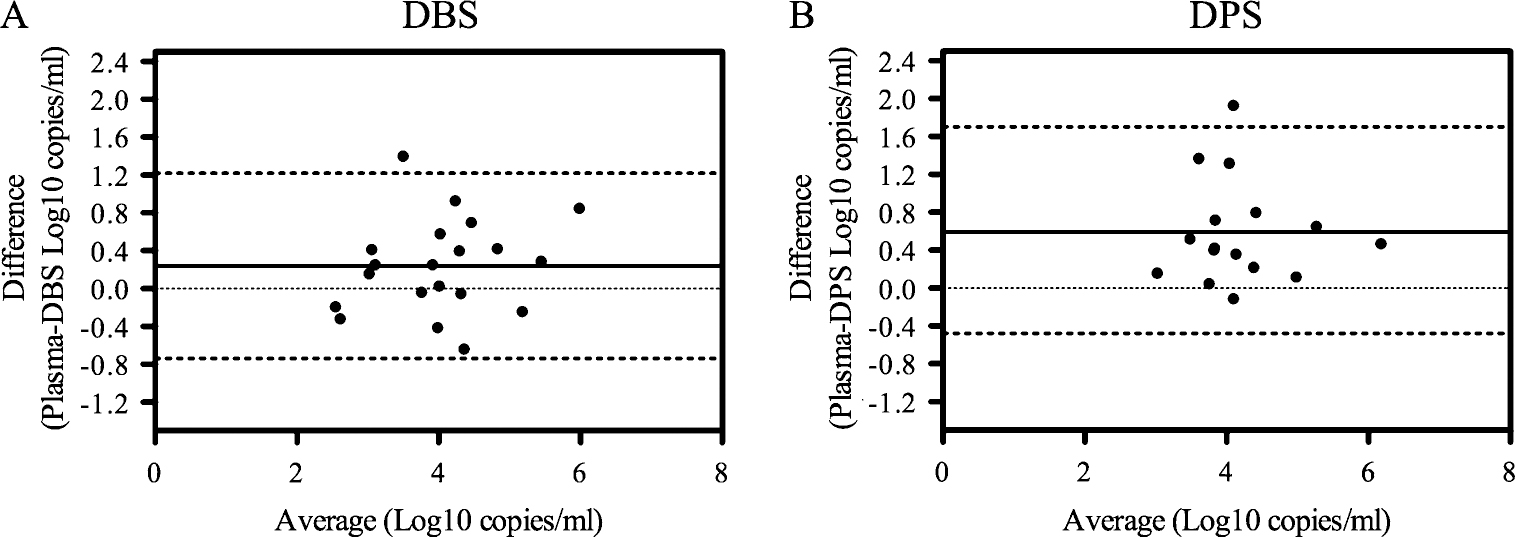
Description:Background. ; Antiretroviral therapy (ART) is being administered in developing nations at unprecedented numbers following the World Health Organization’s (WHO) development of standardized first-line drug regimens. To ensure continued efficacy of these drug regimens, WHO recommends monitoring virological responses and development of human immunodeficiency virus (HIV) drug resistance (HIVDR) in HIV-infected patients in a prospective cohort. The current study compared dried fluid spot specimens with the reference standard plasma specimens as a practical tool for viral load (VL) and HIVDR genotyping in resource-limited settings. ; Methods. ; Dried blood spot (DBS), dried plasma spot (DPS), and plasma specimens were collected from 173 –patients receiving ART at 2 hospital sites in Abuja, Nigeria. HIV-1 VL analysis was performed using NucliSENS EasyQ HIV-1 v1.1 RUO test kits. Genotyping of the HIV-1 pol gene was performed using a broadly sensitive in-house assay. ; Results. ; Direct comparison of VL levels showed that DBS specimens, and not DPS specimens, gave results comparable to those of plasma specimens (P = .0619 and .0007, respectively); however, both DBS and DPS specimens had excellent correlation with plasma specimens in predicting virological failure (VL, ≥1000 copies/mL) in patients (κ = 0.78 and 0.83, respectively). Of the 18 specimens with a plasma VL ≥1000 copies/mL, HIVDR genotyping rates were 100% in DBS and 38.9% in DPS specimens, and DBS specimens identified 61 of 65 HIVDR mutations (93.8%) identified in plasma specimens. ; Conclusions. ; Our results indicate that DBS specimens could be used for surveys to monitor HIVDR prevention failure in resource-limited settings.
-
Subjects:
-
Source:Clin Infect Dis. 54(8):1187-1195
-
Pubmed ID:22412066
-
Pubmed Central ID:PMC11528918
-
Document Type:
-
Funding:
-
Volume:54
-
Issue:8
-
Download URL:
-
File Type:
 [PDF - 391.19 KB]
 -
Collection(s):
-
Main Document Checksum:urn:sha-512:9d044c0017a4e1a632fb1a3348b8c794101a38c2b2beb5227647b62d28a74ce067f951d265682851f470e361d11fd9cb95f6b54240f04e765d673f73be56aa13
Supporting Files


File Language:
English
 Was this page helpful?
 Found an issue?

CDC STACKS serves as an archival repository of CDC-published products including
scientific findings, journal articles, guidelines, recommendations, or other public health information authored or
co-authored by CDC or funded partners.
As a repository, CDC STACKS retains documents in their original published format to ensure public access to scientific information.
As a repository, CDC STACKS retains documents in their original published format to ensure public access to scientific information.
You May Also Like
COLLECTION
CDC Public Access